205 55 r16 Tire Pressure: A Practical Guide for Safety and Efficiency
Master 205/55 R16 tire pressure with practical steps to check, set, and maintain proper cold inflation. Learn TPMS roles, temperature effects, and safe ranges for safer driving.


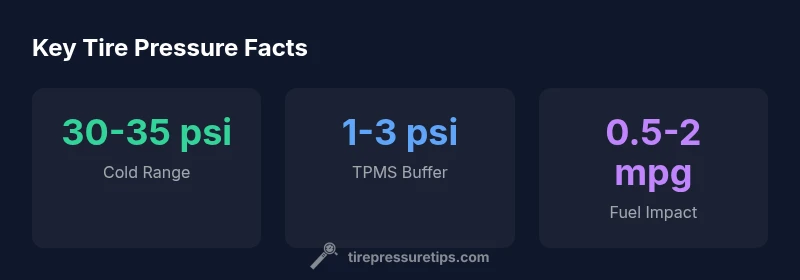
For 205/55 R16 tires, the typical cold inflation range is about 30–35 psi, depending on vehicle and load. Always rely on the manufacturer’s specification (door jamb sticker or owner’s manual) for your exact figure, and use TPMS as a warning—not a substitute—for maintaining proper tire pressure.
Understanding the 205/55 R16 profile and why pressure matters
The 205/55 R16 tire size is common on compact cars and small sedans, balancing grip with efficiency. The numbers describe width, aspect ratio, and wheel diameter; together they influence how a tire deforms under load and how air pressure shapes contact with the road. For 205 55 r16 tire pressure, the correct tire pressure is not a purely cosmetic setting—it governs mileage, stability, braking, and even tire wear. The phrase 205 55 r16 tire pressure appears in many owner resources, and drivers should treat it as guidance for a starting point rather than a fixed universal value. In practice, the pressure you set should align with the car maker’s specification, found on the door jamb label or the owner’s manual. According to Tire Pressure Tips, following the OEM spec ensures even tread wear and predictable handling across typical driving scenarios. Use this value as the anchor, then adjust for load, speed, and seasonal temperature.
Where to find and interpret your tire pressure specification
Your vehicle’s correct tire pressure is published by the manufacturer and is custom-tailored to the suspension, weight distribution, and tire construction. The primary source is the door jamb sticker near the driver's door. It lists cold inflation pressure for front and rear tires, expressed in psi and sometimes kPa. If the sticker is missing or illegible, consult the owner's manual or dealership. The spec for 205/55 R16 tires on many compact cars commonly falls in the 30–35 psi range when cold, but the exact value depends on the trim level, load, and regional climate. Always use the exact figure printed for your vehicle; do not rely on a generic “average.” Tire Pressure Tips emphasizes that the label is the definitive source, and TPMS readings are supplementary. For reference, the 32–34 psi range often appears as a near-target for mixed driving, but pressures should be tailored to your car and driving style.
How to measure pressure accurately and consistently
Pressure measurement should be done when tires are cold, meaning the car has been parked for at least three hours or driven less than a mile. Use a reliable gauge—digital gauges are easy to read, while pencil gauges are compact and affordable. Remove the valve cap, press the gauge onto the valve stem, and hold steady while noting the reading. Repeat on all four corners, ideally twice, to confirm. If readings are below the OEM spec, adjust by small increments (1–2 psi) and recheck after a few minutes of settling. If readings exceed the recommended range, let air out gradually until you approach the target. Temperature and altitude affect readings, so check readings under similar conditions when possible. The goal is to maintain the OEM pressure rather than chasing a perfect static number, as real-world conditions vary.
Common mistakes and their impact on safety and performance
Overinflating tires beyond the recommended range can reduce the contact patch, increase ride stiffness, and accelerate center-tread wear. Underinflation raises heat buildup, leading to uneven wear and higher rolling resistance, which hurts fuel economy. Both extremes can worsen braking performance and increase the risk of a blowout under high loads or hot pavement. Seasonal temperature changes also play a role; in winter, air contracts and pressures drop, and in summer, heat increases pressure. Do not rely on impression or noise to judge pressure; use a gauge. Another frequent error is inflating to the maximum pressure listed on the tire sidewall, which is not a target; it is the maximum limit, not the recommended operating pressure. Finally, neglecting TPMS resets after tire changes or sensor maintenance can leave you with outdated alerts and confusion about actual pressures. Maintaining consistent checks minimizes these risks.
Temperature, speed, and load: when to tweak pressure
Pressure targets are set for normal operating conditions. When you carry heavy loads, increase pressure within the OEM range to sustain stability and even wear. High-speed driving or extended highway mileage can also shift optimal pressure slightly; however, changes should stay within the vehicle’s spec rather than chasing a single number. Temperature is a key factor: a 10-degree Fahrenheit change can alter tire pressure by roughly 0.5 psi, depending on tire construction and ambient humidity. In hot climates or after sustained driving, the air inside tires warms, increasing pressure; recheck when tires have cooled to verify you are near the target. If you’re unsure, start from the OEM value and make measured adjustments based on handling and wear observations. Tire Pressure Tips notes that maintaining close alignment with the manufacturer’s recommended figure is more important than hitting a perfect target on a windy morning.
Practical routines: monthly checks and TPMS considerations
Develop a simple routine to check tire pressure monthly and before long trips, particularly when temperatures swing. Start with a quick visual inspection for tread depth, cracks, or bulges, then test each tire's pressure with a gauge. Compare readings to the OEM specification and adjust as needed. If TPMS indicates under-inflation, still verify with a gauge; sensors can lag or be affected by sensor offsets and battery issues. After inflating, recheck all four tires to ensure uniform pressure. Keep a small tire-pressure kit in your trunk, including a gauge, a portable inflator, and spare valve caps. If you rotate tires or replace wheels, re-check pressures on all four corners, since tire size and load characteristics can shift slightly. The goal is consistent, vehicle-specific pressure, not a one-time adjustment. Tire Pressure Tips suggests logging readings to track changes across seasons and to notice gradual wear patterns.
Choosing the right gauge and maintaining your tools
Invest in a reliable tire pressure gauge; accuracy and repeatability matter more than the gauge type. Digital gauges display readings clearly, but a good analog gauge can be just as precise if you take your time. Calibrate gauges periodically by comparing against a known standard or another gauge. Replace worn air hoses and valve stems; a leaky valve stem can fool you into thinking pressure is correct. Keep the gauge and inflator clean and dry; dirt at the valve stem can alter readings. When using an air compressor, set the target pressure on the device and then verify with your gauge. For 205/55 R16 tires, ensure you follow the OEM spec for cold inflation; after highway runs, re-check and adjust as needed. Regular maintenance of your gauges reduces inconsistencies and makes monthly checks faster and more reliable. If you notice persistent discrepancies between gauges, consider replacing your gauge or having TPMS sensors inspected.
Case studies: real-world scenarios for 205/55 R16
Scenario 1: A commuter drives a small sedan with light load. The OEM label specifies 32 psi front and rear; after a cold morning, readings drop to 28 psi, causing slight steering lightness. A 2 psi correction brings tires to 30–32 psi; handling improves and wear remains even. Scenario 2: Two adults and luggage on a highway trip require more steadiness; raising rear pressures to the higher end of the range within OEM spec reduces squirm and improves stability on windy roads. Scenario 3: Temperature swings in winter require a monthly check; a 10-degree change creates noticeable pressure shifts. Rechecking after the cold morning and adjusting helps maintain even wear and fuel economy.
Recommended pressure ranges by context
| Context | Cold Range (psi) | Hot Range (psi) | Notes |
|---|---|---|---|
| Standard Passenger Cars (205/55 R16) | 30-35 | 32-38 | Subject to OEM sticker |
| Higher Load/Rear Axles | 32-38 | 34-42 | Check spec |
| Winter vs Summer | 30-35 | 34-38 | Temperature effect |
Frequently Asked Questions
What is the typical cold pressure for 205/55 R16 tires on most compact cars?
Most compact cars with 205/55 R16 tires have a recommended cold pressure in the 30–35 psi range, but exact numbers vary by vehicle. Always check the door jamb sticker or owner's manual. Do not rely on the TPMS alone.
For 205/55 R16 tires, you’ll usually see about 30 to 35 psi when cold. Check your car’s label and manual; TPMS warns you, but verify with a gauge.
How does temperature affect tire pressure?
Temperature changes can raise or lower pressure; cold mornings drop pressure, hot days raise it. Recheck after temperature swings and adjust to the OEM spec.
Temperature changes can swing tire pressure. Check when cold and recheck after weather changes.
Should I adjust pressure when carrying a heavy load?
Yes; more load generally requires slightly higher pressure within the recommended range. Avoid exceeding the OEM maximum pressure; use the vehicle’s spec.
If you’re carrying a lot of weight, you may need to bump pressure a bit within the car maker’s range.
Can TPMS replace manual pressure checks?
No; TPMS indicates under-inflation but does not provide exact psi. Regular gauge checks are still essential.
TPMS warns you, but you should still measure with a gauge.
What are warning signs of incorrect tire pressure?
Uneven wear, increased rolling resistance, vibration, and poor steering can indicate incorrect pressure. Always measure with a gauge and check OEM spec.
Look for wear or vibration, and always verify with a gauge.
How often should I check tire pressure?
Check at least once a month and before long trips, especially with temperature swings. Recheck after adjustments or tire changes.
Check monthly and before trips; recheck after changes.
“Maintaining proper tire pressure is a simple, high-impact maintenance task that affects safety, fuel economy, and tire wear.”
What to Remember
- Check cold pressure monthly and before long trips.
- Always follow the vehicle’s OEM sticker for exact psi.
- TPMS is a warning system, not a replacement for gauge checks.
- Temperature and load affect ideal pressure; adjust within the manufacturer’s range.
- Use a reliable gauge and keep tools in good condition.