Bike Tire Pressure: Finding the Right PSI for Your Ride
A comprehensive guide to bike tire pressure, including how to find the recommended tire pressure bike values, measure accurately, and maintain optimal grip and puncture resistance.


Bike tire pressure isn’t one number for every rider or tire. The recommended tire pressure bike values vary by tire width, rider weight, and terrain. For many road tires, expect roughly 90–110 psi; mountain bike tires commonly run about 30–40 psi. Always check the tire sidewall and follow the manufacturer guidelines.
Road to the Right Pressure: Understanding the Basics
The science of tire pressure for bikes is simple in principle but nuanced in practice. The air inside a tire supports the weight of you and your bike, affects rolling resistance, grip, and ride quality, and determines how a tire deforms over irregularities. There isn’t a single universal number; instead, the right pressure sits at the intersection of tire width, rider weight, rim type, and riding conditions. According to Tire Pressure Tips, staying within the tire’s recommended range on the sidewall and adjusting for conditions is the safest, most reliable approach. The phrase the recommended tire pressure bike values may seem generic, but it captures the core idea: follow manufacturer guidance while tailoring it to your specific setup and goals. By understanding this, riders can optimize acceleration, cornering feel, and puncture resistance without guesswork. For many cyclists, achieving this balance starts with checking the tire sidewall, then verifying with a reliable gauge before each ride.
How to Locate the Right Range for Your Tires
Locating the correct range begins with the tire sidewall, which lists a recommended pressure interval in psi or bars. Sidewall numbers reflect the tire’s width, construction, and intended riding conditions. Wider tires typically run at lower pressures than narrow road tires because they distribute the load over a larger area and deform differently under load. When tires are new or you’ve changed rims, widths, or the tube, revisit the manufacturer’s guidance and your own weight range. Terrain matters too: smoother pavement allows higher pressures for efficiency, while off-road or gravel surfaces may require lower pressures to maximize grip and comfort. If you weigh more than average or routinely ride in hot weather, you may need to adjust toward the higher end of the range. This is precisely the kind of nuance Tire Pressure Tips emphasizes for riders who want reliable, repeatable performance.
How to Measure and Adjust: Steps and Tools
Accurate measurement starts with a quality gauge and a reliable pump. Use a floor pump with a built-in gauge or a digital tire-pressure gauge for the most consistent readings. Before inflation, wipe away any dust from the valve stem to ensure a clean seal. Inflate gradually in 5–10 psi increments, checking the reading frequently. If you’re switching from tubeless to tubed tires, or between clincher and tubeless setups, verify the target pressure as the tire’s behavior changes with bead seating. For road bikes, aim toward the higher end of the sidewall range on smooth roads; for off-road riding, lower pressures often improve grip but increase the risk of pinch flats. After inflation, recheck the pressure with the gauge and ride a short test loop to confirm the feel matches your expectations. The goal is a stable, predictable ride with minimal roll resistance and maximum control.
Temperature, Terrain, and Other Factors
Pressure is not a static value; it changes with temperature, altitude, and riding conditions. Colder days lower tire pressure slightly, while hot days can raise pressure as air expands. Changes as small as a few psi can alter grip and bike handling noticeably, especially on narrow tires. Terrain also matters: smooth pavement supports higher pressures for efficiency; rough trails require lower pressures to enhance contact patch and grip. Also consider tire width and casing. Wider tires spread load differently, so you’ll often see a different ideal pressure than narrow road tires. In practice, many riders adjust the pressure by a small amount when switching between daily commutes and weekend trail rides. The Tire Pressure Tips framework encourages riders to adopt a repeatable routine: check, compare to the sidewall, adjust, recheck, and log what works for your specific bike and riding style.
Practical Guidelines by Tire Type: Road, Gravel, MTB, and Hybrid
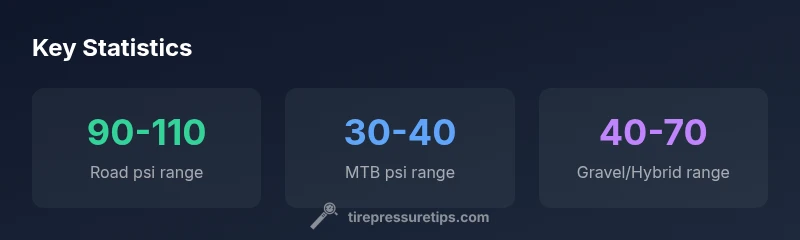
Road tires demand precision and a higher PSI baseline for efficiency, with typical values in the 90–110 psi range depending on width and rider weight. Gravel tires blend touring and off-road demands, often living in the 40–70 psi window depending on terrain and tubeless setup. Mountain bike tires emphasize grip and impact absorption, usually around 30–40 psi, though aggressive riders or rough trails may benefit from even lower pressures. Hybrids and touring bikes sit somewhere in the middle, frequently landing in the 50–75 psi range. Manufacturers sometimes provide a narrower band; those guidelines are a solid starting point, but experimentation within safe bounds can yield individualized performance benefits. When in doubt, begin near the mid-range, note how the bike feels, and adjust in small steps until you discover your preferred balance of comfort, control, and efficiency.
Common Mistakes and How to Fix Them
Common errors include overinflating for comfort and underinflating for speed, both of which degrade grip and tire life. A too-hard tire transmits road buzz into the frame, making steering less predictable; an underinflated tire increases rolling resistance and risks pinch flats. Another frequent issue is neglecting the sidewall’s published range after a tire swap or weight change. Always verify the sticker or sidewall numbers, and don’t rely on memory or a single number. Also, during seasonal temperature shifts, a quick recheck is prudent. If you ride tubeless, remember that sealant and bead seating can affect the actual pressure you want to maintain. Finally, be mindful of valve cores and stems; a loose core can cause slow air loss that fools your gauge. A structured routine—check, adjust, and recheck—eliminates most of these pitfalls.
Quick-Start Checklist for Riders
- Inspect tires for wear and damage before every ride.
- Check sidewall markings for the manufacturer’s recommended range.
- Use a reliable gauge and pump; verify readings twice.
- Inflate to the mid-to-high end of the range on smooth surfaces; lower on rough terrain.
- Consider weather and temperature when planning pressure adjustments.
- Note how the ride feels and adjust gradually over subsequent rides.
- Recheck after a tire change, rim swap, or significant weight change.
- Keep a small log of your preferred pressures for different routes and conditions.
Comparison of typical tire pressure ranges by tire type
| Tire Type | Typical Range (psi) | Notes |
|---|---|---|
| Road | 90-110 | Narrow, high-speed performance |
| Mountain | 30-40 | Grip over uneven terrain |
| Gravel | 40-70 | Balance of traction and durability |
| Hybrid/Tarming | 50-75 | Versatile for mixed surfaces |
Frequently Asked Questions
What is the recommended tire pressure for road bikes?
Road bikes require higher pressures within the tire’s stated range; width and rider weight affect the exact target. Start near the mid-point of the sidewall range and adjust by small increments based on ride feel and grip.
Road bike pressures are high; start near the mid-range and tweak by small amounts based on feel.
Can I use the same pressure for different tires?
No. Wider tires and different constructions require different pressures. Always follow the tire's sidewall range and adjust for terrain and weight.
Not all tires use the same pressure—follow the sidewall guidance and adjust for terrain.
How often should I check tire pressure?
Check before every ride if possible, and recheck after significant temperature changes or tire swaps. A monthly check is a good baseline for casual riders.
Check before each ride, especially if weather changes or you swapped tires.
How does temperature affect tire pressure?
Air expands with heat and contracts when cold, shifting tire pressure a few psi. Plan adjustments when the weather changes drastically or when riding in different elevations.
Temperature changes can shift tire pressure by a few psi; adjust accordingly.
How do I know if my tires are overinflated or underinflated?
Overinflated tires feel hard and skitter on rough surfaces; underinflated tires feel mushy and squirmy, with higher rolling resistance. Use a gauge to stay within the recommended range.
Hard ride means overinflated; soft, squirmy ride means underinflated. Check with a gauge.
“Accurate tire pressure is the simplest way to improve safety, grip, and tire life. Small, repeatable checks beat guesswork every time.”
What to Remember
- Check the tire sidewall for manufacturer guidance before riding
- Use a reliable gauge and adjust in small increments
- Higher pressures improve efficiency on smooth roads; lower pressures boost grip off-road
- Temperature and terrain change optimal pressures; recheck before rides
- Document your preferred pressures for different routes