Bike Tire Pressure Guide
Learn how to check, adjust, and maintain bike tire pressure to improve safety, grip, and efficiency. This guide covers PSI ranges, gauge types, temperature effects, and step-by-step procedures from Tire Pressure Tips.


With the right bike tire pressure, you’ll ride safer, faster, and more efficiently. This guide shows you how to determine the correct PSI for your tires, how temperature and terrain affect pressure, and how to check and adjust using a manual or digital gauge and a portable pump. You’ll learn practical steps, avoid common mistakes, and extend tire life.
Why bike tire pressure matters
Maintaining the correct bike tire pressure is more than a number on the sidewall—it's a core safety and performance factor. When you ride with the right pressure, you get better traction, smoother handling, lower rolling resistance, and fewer flats. The Tire Pressure Tips team emphasizes that tire pressure isn't a fixed value; it changes with tire width, rider weight, and riding conditions. In this section, you'll learn why pressure matters across different bikes (road, gravel, mountain), how under- and over-inflation manifest, and how to approach setting a baseline that works for most rides. We'll touch on how tire shape and rim compatibility affect how the pressure seals the tire to the rim. Understanding these basics helps you tune your setup for grip on corners, comfort on rough pavement, and efficiency on long climbs. Start with the manufacturer's recommended range on the sidewall, then adjust gradually based on your experience and local conditions. According to Tire Pressure Tips, proper bike tire pressure is a simple, effective safety and performance adjustment.
Finding the Right PSI for Your Bike
The target tire pressure varies by tire width, rider weight, and riding conditions. Start with the sidewall range printed on the tire label as your baseline. Narrow road tires typically tolerate higher pressures, while wider tires in gravel or mountain setups often run lower PSI to maximize contact with the ground. Your goal is to balance grip, rolling resistance, and flat protection. If you ride aggressively on rough pavement, you may prefer a slightly lower but still safe pressure; if you carry a heavy load or ride at high speeds, a modest increase can improve stability. Always verify that your chosen PSI keeps the tire fully inflated without pinching the tube at the rim bead. Over time, you may fine-tune by a few PSI depending on comfort and performance observations. Tire Pressure Tips analysis shows that small, deliberate adjustments yield noticeable gains in traction and efficiency.
Temperature and tire pressure: what changes when it’s cold or hot
Air expands with heat and contracts when it cools, so tire pressure changes with the environment. In cool mornings, pressure can drop a few PSI, while midday heat may raise it. Temperature shifts matter most for riders who switch between seasons or ride in climates with large diurnal temperature swings. A simple rule is to check and adjust pressure after you’ve warmed up from riding or after exposure to a long, cold night. If you store your bike in a garage with variable temperatures, check the pressure before rides rather than relying on last week’s setting. Consistent checks help prevent sudden pressure changes that might compromise traction and pinch-flat risk. Tire Pressure Tips analysis shows that aligning pressure with temperature patterns reduces risk and improves ride feel.
Front vs rear pressure: do you need different targets?
Yes—weight distribution and tire load differ between the front and rear wheels, which often justifies different targets. The rear tire typically supports more weight, which can necessitate slightly higher pressure to maintain rolling efficiency and reduce tire squirm. However, this is highly bike- and tire-specific; some setups feel better with nearly identical pressures. Check your tire manufacturer guidance and your own ride data. Small variations of a few PSI between front and rear can have a noticeable impact on cornering stability and comfort, especially on mixed surfaces. Keep in mind that changes in load, rider skill, and terrain will alter these relationships over time. The Tire Pressure Tips team recommends establishing a practical front/rear difference and testing it during routine rides.
Tools and materials you need to check tire pressure
To measure and adjust tire pressure accurately, you’ll want a few reliable tools: a gauge (digital or analog) to read PSI, a portable pump or floor pump with a built-in gauge, and valve adapters for Presta or Schrader valves. Keep a spare valve core tool if you ride with tubes. Have a small wipe or rag to clean the valve stem and the rim’s bead area, ensuring a clean seal. If you ride at extreme pressures or with specialty tires, consider a high-precision gauge and a pump with a stable gauge display. Optional items include a CO2 inflator for quick top-offs and a tire lever for quick inspections. These tools help you achieve consistent results and reduce the chance of under- or over-inflation.
Step-by-step: Checking and adjusting tire pressure (quick reference)
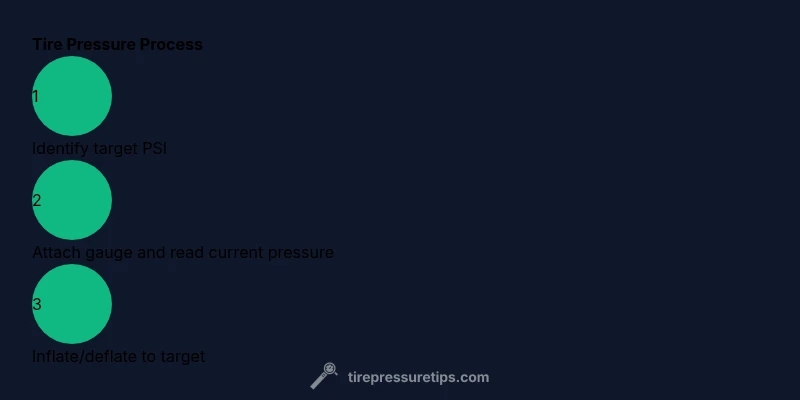
- Find your target PSI from the sidewall and rider weight/terrain. 2) Remove the valve cap, inspect the valve for any damage. 3) Attach the gauge firmly and read the current pressure. 4) If underinflated, attach the pump and bring pressure up in small increments; if overinflated, release air in small amounts. 5) Recheck with the gauge to confirm you’re within the target range. 6) Spin the wheel to ensure the rim seat is even and there are no leaks. 7) Document your target PSI and adjust if your tire wear or load changes. 8) Reassemble the valve cap. 9) Take a test ride to confirm the feel—adjust gradually as needed.
Common mistakes and how to avoid them
Many riders inflate to a single number without considering tire width or terrain. Others neglect to recheck pressure after a ride, when temperatures and road conditions have shifted. A frequent error is using a gauge that hasn’t been calibrated recently, leading to inaccurate readings. Always verify your gauge accuracy by comparing with a known reference or calibrating per the manufacturer’s instructions. Another pitfall is mixing tires with different pressure targets on the same bike; keep front and rear targets aligned with the tire design and your weight distribution. Finally, avoid storing your bike in extreme heat or cold, which can skew readings until you ride and warm the tire.
Reading gauges: digital vs analog and how to interpret readings
Digital gauges provide a quick numeric readout and are easy to use in dim light, but their accuracy depends on proper calibration and battery life. Analog gauges are budget-friendly and offer visible increments, yet readings can be harder to parse precisely. In either case, ensure the device is compatible with your valve type and that you read from a stable position, not while the tire is spinning. If you notice inconsistent readings between gauges, consider cross-checking with another device or replacing a worn gauge. Keeping a tactile feel for typical front and rear pressures also helps you detect gradual changes.
Seasonal maintenance and safety: keeping pressure consistent through the year
Seasonal changes affect tire pressure for bikes just as they do for cars. In winter, cold nights can lower PSI, while summer heat can increase it. Develop a routine to check tire pressure before every long ride or after parking in extreme temperatures. If you store your bike in a garage, keep it away from direct sunlight or heat sources that can degas or overinflate tires over time. Regular checks help prevent sudden flats and improve ride feel. Consistent adjustment and a quick pre-ride check should be part of your biking habit. The Tire Pressure Tips team recommends building a short, seasonal routine into your cycling calendar to maintain consistent performance.
Tools & Materials
- Bike tire pressure gauge (digital or analog)(Calibrated, reads in psi, compatible with your valve type)
- Portable hand pump or floor pump with gauge(Must read accurately at your target pressure)
- Valve adapters (Presta/Schrader)(Useful if you switch valve types)
- Valve core tool(Helpful for minor valve issues)
- Rag or tissue(Wipe valve stem and rim bead to ensure seal)
- Spare inner tube (optional)(Assists with quick tire checks on the road)
- CO2 inflator (optional)(For quick top-offs on the go)
Steps
Estimated time: 30-45 minutes
- 1
Identify target tire pressure
Consult the tire sidewall and rider situation to determine an initial target PSI. Consider tire width and terrain, then select a baseline to test.
Tip: Start with manufacturer range and test adjustments in small increments. - 2
Prepare the valve and gauge
Remove the valve cap, inspect the valve, and ensure your gauge is clean and compatible with your valve type.
Tip: Wipe the valve stem for a clean seal before attaching the gauge. - 3
Read current pressure
Attach the gauge firmly and read the current pressure without twisting the valve stem. If any air escapes, re-seal and re-read.
Tip: Hold the gauge steady and avoid turning the wheel while measuring. - 4
Inflate or deflate to target
If underinflated, inflate in small increments; if over, deflate gradually. Re-check after each adjustment.
Tip: Make tiny adjustments (1-2 psi at a time) to avoid overshooting. - 5
Verify seating and seal
Spin the wheel slowly to confirm the rim seats evenly and there are no leaks, especially at the valve.
Tip: Check for bead leaks by inspecting the bead area. - 6
Document and test ride
Record the target PSI and take a short test ride to feel how the tire behaves on typical surfaces.
Tip: If feel is off, fine-tune by 1-2 psi after riding a few minutes. - 7
Update baseline as needed
Seasonal, terrain, or load changes may require small PSI adjustments. Update your baseline accordingly.
Tip: Keep a notebook or phone note of your preferred targets.
Frequently Asked Questions
What is the purpose of bike tire pressure?
Bike tire pressure balances grip, rolling resistance, and puncture protection. It affects ride feel and safety on different surfaces.
Bike tire pressure balances grip and efficiency, and it affects safety on different surfaces.
Where can I find the recommended PSI for my tire?
Check the tire sidewall for a recommended range and consider rider weight and terrain when choosing a target PSI.
Check the tire sidewall for the recommended PSI range and adjust for weight and terrain.
Do I need a different PSI for road, gravel, or mountain biking?
Yes. Terrain affects grip and comfort, so you may adjust pressure within the tire’s safe range based on surface and load.
Yes, different terrains can require different pressures to optimize grip.
How often should I check bike tire pressure?
Check before each ride, especially after long storage periods or significant temperature changes. Regular checks help prevent flats.
Check before each ride, especially after storage or temperature changes.
What are common signs of under- or over-inflation?
Underinflation causes squirmy handling and pinch flats; overinflation leads to harsh ride and reduced grip. Adjust gradually.
Underinflation feels squishy; overinflation makes the ride harsh. Adjust gradually.
Is TPMS relevant to bicycles?
Most bikes don’t use TPMS; use a reliable gauge to read pressure and set the target PSI based on tire and terrain.
Most bikes don’t have TPMS; use a gauge and target PSI based on tire and terrain.
Watch Video
What to Remember
- Set target PSI from sidewall and terrain, then test and adjust.
- Temperature and load affect tire pressure; recheck before rides.
- Use a reliable gauge and pump for consistent readings.
- Front/rear pressure differences can improve stability on certain bikes.
- Develop a seasonal routine for consistent tire pressure.