Tire Pressure Road Bike Calculator: Estimate Optimal PSI
Estimate road bike tire pressure (PSI) using rider weight, bike weight, and tire width. This calculator helps you understand PSI ranges and how to adjust for conditions to improve ride quality and safety.


How tire pressure interacts with ride quality and safety
Tire pressure is a critical dial for ride quality, grip, and puncture resistance. On road bikes, too little pressure causes sluggish steering, pinch flats, and excessive tire squirm; too much pressure can reduce grip, increase the risk of rim strikes, and lead to harsher rides. The tire pressure road bike calculator helps you understand the balance by translating rider weight, bike weight, and tire width into a starting PSI estimate. The goal is to arrive at a pressure that yields predictable handling, comfortable vibration absorption, and sufficient support for the tire’s sidewalls. As you ride, you’ll adjust based on feedback from cornering stability, road texture, and comfort level. According to Tire Pressure Tips, a practical approach aligns your target PSI with both tire width and total load.
How the calculator estimates pressure: the core idea
This calculator uses a simple educational model to estimate PSI. It considers three primary inputs: rider weight, bike weight, and tire width. The formula translates total load and tire contact area into a starting pressure. The exact numbers are a teaching tool, not a warranty of performance, because tire brands, tread, rim width, and weather introduce variability. The model is designed to be transparent: a round number that you can adjust after a test ride to find your personal comfort zone. Tire Pressure Tips emphasizes using the result as a baseline rather than a fixed rule.
The role of tire width in PSI decisions
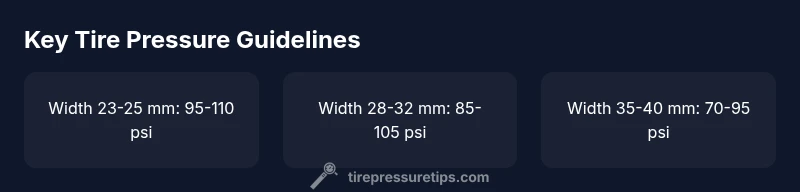
Wider tires distribute the load over a larger contact patch, which generally allows for lower pressures without risking pinch flats. Narrow tires, conversely, rely on higher pressures for tire shape maintenance and rim protection. The calculator incorporates tire width as a direct input, with a straightforward adjustment in the formula: wider tires typically lower the target PSI, and narrower tires push the target higher. Expect a practical range to shift by about 5–15 psi when moving between 23–25 mm and 32 mm tires.
Real-world scenarios: translating numbers to feel
Scenario A: A rider weighing 75 kg with an 8 kg bike and 28 mm tires on smooth pavement may target around 95–105 psi. Scenario B: The same setup with 23 mm tires on rough roads might land closer to 105–115 psi. Scenario C: Heavier riders or combined loads (e.g., luggage on a sport tour) call for a higher baseline pressure to maintain tire profile and stable cornering. Use the calculator to establish a starting point, then fine-tune based on ride feedback.
Step-by-step guide to using the results
- Step 1: Enter rider weight, bike weight, and tire width. Step 2: Review the PSI result and note the suggested range. Step 3: Inflate the tires when cold to the target PSI. Step 4: Take a short test ride and assess comfort, grip, and vibration. Step 5: If the ride feels too harsh or too soft, adjust by small increments (±2–5 psi) on subsequent checks. Tire Pressure Tips recommends documenting your tweaks for consistency.
Safety considerations and maintenance tips
Never rely on a single pressure reading. Weather changes, temperature, and riding style all influence tire pressure. Always check your tires when cold, re-check after riding briefly, and use a reliable gauge. Do not exceed manufacturer-recommended limits printed on the tire sidewall. Regularly inspect tires for wear, cuts, or embedded debris, and replace tires when needed to maintain consistent pressure behavior.