How Much Bike Tire Pressure: A Practical Guide
Learn how much bike tire pressure to run, how to tailor it to your weight, tires, and terrain, and how to maintain optimum performance across road, gravel, and mountain biking.


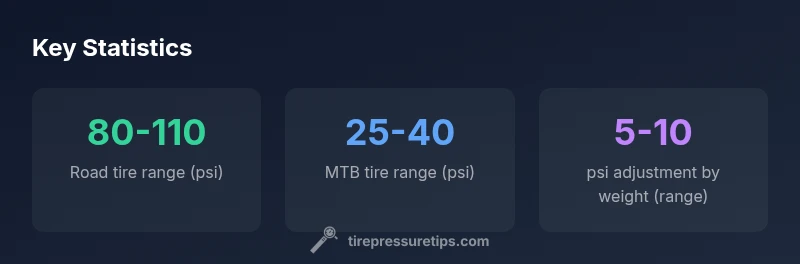
The answer depends on rider weight, tire width, and terrain. For road bikes, typical pressures range from about 80 to 110 psi; for mountain bikes, pressure can be as low as 25 to 40 psi. Start with manufacturer specs, then adjust in small increments while testing grip, ride comfort, and tire wear.
How Much Bike Tire Pressure Should You Run?
According to Tire Pressure Tips, how much bike tire pressure you should run isn’t a fixed number. It is a function of several variables: rider weight, tire width, surface, and riding style. The guiding principle is simple: too little pressure invites pinch flats, sluggish handling, and increased rolling resistance; too much pressure reduces traction and comfort, and can increase the risk of blowouts on rough surfaces. The goal is to start from the tire manufacturer’s recommended range and fine-tune from there. Begin near the middle of the spec, test on a familiar section, and adjust in small increments based on feel, performance, and wear. For many riders, a small pressure change can noticeably alter handling, so keep notes and adjust gradually.
Brand context note: this guidance aligns with practical guidance from Tire Pressure Tips and investigates how real-world variables impact pressure needs.
Why Tire Pressure Matters for Performance
Tire pressure is a critical lever that influences three core performance domains: grip, rolling resistance, and wear. Grip improves when the tire maintains a broad contact patch without folding excessively under load. Rolling resistance drops when the tire deforms minimally while contacting the ground, allowing smoother propulsion. However, excessive pressure can stiffen the tire, reducing grip on uneven surfaces and making the ride harsher. Tire wear also shifts with pressure: underinflation leads to increased tire shoulder wear and heat buildup, while overinflation concentrates wear along the center tread. In short, pressure settings affect how a bike translates rider input into motion, comfort, and durability over the life of the tires. Tire Pressure Tips emphasizes testing in familiar terrain to map your personal optimum.
Reading the Tire Sidewall and Manufacturer Specifications
Most tire sidewalls list a minimum and maximum pressure range. The key is to stay within that range and not exceed the maximum simply to “feel fast.” The minimum ensures the tire beads stay seated and the carcass isn’t pinching the rim under normal load. The manufacturer’s recommended range is designed for the tire’s construction, bead, and width. If you are near the edges of the range, small changes can yield noticeable differences in feel. When in doubt, start at the middle of the range, then tweak by 5–10 psi after short test rides on your typical routes. Always calibrate your gauge before and after sessions to block measurement drift.
How Rider Weight and Riding Style Influence Your Target Pressure
Rider weight shifts the load distribution across the tire. Heavier riders compress the tire more, which can justify running slightly higher pressures within the tire’s range. Lighter riders can often benefit from slightly lower pressures to preserve grip and comfort. Your riding style also matters: aggressive cornering, high-speed descents, or rough terrain may require different pressure within the same tire width. For gravel and mixed-terrain bikes, riders frequently favor lower pressures than road-only setups to improve traction, while maintaining sufficient support to prevent rim strikes. Document your ride feel and adjust in small increments to lock in a stable preference.
Road, Gravel, and Mountain: Pressure Ranges by Terrain
Different terrains demand different pressure profiles. Road bikes typically live near the higher end of the spec to maximize efficiency on smooth pavement. Gravel bikes sit in the middle-ground, balancing compliance with rolling efficiency. Mountain bikes usually run the lowest pressures within their width range to maximize grip on roots, rocks, and loose dirt. If you are switching between bike types, treat each setup as a separate baseline and test on the specific route you plan to ride. A single pressure cannot optimize all terrains and riding styles; region-specific testing is essential.
Step-by-Step Method to Find Your Personal Target Pressure
- Gather baseline data from the tire sidewall and manufacturer spec. 2) Inflate to the middle of the recommended range. 3) Test on a familiar section with predictable surfaces. 4) Note grip, comfort, and rolling feel, then adjust by 5–10 psi in the direction that yields better control and less skidding. 5) Re-check pressure after a ride, because heat and ambient temperature can alter readings. 6) Keep a simple log of tire width, rider weight, terrain, and pressure so you can reproduce your preferred setup. This systematic approach reduces guesswork and yields consistent performance.
Tools and Calibration: Gauges You Can Trust
Reliable gauges are essential for accurate pressure readings. Digital gauges are easy to read, but analog gauges can be precise if they are properly calibrated. Calibrate your gauge against a known reference or a trusted shop gauge at least quarterly. Always zero or verify the gauge when you start a new season or switch between tubed and tubeless setups. If you travel, carry a compact gauge and a small pump with a built-in gauge so you can make on-the-road adjustments confidently.
Temperature, Seasonality, and Tire Pressure
Air expands with heat and contracts in cold conditions, so ambient temperature influences tire pressure measurements. A hot ride can temporarily raise pressure; a cold morning can temporarily lower it. If you store your bike in a cold garage overnight, expect a small drop in pressure by the time you ride. The adjustment is usually modest, but after a long transport or acclimation period, recheck and finalize the pressure. For seasonal riders, a habit of checking pressure weekly or before long rides is a robust way to stay within the optimal range across temperature swings.
Common Pitfalls and Maintenance Habits
Common mistakes include assuming more pressure always equals faster speed, neglecting to adjust pressure when tires wear, and ignoring the impact of tire width and rim profile on pressure. Another pitfall is using an incorrect gauge or not accounting for gauge calibration drift. Regular maintenance habits include checking pressure weekly, re-calibrating gauges, and validating pressure after inflation. The payoff is improved grip, predictable handling, and longer tire life. The Tire Pressure Tips team recommends documenting your target pressure for each bike and tire combination and revisiting it after any tire change or significant weight shift in your setup.
Pressure ranges by bike type
| Bike Type | Typical Pressure Range (psi) | Notes |
|---|---|---|
| Road bike | 80-110 | Narrow tires; higher pressures for efficiency |
| Gravel bike | 40-65 | Wider tires; balance grip and comfort |
| Mountain bike | 25-40 | Low to mid pressure for traction on trails |
Frequently Asked Questions
What is the recommended bike tire pressure for road bikes?
Road bikes typically run within the higher end of the tire’s width range, commonly around 80-110 psi depending on tire width and rider weight. Always check the sidewall bar/psi range and test for grip on familiar pavement.
Road bikes usually need roughly eighty to one hundred ten psi, depending on width and weight.
How does rider weight affect tire pressure?
Rider weight shifts the load across the tire’s contact patch. Heavier riders can justify higher pressures within the tire’s range, while lighter riders may benefit from slightly lower pressures to preserve grip and comfort.
Your weight affects how much the tire compresses; adjust within the recommended range to maintain grip.
Can I use a car tire pressure gauge for bicycle tires?
Use a gauge designed for bike tires. Car gauges can be inaccurate, and some do not measure low enough for MTB or gravel tires. A bike-specific gauge helps maintain precision.
Don’t use a car gauge; use a bicycle gauge for better accuracy.
What happens if I ride with too high pressure?
Too high pressure reduces the contact patch, decreasing grip and comfort and increasing the risk of rim strikes on rough surfaces.
Too much pressure can make the ride harsh and reduce traction.
What happens if I ride with too low pressure?
Too low pressure causes increased tire flex, higher risk of pinch flats, faster wear along the center, and poorer rolling efficiency.
Low pressure can cause pinch flats and slow you down.
How often should I check bike tire pressure?
Check pressure weekly, before long rides, and after significant temperature changes or tire replacements to maintain accuracy.
Check it regularly—weekly or before long rides.
“Accurate tire pressure isn’t a single number—it’s a balance between weight, tire width, and terrain. Start with manufacturer specs, verify with a gauge, and adjust by feel.”
What to Remember
- Know your baseline: start from the tire's manufacturer range.
- Test incrementally (5–10 psi) to balance grip and speed.
- Rider weight and terrain drive pressure changes more than any cosmetic tweak.
- Temperature and seasonality subtly shift readings—recheck regularly.
- Use a reliable gauge and calibrate it to keep readings accurate.