Most Air Pressure: A Practical Guide to Tire PSI
A practical guide to tire pressure that debunks the idea of chasing the 'most air pressure' and shows how to locate, measure, and maintain the recommended PSI for safety, tire wear, and fuel efficiency.


To get the most reliable tire performance, follow your vehicle’s recommended tire pressure rather than chasing the highest possible psi. According to Tire Pressure Tips, the maximum safe pressure is listed on the tire sidewall and the vehicle placard, and weather, load, and driving style all affect real pressure. Measure cold tires and adjust to the recommended PSI for best wear, safety, and fuel efficiency.
Understanding Why People Talk About 'Most Air Pressure' and What It Really Means
Many drivers wonder about the 'most air pressure' for their tires. The truth is, there isn't a universal 'most' that applies to safety and performance. The goal is to match the vehicle's recommended PSI for each tire, which balances handling, wear, fuel economy, and ride comfort. According to Tire Pressure Tips, the maximum safe pressure printed on the tire sidewall is not a target you should routinely exceed; it simply marks the limit beyond which a tire could be at risk under certain conditions. Real-world pressure fluctuates with temperature, load, and driving style, so you should aim for the recommended cold PSI from the door placard or owner's manual and adjust gradually if you frequently carry heavy loads or drive in extreme heat. Tire pressure is a dynamic parameter, not a fixed badge of performance. The term 'most air pressure' can be misleading; focusing on the right PSI leads to safer handling and longer tire life.
How to Find Your Vehicle's Recommended Tire Pressure
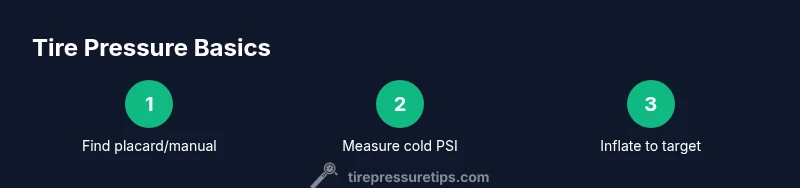
The recommended tire pressure for your vehicle is shown on a placard located on the door jamb of the driver's side, and in the owner's manual. Always read the values for cold tires; driving heats tires and increases PSI, skewing readings. Use the placard's per-tire values for front and rear when available. If your car has run-flat or staggered tires, check the manufacturer's guidance for differences between tires. If you can't locate the placard, contact the manufacturer or dealership. By starting with the correct target, you avoid chasing 'more air' that can harm wear and handling.
Distinguishing Maximum, Recommended, and Actual PSI
Tires show three kinds of pressures you will encounter. The maximum PSI is printed on the tire sidewall and marks the upper limit; it is not a goal for daily inflation. The recommended PSI comes from the vehicle placard or manual and should be used for normal driving. Actual PSI is what you measure with a gauge when tires are cold. Temperature, driving history, and load will shift the numbers, so you should adjust toward the recommended value rather than the maximum.
Tools and Method: How to Measure Tire Pressure Accurately
To measure accurately, use a reliable gauge (digital is often simplest) and measure when tires are cold. Remove the valve stem cap, press the gauge onto the valve, and note the reading. If your pressure is below the target, add air in small increments and re-check. If it’s above, release air until you reach the target. A portable inflator or gas-station air pump makes this easier, but a good hand pump can work too.
Inflating Safely: When and How to Adjust Based on Conditions
In practice, you’ll adjust tire pressure when you carry heavy loads, tow trailers, or travel in extreme heat or cold. Heavier loads increase tire pressure demand, while hot weather can cause PSI to rise during operation. Always return to the cold PSI after you’ve moved the vehicle and tires cooled, or you risk over-inflation. If your tires wear more on the edges or show bulges, revisit the target PSI and consider a professional inspection.
Regular Tire Pressure Maintenance: A Simple Routine
Create a routine to check tire pressure monthly and before long trips. Start by finding the correct PSI, measure all four tires when cold, and adjust as needed. Recheck the readings after inflation and re-tighten the valve caps. Keep a small gauge in your glove box so you can verify readings on the road, and record the numbers for future reference.
Common Misconceptions About Air Pressure
A common myth is that higher pressure always improves fuel economy or performance. In reality, over-inflation reduces the contact patch and can cause uneven wear, while under-inflation hurts handling and increases heat buildup. Another misconception is that the maximum sidewall PSI is the target; this is a safety limit, not a goal. Finally, some drivers rely solely on TPMS; while helpful, TPMS doesn’t replace manual checks, especially after tire repairs or rotation.
Using TPMS and Visual Checks as a Safety Net
TPMS provides real-time alerts when a tire falls below the threshold, but it won’t catch gradual slow leaks. Pair TPMS with regular visual inspections for tread wear, sidewall damage, and valve condition. If you notice a quick pressure drop or a tire that looks visibly underinflated, pull over safely and verify with a gauge. This combined approach helps ensure you’re always operating with safe, efficient tire pressure.
Troubleshooting Readings That Don’t Match or Drift Over Time
If your gauges give inconsistent readings between checkups, ensure you’re using the same gauge type and the tire is cold when you measure. Calibrate your gauge if you suspect inaccuracy, and consider replacing a worn-out gauge. Also, note that seasonal temperature shifts can cause readings to drift, so adjust your routine and check more often during temperature extremes.
Real-World Scenarios: Load, Temperature, and Tire Wear
Think through scenarios you might regularly encounter: daily city driving with a light load, or weekend trips with passengers and luggage. In each case, match the PSI to the placard recommendations and recheck after changes in load or ambient temperature. Remember: the right PSI improves safety, tire life, and fuel economy, while chasing the 'most air pressure' can undermine these benefits.
Tools & Materials
- Tire pressure gauge (digital preferred)(Calibrate regularly; use the gauge before inflating.)
- Portable air compressor or air pump(Access to steady airflow to adjust PSI.)
- Vehicle owner's manual or door placard(Locate the exact recommended PSI for each tire.)
- Soapy water for leak detection(Optional for checking bead leaks after repair.)
Steps
Estimated time: 20-30 minutes
- 1
Gather tools and locate the recommended PSI
Collect your gauge, inflator, and the placard or manual to determine the target cold PSI for each tire. Confirm there is no damage to tires or valves before starting.
Tip: Keep the placard handy or photograph it for quick reference. - 2
Park on a level surface and let tires cool
Park with the vehicle on a flat surface and turn off the engine. If possible, allow tires to cool for several hours so readings reflect cold PSI rather than heat-expansion effects.
Tip: If you’ve just returned from a drive, wait until tires are cold to measure. - 3
Check current tire PSI with a reliable gauge
Remove the valve cap, press the gauge onto the valve stem, and record the exact reading for each tire. Do this for all four tires and the spare if applicable.
Tip: Take notes or snap a photo of readings for your records. - 4
Inflate tires to the recommended PSI
If a tire is below target, add air in small increments, pausing to re-check after each addition. Stop once the gauge shows the target cold PSI.
Tip: Avoid topping off to the max; gradual adjustments reduce overshoot. - 5
Recheck PSI after inflation
After inflating, re-measure all tires to confirm they’re at the target PSI. Ensure the valve caps are tightened back on securely.
Tip: A loose valve cap can cause slow leaks over time. - 6
Check spare tire and equipment
If your spare is a full-size tire, measure it as well and keep the inflation kit ready in case of an emergency.
Tip: Spare pressure matters for immediate readiness, not just routine wear. - 7
Document readings and set a maintenance plan
Record tire pressures and schedule regular checks (monthly or before long trips). Adjust the routine for seasonal temperature changes.
Tip: Set a calendar reminder to avoid skipping checks.
Frequently Asked Questions
What does chasing the 'most air pressure' really mean for tires?
Chasing the highest possible PSI is not a safety or performance target. The correct approach is to match the manufacturer’s recommended PSI for each tire, taking into account temperature, load, and driving conditions.
Chasing the highest PSI isn’t the goal; use the recommended PSI per tire.
How often should I check my tire pressure?
Check tire pressure at least once a month and before long trips. Also check after getting a new tire or experiencing temperature changes.
Check your tires monthly and before long trips.
What causes tire pressure to drop quickly?
Slow leaks, punctures, naturally porous seals, and temperature changes can cause pressure to drop. If you notice a rapid drop, inspect for leaks or damage.
Leaks or temperature shifts can drop tire pressure fast.
Can TPMS replace manual tire pressure checks?
TPMS provides alerts when pressure falls below a threshold, but it does not replace manual checks, which measure exact PSI and help detect leaks.
TPMS helps, but you still need to manually check PSI.
What should I do if my gauge reads differently from the TPMS?
Trust the gauge when tires are cold. If readings diverge, recheck with the gauge, inspect for leaks, and consider professional service if the discrepancy continues.
If readings don’t match, double-check with your gauge and consult a pro if needed.
Is overinflating dangerous?
Yes. Overinflation can cause a harsher ride and uneven tire wear, and it increases the risk of damage from road debris.
Overinflating is risky; keep to the recommended PSI.
Should I check pressure in hot weather?
Check when tires are cold for accuracy; hot weather can raise PSI, leading to overinflation if measured immediately after driving.
Measure when cold to avoid inflating too much in heat.
What to Remember
- Inflate to the manufacturer’s recommended PSI, not the max sidewall value.
- Measure tires when cold for accurate readings.
- Use a reliable gauge and recheck after inflating.
- Check all four tires and the spare regularly.
- Temperature and load affect PSI; adjust accordingly.