Winter Tire Pressure Guide: Inflate Right in Cold Weather
Learn how to manage more tire pressure in winter by inflating to the manufacturer’s cold PSI, checking readings when tires are cold, and using TPMS guidance for safe driving on cold roads.


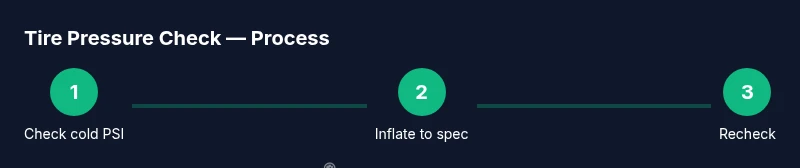
Steps to manage winter tire pressure: 1) Check cold-pressure using a reliable gauge before driving. 2) Inflate to your car maker’s recommended cold PSI (found on the door jamb sticker). 3) Recheck after a short drive if weather has changed dramatically. 4) Monitor TPMS alerts and adjust as temperatures swing.
Why winter temperature affects tire pressure
In winter, the air inside your tires behaves like the air around you: it gets colder and contracts. That means even if you haven't driven, the gauge on the tire can show a lower pressure than the manufacturer intended. The door jamb sticker on your vehicle specifies the recommended cold inflation pressure, and that figure is chosen for optimal handling, safety, and fuel economy when the tires are cold. Because outdoor temperatures can swing dramatically, especially in morning lows and evening rapid drops, you may notice your tires start to read underinflated as the thermometer drops. The phrase more tire pressure in winter is a common point of confusion; the key is not to chase a fixed winter value but to maintain the cold-inflation pressure your vehicle requires. Before you drive in cold weather, take a moment to check all four tires using a reliable gauge, and confirm your readings are consistent across wheels. According to Tire Pressure Tips, temperature-driven underinflation is common in winter, so frequent checks help.
Tools & Materials
- digital tire pressure gauge(Calibrated to read in psi; prefer a gauge with a digital readout for accuracy.)
- air compressor or portable inflator(Must work with your gauge and be able to reach the door-jamb pressures.)
- vehicle owner’s manual and door jamb sticker(Location of the recommended cold psi; useful for all weather conditions.)
- cloth or rag(Wipe valve stems and caps for an accurate reading.)
- notebook or mobile note app(Record readings to track changes over weeks and seasons.)
Steps
Estimated time: 45-60 minutes
- 1
Gather tools and locate the recommended cold PSI
Pull together your gauge, inflator, and the car’s door jamb sticker or owner’s manual. The cold PSI is the target you should aim for when the tires are cold—not after a drive. This baseline is what winter conditions are tested against.
Tip: Having the exact sticker value prevents guesswork in fluctuating winter temps. - 2
Check all tires while they’re cold
Park in a shaded, level area and wait at least three hours after driving before checking. Remove the valve caps and press the gauge onto each valve stem firmly to get a stable reading.
Tip: If you drove recently, wait until tires cool to re-check. - 3
Inflate to the recommended cold PSI
If a tire reads below the cold PSI, fill it to the vehicle’s specified value shown on the placard. Do not exceed the tire’s maximum inflation printed on the sidewall.
Tip: Inflating beyond the recommended cold PSI can reduce traction and ride quality. - 4
Recheck all tires after inflating
After inflating, replace valve caps, drive a short distance if needed, and recheck to confirm all tires are at the target pressure. Temperature can still influence readings, so periodic checks are wise in winter.
Tip: Even small variations matter for fuel economy and handling. - 5
Monitor TPMS and seasonal changes
TPMS alerts help you catch pressure drift due to temperature swings. Use the gauge as a cross-check for the readings shown by TPMS, especially after cold snaps.
Tip: Do not rely solely on TPMS; physical gauge readings are essential in extreme cold. - 6
Repeat checks as temperatures shift
In winter, ambient temperatures can swing by day. Check pressures at least weekly during severe cold or when you notice changes in handling.
Tip: Regular checks build a habit that keeps you safer on icy roads.
Frequently Asked Questions
Why does winter affect tire pressure, and should I add more PSI?
Winter cools the air inside tires, causing pressure to drop. Rather than permanently increasing PSI, inflate to the vehicle’s cold-spec and recheck as temperatures change. If you consistently see underinflation, investigate leaks or load changes.
Winter makes tire air contract, so readings drop. Stick to the cold-spec fill and recheck as temps change.
Should I inflate to a higher PSI in cold weather?
No. You should inflate to the car maker’s recommended cold PSI. A higher permanent target can reduce traction and cause uneven wear. Use a gauge and TPMS to guide adjustments.
Don’t override the factory PSI; use the gauge and TPMS to guide winter adjustments.
How often should I check tire pressure in winter?
Check at least weekly during very cold spells, and before long trips. Temperature swings can quickly change readings, so regular checks help maintain safe handling.
Check once a week in winter, or before long trips when it’s cold.
What if TPMS shows a low-pressure warning in winter?
Pause and check all tires with a gauge when cold. If any tire is below the cold PSI, inflate to spec and recheck. Persistent warnings deserve a professional inspection.
If TPMS lights up, check the tires with a gauge first and then adjust to the recommended cold PSI.
Should I check the spare tire pressure in winter?
Yes. Check the spare as well, since a low or high spare can affect your readiness in a roadside emergency. Inflate to the same cold PSI when possible.
Don’t forget the spare; keep it at the right pressure too.
Watch Video
What to Remember
- Inflate to the manufacturer’s cold PSI, not a warm-reading value.
- Check tires when cold and in stable, low-temperature conditions.
- Use TPMS readings as a guide, but verify with a physical gauge.
- Do not exceed the tire’s maximum inflation printed on the sidewall.
- Recheck pressures regularly as winter temperatures fluctuate.