How to Check Tire Pressure in Your Car: A Practical Guide
Learn how to check, adjust, and maintain correct tire pressure for safer driving. This step-by-step guide covers gauges, target psi, TPMS tips, seasonal effects, and maintenance routines.


This quick answer shows how to tire pressure car safely: check each tire with a gauge, inflate to the vehicle’s recommended psi, and verify readings with the TPMS. You’ll learn which tools you need, how to interpret the target pressures, and steps to take if readings don’t match the label.
Why Tire Pressure Matters for Safety and Efficiency
Maintaining proper tire pressure is a basic, high-impact part of car maintenance. Correct tire pressure improves safety by ensuring optimal handling, braking, and cornering response. It also enhances fuel efficiency, reduces irregular tire wear, and helps protect the TPMS (tire pressure monitoring system) from unnecessary alerts. According to Tire Pressure Tips, staying on target with your vehicle’s recommended pressures supports predictable performance across driving conditions. By taking a few minutes each month to check pressures when tires are cold, you can avoid costs from premature tire wear and reduced gas mileage, while keeping yourself and others safer on the road.
Another practical reason to monitor pressure is comfort and ride quality. Under-inflated tires tend to feel soft, squirmy, and slower to react to steering inputs. Over-inflated tires can make the ride feel harsher and may increase the risk of damage from road hazards. A consistent, gentle maintenance routine is a small investment that yields big returns in safety and longevity.
If you use a TPMS, remember that sensors reflect pressure trends, not a precise measurement at the moment you glance at them. The Tire Pressure Tips team notes that a gauge measurement taken when tires are cold provides the most accurate target comparison, and that TPMS alerts should be treated as a guide when a tire begins to diverge from the label values. If you’re unsure, start with a trusted gauge and compare results across all four tires for a complete picture.
How to Measure Tire Pressure Accurately
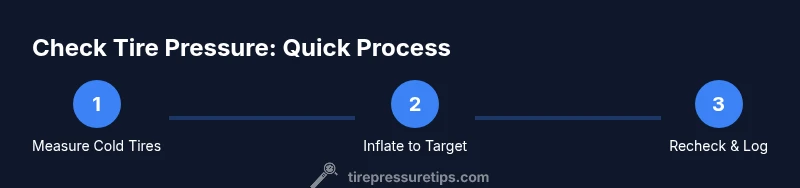
Getting an accurate reading starts with a clean, dry gauge and tires that are cold. Begin by locating the valve stem on each tire, removing the valve cap, and placing the gauge on the stem firmly. Record the reading, then replace the cap. Repeat on every tire, including the spare if your vehicle requires it. If the reading is below the recommended target, inflate the tire using an air compressor until you reach the target. If it’s above target, carefully deflate in small increments until you hit the mark. Always compare readings against the vehicle’s door placard or the owner’s manual.
When using a digital gauge, read the display once the seal is tight and the gauge beeps or displays a stable number. An analog gauge may require a quick flush on the stem to ensure the needle settles. In both cases, recheck after inflation to confirm accuracy. For best results, perform measurements in a shaded, cool area and avoid inflating in direct sun or on a very hot wheel surface, which can skew readings. The goal is to end with the tires within the manufacturer’s specified range so tread life and handling stay optimal.
Vehicle-Specific Tire Pressure Targets
Your vehicle’s correct tire pressure is not a guess; it’s a precise target published by the manufacturer. Locate the recommended tire pressure on the door jamb placard on the driver’s side, or in the owner’s manual. Some vehicles have different targets for front and rear tires, and the spare tire may have its own guideline. Note that the labeled target is typically given as PSI (pounds per square inch) values for both front and rear tires when cold.
Always reference the label rather than relying on feel or appearance. If you’ve recently changed tire sizes or swapped wheels, recheck the targets because the new setup may require a different pressure. If you share your vehicle’s year, make, and model with a tire professional, they can confirm the exact ranges for your configuration. Remember that seasonal temperature changes can influence readings, so a quick recheck during temperature shifts is wise.
Using TPMS and Readings
Tire Pressure Monitoring Systems (TPMS) act as a safety net by warning you when a tire’s pressure deviates enough to affect performance. A TPMS alert should prompt you to check pressures with a gauge even if a tire appears normal visually. If the TPMS light comes on, first check all four tires cold, refilling as needed to bring them within the target range. If one tire consistently reads low while others are in-range, inspect for leaks, punctures, or faulty valve stems.
Remember that TPMS can be triggered by rapid temperature changes or a temporary drop in pressure due to minor leaks. Do not rely solely on the TPMS; use a gauge to validate measurements. If readings remain inconsistent after inflation, consult a professional to inspect the TPMS sensors and ensure they’re calibrated correctly.
Common Mistakes and Troubleshooting
Common mistakes include ignoring the cold-tire rule, using inaccurate gauges, and inflating to a rough estimate instead of the label. Always start with a cold tire reading, then adjust to the manufacturer’s target. If a tire reads low even after inflation, inspect the valve stem for damage or leaks around the bead area. A small puncture or slow leak may require professional repair rather than DIY inflating. If a tire shows rapid pressure loss, there could be a puncture or valve issue that needs timely attention to prevent compromised handling and tire failure.
Tips from Tire Pressure Tips emphasize consistency: measure regularly, keep a small gauge in your glove box, and record your readings to spot trends over time. Safety first means stopping if you notice abnormal wear, bulges, or a tire that won’t hold air after repeated inflations.
Tools & Materials
- Tire pressure gauge(Choose digital or analog. Ensure it’s calibrated and easy to read.)
- Owner’s manual or door placard location(Used to confirm the exact target psi for your tires.)
- Air compressor or access to an inflation station(Needed to adjust pressure to the target. Some stations provide built-in gauges.)
- Valve cap removal tool (optional)(Not strictly necessary; a thumbnail works, but a tool reduces contact with dirt.)
- Notebook or digital log(Helpful for tracking readings over time and spotting leaks.)
- Rag or cleaning cloth(Wipe the valve stem and gauge ports for accurate contact.)
Steps
Estimated time: 30-45 minutes
- 1
Gather your tools
Collect a reliable tire pressure gauge, your vehicle’s target psi from the placard or manual, an air source, and a way to log readings. Ensure the gauge is calibrated and functioning before starting. This upfront check saves time and prevents guessing.
Tip: Keeping a gauge in the glove box makes on-the-spot checks quick and consistent. - 2
Find the target pressures
Locate the official tire pressure targets for your car (front and rear). Read the information on the door placard or in the owner’s manual. Note whether there are separate numbers for the front vs rear tires and apply the correct target to each wheel.
Tip: If you swap tire types, confirm the new targets—they can differ from factory specs. - 3
Check tires when cold
Do not measure after a long drive or immediately after driving. Allow tires to cool for at least three hours or until the ambient temperature stabilizes. A hot tire reads higher and will mislead your inflation.
Tip: If you must check after a drive, wait for tires to cool or note the drive-time context when comparing to targets. - 4
Take readings with the gauge
Remove the valve cap, position the gauge onto the valve stem firmly, and read the display. Record the numbers for all four tires. Replace the caps to keep dust out and prevent air leaks.
Tip: If the gauge slips or leaks, re-seat and recheck to confirm the read. - 5
Inflate or deflate to target
If a tire is under target, inflate in small increments until you reach the correct psi. If it’s over target, let air out in small amounts, then recheck. Make sure to recheck after adjusting to ensure accuracy.
Tip: Avoid overfilling beyond the target; small adjustments go a long way. - 6
Recheck and record
After adjustments, recheck all tires to confirm consistency. Log dates, readings, and any notes about leaks or weather effects. This habit helps you track changes over time.
Tip: A simple log helps you notice gradual pressure losses before they become problems.
Frequently Asked Questions
What is the best time to check tire pressure?
Check tire pressure when the tires are cold, ideally after they’ve cooled for several hours. This ensures readings aren’t inflated by recent driving heat.
Check tire pressure when the tires are cold, ideally after they’ve cooled for several hours.
How often should I check tire pressure?
Aim to check tire pressure at least once a month and before long trips. Temperature changes or recent tire maintenance are good reasons to check more often.
Check tire pressure at least once a month and before long trips.
Can TPMS readings be wrong?
Yes, TPMS readings can be off due to sensor issues or calibration drift. Always verify with a hand-held gauge to confirm actual pressure.
TPMS readings can be off; verify with a gauge.
What happens if tire pressure is too high?
Over-inflation can reduce traction, cause uneven wear, and increase the risk of damage from road hazards. Stay within the manufacturer’s specified range.
Too high PSI reduces traction and can cause uneven wear.
What should I do about a suspected leak?
If you notice slow loss of air, inspect the valve stem, tire bead, and tire surface for punctures or damage. Seek professional repair when needed.
If you suspect a leak, inspect for damage and have it repaired if needed.
Watch Video
What to Remember
- Check tires when cold to get accurate readings
- Use the vehicle’s target psi on the placard
- TPMS is a guide; verify with a gauge
- Log readings to spot gradual leaks
- Repair or replace damaged components promptly