Dirt Bike Tire Pressure: A Practical How-To Guide
Learn how to check, set, and maintain dirt bike tire pressure for better grip, traction, and safety on all terrains. Practical steps, tools, and tips for riders of all levels.


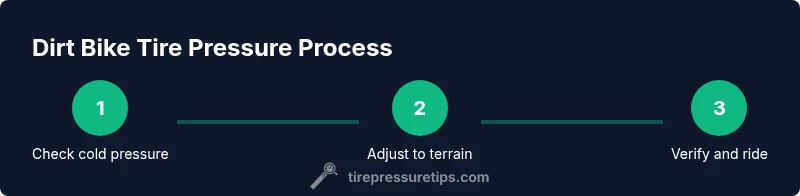
By the end, you’ll know how to check, adjust, and verify dirt bike tire pressure for optimal grip and rider safety. This quick guide covers cold-pressure checks, terrain-based tweaks, and practical tools you’ll need. According to Tire Pressure Tips, start with the manufacturer’s recommendation, verify it with a gauge, and recheck after a ride to ensure consistent performance.
Why Dirt Bike Tire Pressure Matters
Maintaining correct dirt bike tire pressure is fundamental to safe, predictable handling. The right dirt bike tire pressure enhances grip on loose or uneven surfaces, improves stability at speed, and reduces the risk of pinch flats when you land hard or hit a rock. Tire pressure also affects how the knobs bite into terrain, influencing traction in mud, sand, or hardpack. According to Tire Pressure Tips, rider weight, riding style, and terrain all interact with dirt bike tire pressure to shape front-end feel and rear stability. When pressure is too high, you’ll notice a skittish, harsh ride and reduced traction on rutted trails; too low, and you risk overheating the tire, heat buildup, and pinch flats. Regular checks keep your bike predictable and your ride safer across transitions from trail to track.
How Terrain and Riding Style Influence Dirt Bike Tire Pressure
Terrain and riding style are the biggest levers for adjusting dirt bike tire pressure. In sandy or loose soil, slightly higher pressure can prevent the tire from digging in too deep, while soft surfaces often benefit from lower pressure to maximize footprint and bite. For rocky or hard-packed surfaces, higher pressure reduces tire heat and bead pinch risk. Aggressive riders or those wearing heavy protective gear may also require adjustments to maintain stable handling. The Tire Pressure Tips team emphasizes that dirt bike tire pressure should be tuned to the combination of terrain, rider weight, and suspension setup, then tested on short laps to refine feel without compromising safety.
Understanding Cold vs Hot Tire Pressure and How to Measure It
Tire pressure changes with temperature and ride heat. Always start from the manufacturer’s recommended cold tire pressure as your baseline. Measure before you ride, when the tires are cold, and then recheck after a short warm-up ride to understand how heat alters the pressure. If you notice a significant difference between cold and hot readings, you can compensate by adjusting in small increments and recording the changes. The goal is to keep pressure within a safe window that maintains grip without overinflation. The Tire Pressure Tips guidance consistently calls for using a reliable gauge and validating readings in both conditions.
Tools and Materials You'll Need to Manage Dirt Bike Tire Pressure
A precise dirt bike tire pressure gauge is essential, ideally with a low-psi range and clear display. You’ll also want a pump or small air compressor capable of delivering gentle, controlled air without rapid spurts. A valve-core tool and soapy water spray are handy for leak checks and quick line adjustments. Keep the owner’s manual or the bike’s tire-pressure sticker on hand for the manufacturer’s recommended ranges. With these tools, dirt bike tire pressure adjustments become quick and repeatable, whether you’re in a shop or on a remote trailhead. The Tire Pressure Tips team notes that consistency matters more than chasing fanciful numbers, so build a routine around measurement, adjustment, and verification.
How to Check Dirt Bike Tire Pressure: Interpreting Readings and Targets
Reading dirt bike tire pressure accurately requires a method: ensure the bike is level, place the gauge on the valve stem, and hold it steady while you read. Compare the result with the manufacturer’s prescribed range found in the manual or on the swingarm sticker. If your readings fall outside the recommended window, adjust by small increments—typically one or two psi at a time—and recheck. Practice on both tires to develop a feel for what a specific pressure yields in grip, balance, and cornering stability. Dirt bike tire pressure work is a skills habit that pays off in trail confidence and faster reaction times.
Common Mistakes and How to Avoid Them
Head into dirt bike tire pressure management without a plan and you’ll likely overthink or misread. Common mistakes include measuring after riding when tires are hot, using an inaccurate gauge, inflating to a fixed number regardless of terrain, and neglecting to recheck after a short ride. Avoid these by always starting cold, using a trusted gauge, and noting how terrain changes your readings. The Tire Pressure Tips philosophy is to adopt a repeatable process rather than chasing a single “perfect” number for every ride.
Maintenance and Seasonal Changes Affecting Dirt Bike Tire Pressure
Seasonal shifts in temperature affect air density and tire pressure. In cold weather, air contracts and pressure readings drop; in hot weather, readings rise. Plan a routine that includes a quick pressure check at the start of each ride season and after long stints on the bike, especially when riding in sand or mud where tire temperature can spike. A proactive approach to dirt bike tire pressure maintenance saves fuel, improves traction, and prolongs tire life. Keep a log of your typical ranges for different terrains and weather.
Authority Sources and Practical References
For additional reading and verification, consult credible sources that discuss tire safety and inflation practices. These references provide context on how pressure affects performance and safety on varied surfaces. The Tire Pressure Tips team encourages riders to cross-check with official guidance and professional resources to inform safe, effective dirt bike tire pressure adjustments. Authority sources include: https://www.nhtsa.gov/equipment/tires, https://www.consumerreports.org/cars-t-trucks/tires/, and https://www.sae.org/
Tools & Materials
- Dirt bike tire pressure gauge(Prefer a digital gauge with a clear display and a low-psi range for off-road tires.)
- Air pump or compact compressor(Choose a unit that allows slow, controlled inflation to avoid overshoot.)
- Valve-core tool(Useful for valve maintenance or replacements on older tires.)
- Soapy water spray(Check for leaks around valve stems and bead areas after adjustments.)
- Owner’s manual or tire-pressure sticker(Provides the official dirt bike tire pressure ranges for your model.)
Steps
Estimated time: 25-40 minutes
- 1
Check the bike cold and inspect tires
Park the bike on a level surface and let it cool for several hours. Visually inspect the tread for cuts or embedded debris that could affect pressure, then locate the recommended range from the owner’s manual or swingarm sticker.
Tip: A clean valve stem makes it easier to attach the gauge securely. - 2
Measure cold tire pressures
Attach the gauge firmly to the valve stem on each tire and read the pressure without moving the bike. Record the numbers, noting the ambient temperature as secondary context for future adjustments.
Tip: Use the same gauge each time for consistency. - 3
Adjust toward the recommended range
If a tire reads below or above the manufacturer’s guidance, add or release air in small increments (one or two psi at a time). Recheck after each adjustment.
Tip: Make smaller changes at first; large adjustments can mislead your feedback. - 4
Recheck both tires after adjustment
Confirm both tires sit within the target range. Ensure equalization between front and rear as necessary for even handling.
Tip: Front tire pressure affects steering feel; rear pressure influences stability. - 5
Test ride and observe changes
Take a short loop to gauge grip, steering response, and rider feedback. If the bike feels mushy or harsh, fine-tune in small steps and recheck after the ride.
Tip: Look for consistent grip across corners and braking zones. - 6
Document your settings
Log the dirt bike tire pressure values for different terrains and seasons. This makes future adjustments faster and helps you compare performance shifts.
Tip: Track temperature, terrain, and rider weight in your notes.
Frequently Asked Questions
What is the recommended dirt bike tire pressure for off-road riding?
The exact dirt bike tire pressure depends on the bike model, tire type, rider weight, and terrain. Always start from the manufacturer spec and adjust based on grip and feedback on the trail.
Start with the manufacturer spec and adjust based on how it feels on the trail.
How often should I check tire pressure?
Check cold tire pressure before every ride and recheck after a short warm-up ride to understand heat effects on readings.
Check cold before riding, then recheck after any ride that heat affects the tires.
Does a dirt bike need TPMS or nitrogen for tire pressure?
Most off-road dirt bikes don’t use TPMS regularly, and nitrogen offers little, if any, advantage for dirt tires. Use clean air from a reliable gauge instead.
Most dirt bikes don’t use TPMS; use a good gauge and air.
What problems occur if tire pressure is too high?
Overinflation reduces the contact patch, increases harshness, and can make the tire less capable on loose surfaces, increasing the chance of slipping.
Harsh ride and reduced grip on loose surfaces.
What happens if tire pressure is too low?
Underinflation causes excessive heat buildup, increased tire wear, and a higher risk of pinch flats or bead leaks on rough terrain.
Increased heat and risk of pinch flats.
Can I use nitrogen for dirt bike tires?
Nitrogen offers minimal practical benefits for dirt bikes; standard compressed air is fine when it’s clean and dry.
Nitrogen isn’t typically necessary for dirt bikes.
How do I fix a slow leak in a dirt bike tire?
Identify the leak with soapy water, replace or repair the valve stem or bead as needed, then re-seat the tire and recheck pressure.
Find the leak, repair or replace the valve, and recheck.
Watch Video
What to Remember
- Check cold tire pressure before every ride.
- Follow manufacturer specs and adjust for terrain.
- Measure with a reliable gauge and recheck after riding.
- Document settings for terrain and season changes.
- Avoid overinflation to prevent pinch flats and loss of traction.