Compact Air Pressure: A Practical Guide for Small Cars
Learn how to check, adjust, and maintain compact air pressure for small cars. Practical steps, TPMS tips, and seasonal guidance to improve safety, fuel economy, and tire longevity.


Compact air pressure refers to maintaining the correct tire pressure for small cars to optimize safety, fuel economy, and tire wear. In this guide, you’ll learn how to check cold tires, inflate to the manufacturer’s recommended PSI, and troubleshoot common TPMS alerts. Proper compact air pressure also improves handling in suburbs, highways, and city driving.
Understanding compact air pressure
Compact air pressure is the term we use to describe the tire pressure targets for small cars and light-duty vehicles. The correct pressure varies with load, tire size, and driving conditions. Following the manufacturer’s recommended range, usually listed on a placard inside the driver’s door or in the owner's manual, helps you maintain optimal contact with the road. In practice, compact air pressure affects grip, braking response, and rolling resistance, which in turn influence fuel efficiency and tire wear. According to Tire Pressure Tips, consistent, accurate readings are more important than chasing a single number on a gauge. Make a habit of checking pressure when tires are cold and when the vehicle has not been driven more than a mile. This avoids readings inflated by heat in the tires. As you learn this habit, you’ll notice steadier handling and more predictable tire performance across city streets and longer highway trips.
Why this matters for small cars
Small cars often have lighter suspensions and different tire footprints than larger vehicles, which means pressure deviations can noticeably affect steering feel and ride quality. Underinflated tires tend to deform, generating more heat and accelerating wear, while overinflated tires reduce the contact patch, diminishing grip and ride comfort. Maintaining the recommended compact air pressure helps preserve tread life and improves braking performance. Tire Pressure Tips analysis shows that consistent pressure supports fuel economy and reduces risk of flats by maintaining even tire wear. By staying within spec, a compact car can deliver steadier cornering, balanced steering, and more responsive throttle behavior across varied road surfaces.
How to measure air pressure accurately
Accurate measurement starts with the right tools and technique. Use a high-quality tire pressure gauge and ensure tires are cold before measuring. Remove the valve cap, press the gauge onto the valve stem firmly, and read the display without wiggling. Compare the reading to the recommended PSI on the placard; if you’re close but off by a few tenths, you can top off with a controlled pump or release air slowly to adjust. After inflating or deflating, recheck each tire to confirm uniform pressure. If you’re unsure about a reading, recheck later when the tire has cooled to room temperature. Maintaining consistent practice builds confidence and ensures you won’t miss a gradual slow leak or a subtle pressure drop behind the scenes.
Step-by-step: preparing to check pressures
Before you begin, gather your tools and locate the vehicle’s recommended pressure. Prepare a clean work area and ensure hands are dry to avoid slipping on the valve. Check the tires when they’re cool, ideally in the morning or after the car has been parked for several hours. If you’re checking after a drive, wait at least 3 hours for the tires to cool before taking a reading. Having a notebook or smartphone note helps you track trends over time, which is especially useful on multi-month maintenance plans. This preparation reduces mistakes and speeds up the process when you repeat the routine.
Inflation and deflation: reaching the target pressure
Inflation or deflation should be performed in small increments to avoid overshooting the target. If a tire is underinflated, gradually add air until you reach the recommended PSI, then verify by rechecking. If overinflated, release air in short bursts and recheck after each adjustment. It’s important to never exceed the tire’s maximum PSI printed on the sidewall, even if the gauge reads below the placard value. After adjustments, measure all four tires again; even a single underinflated tire can alter handling and efficiency.
Temperature and seasonal effects on compact air pressure
Temperature changes influence tire pressure because air expands when warm and contracts when cold. In cooler months, readings tend to drop; in hot weather, readings rise. Expect to rebalance pressures seasonally, especially if you drive long distances or carry heavy loads. If you park the car in shade during measurement, you’ll get a closer cold-reading baseline. Remember that a tire’s pressure can drift over time due to slow leaks, punctures, or valve stem aging, so periodic checks matter.
TPMS alerts: what they mean and how to respond
TPMS alerts indicate low or high pressure or sensor issues. When the light comes on, start by checking cold tire pressures against the placard values. If readings are correct and the light remains on, inspect for slow leaks, and consider visiting a shop if the warning persists. Some TPMS sensors can require recalibration after air adjustments or tire service. Do not ignore a TPMS warning; prolonged underinflation increases heat buildup and can lead to tire damage.
Maintenance plan and record-keeping for compact air pressure
Create a simple schedule: check pressure weekly for the first month, then monthly once you’re consistent. Record each tire’s readings and the date in a notebook or digital log. If you notice a downward trend in any tire’s PSI, investigate for leaks or damage. Regular checks encourage early problem detection and enable you to maintain optimal performance with minimal effort. By integrating this routine into your car care, you’ll improve safety and save money over the tire life cycle.
Special cases: winter tires, run-flat tires, and spares
Winter tires and run-flat configurations may have different pressure targets due to their unique tread designs and sidewall stiffness. Always follow the tire manufacturer’s instructions for these tire types, and verify pressures with the placard after installation. Don’t rely on the number from one tire type to decide for another; differences in construction can alter optimal pressures. For spare tires, set aside a baseline pressure and check it periodically, especially before long trips.
Quick-start checklist and next steps
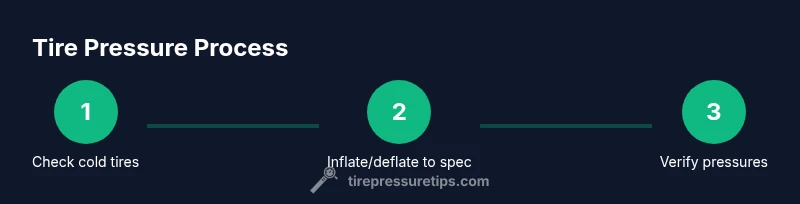
If you’re starting from scratch, assemble a gauge, an inflator, and a small notebook. Then, confirm the recommended PSI from the placard, check all four tires when cold, adjust each tire one-by-one, and recheck. Keep a brief log of your readings and date, and plan to recheck after a short drive or temperature change. By following these steps, you’ll establish a reliable routine that protects your tires and improves overall vehicle performance.
Tools & Materials
- Tire pressure gauge (digital preferred)(Read to at least 0.5 psi precision; calibrate if possible.)
- Air compressor or inflator(Prefer a gauge-integrated inflator; avoid over-spiraling hose twists.)
- Owner's manual or door placard(Shows the recommended PSI for front/rear tires and load conditions.)
- Valve stem caps(Keep caps on to protect valve stems from dirt.)
- Notebook or notes app(Track readings for trend analysis and maintenance planning.)
Steps
Estimated time: 30-45 minutes
- 1
Gather tools and locate recommended pressure
Collect the gauge, inflator, and the placard or owner's manual. Locate the correct PSI values for each tire so you know your targets before you measure. This prevents guessing and ensures accuracy.
Tip: Double-check the placard value; some vehicles have different targets for front vs rear tires. - 2
Check tires when cold
Park in a shaded area or wait for the car to rest after driving. Use the gauge to read each tire’s pressure without removing too much air. Cold readings reflect ambient conditions better and produce more accurate numbers.
Tip: If you’ve just driven, wait at least 3 hours before re-measuring for accurate cold readings. - 3
Measure and compare
Read each tire’s pressure and compare with the recommended PSI. Note any tires that are below or above target by more than a small margin. Record these results for your maintenance log.
Tip: Use the same gauge for consistency, or ensure cross-calibration if using multiple gauges. - 4
Inflate/deflate to target
If underinflated, add air in small increments and recheck frequently. If overinflated, release air in short bursts and verify the change. Stop when each tire matches the placard value.
Tip: Never inflate beyond the tire’s maximum sidewall pressure. - 5
Recheck all tires
After adjustments, recheck every tire to confirm uniform pressure. Ensure caps are replaced to protect the valve stems.
Tip: A final cross-check helps catch small leaks that may have appeared during inflation. - 6
Document and monitor
Log the readings and the date to track changes over time. Set a reminder for your next check, and review the log monthly.
Tip: Look for downward trends in any tire; they signal slow leaks or wheel issues.
Frequently Asked Questions
What is compact air pressure and why does it matter for small cars?
Compact air pressure is the target tire pressure recommended for small cars. It matters because proper pressure supports safety, fuel efficiency, and even tire wear across a range of driving conditions.
Compact air pressure is the target tire pressure for small cars, important for safety, efficiency, and even tire wear.
Where can I find the recommended PSI for my vehicle?
Check the placard on the driver’s door jamb or consult the owner’s manual. The values may differ for front and rear tires and for different load conditions.
Look at the door placard or the manual to find the recommended PSI for each tire.
Can I use any tire gauge for accurate readings?
Use a reliable gauge with good precision, and stick with one type for consistency. Digital gauges are easy to read, but any well-calibrated gauge works.
Use a reliable gauge, preferably digital for readability, and stay consistent with the same type for accuracy.
How does temperature affect tire pressure?
Temperature impacts tire pressure; readings drop in cold weather and rise in heat. Check pressures more frequently during season changes and adjust as needed.
Temperature changes can lower or raise tire pressure; recheck during seasonal transitions.
Should I check tire pressure when tires are cold?
Yes. Cold readings are the baseline for accurate pressure. If you’ve driven, wait several hours for tires to cool before measuring.
Always measure when the tires are cold for accuracy.
What if the TPMS light stays on after inflation?
If the light remains on after inflation, inspect tires for slow leaks or damage. TPMS may require recalibration after service or sensor replacement.
If TPMS stays on after inflation, check for leaks and consider recalibration or service.
Watch Video
What to Remember
- Check tires when cold for accuracy.
- Follow the placard values for all four tires.
- Recheck after inflation to confirm stability.
- Keep a simple log of pressures and dates.