Car Pressure: Check, Maintain, and Troubleshoot
Learn how to check, maintain, and troubleshoot car pressure across tires and the spare. Includes TPMS guidance, gauge selection, seasonal adjustments, and safety tips for better grip, fuel efficiency, and tire life.


Learn how to check, maintain, and troubleshoot car pressure across your tires and spare. This guide covers cold-pressure checks, TPMS tips, and gauge selection, plus quick safety reminders. By following these steps, you’ll improve grip, fuel efficiency, and tire wear. According to Tire Pressure Tips, keeping accurate car pressure is essential for safe driving and long-term savings.
Understanding Car Pressure Basics
Car pressure refers to the air pressure inside each tire, typically measured in pounds per square inch (PSI). Correct pressure helps the tire maintain its designed contact patch with the road, enabling predictable handling and even wear. Your vehicle’s manual or the door jamb sticker lists the recommended cold PSI for front and rear tires. Note that those values assume cold tires—driving heats tires and raises the apparent PSI, so always measure before you drive or after it has cooled for several hours. Tire Pressure Tips emphasize that consistency across all tires is more important than chasing a single number. Maintaining the right car pressure also supports safe steering response and even heat distribution in the tire during operation.
Why It Matters: Safety, Efficiency, and Tire Life
Proper tire pressure is a foundational element of vehicle safety. Underinflated tires can increase stopping distances, reduce traction, and contribute to uneven wear that shortens tire life. Overinflated tires reduce the contact patch, which can worsen ride comfort and increase the risk of a blowout on rough roads. Maintaining correct pressure also improves fuel economy, as underinflated tires create more rolling resistance. The Tire Pressure Tips team reminds drivers that small, regular adjustments beat sporadic, large inflations. Keep all tires within the manufacturer’s suggested range for balanced performance.
TPMS: What It Does and Its Limits
Tire Pressure Monitoring Systems (TPMS) are designed to alert you when a tire’s pressure falls significantly below the recommended level. They are invaluable for catching slow leaks that aren’t obvious to the naked eye. However, TPMS isn’t a precise pressure gauge and won’t tell you the exact PSI. Temperature changes, wheel position, and sensor calibration can affect readings. It’s still essential to periodically verify pressures with a gauge to ensure accuracy, because TPMS can miss gradual leaks in tires you drive every day. The Tire Pressure Tips guidance notes that TPMS should be treated as a warning system, not a substitute for manual checks.
Finding the Right Pressure for Your Vehicle
Your car’s recommended tire pressure is typically listed on the door jamb placard near the driver’s door or in the owner’s manual. The numbers may differ between front and rear tires, and they assume cold tires. Seasonal load, wheel size, and tire type can also influence the ideal value. Always use the same unit of measurement as on the sticker (most commonly PSI) and avoid inflating beyond the recommended range. For vehicles with variable load, adjust pressures when carrying heavy cargo or towing, as this changes the contact patch and handling.
Tools and Materials for Checking Tire Pressure
Successful tire pressure checks require a few reliable tools. A good tire pressure gauge (digital or analog) is essential for accurate readings. An air pump (either a home unit or a station with a gauge) lets you top up tires to the exact specification. The vehicle owner’s manual and the door jamb sticker are your reference for the correct PSI values. A clean cloth helps wipe the valve stem to ensure a clean reading, and a small notebook or app can help you track readings over time. Using calibrated gear matters: accuracy is the key to meaningful adjustments.
Preparation: When and Where to Check Pressure
Check tire pressure when the tires are cold, ideally after the car has sat for at least a few hours. Checking after a drive will give a falsely high reading due to heat buildup. Choose a stable surface away from direct sun and avoid extremely cold ambient temperatures right after inflating, since temperature shifts can quickly alter pressure readings. If you’ve just driven, wait until the tires cool down before rechecking. Routine checks should become part of your monthly maintenance or before long trips.
Step-By-Step Essentials (Overview)
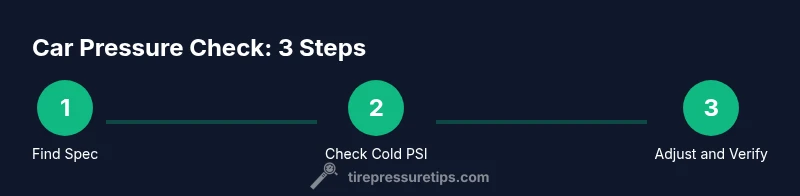
Think of checks as a habit: verify the spec, measure cold tires, adjust in small increments, and recheck. Always start with the recommended PSI on the placard, not the maximum printed on the tire sidewall. Treat the spare as part of routine maintenance; some spares are underinflated and require attention. Keep notes of readings and the date; this helps you spot trends that may indicate slow leaks or sensor drift over time. Consistency in approach reduces surprises on the road.
Common Mistakes and How to Avoid Them
One common mistake is inflating to the tire’s maximum sidewall pressure rather than the vehicle’s recommended value. Another pitfall is using a damaged or inaccurate gauge; calibrate or replace if readings feel off. Measuring after driving yields inflated numbers; always check when cold. Finally, ignoring the spare tire can lead to trouble during a flat or blowout—check it alongside the other tires.
Seasonal and Long-Term Maintenance for Car Pressure
Seasonal temperature changes affect air density and tire pressure. As outdoor temperatures drop, pressure tends to decrease; lifting pressures back to the recommended range helps maintain handling and safety. In hot weather, pressure readings rise; a quick check can prevent overinflation. For long-term maintenance, set a monthly reminder to check all tires and the spare, especially before winter holidays or summer road trips.
Tools & Materials
- Tire pressure gauge (digital or analog)(Choose a gauge with clear readout; ensure it reads in PSI and is easy to zero-check.)
- Air compressor or access to a gas station air pump(Prefer a unit with an integrated gauge or bring your own gauge for accuracy.)
- Vehicle owner’s manual and door jamb sticker(Use these as the official reference for recommended PSI values.)
- Clean cloth(Wipe the valve stem before reading to prevent readings from moisture or debris.)
- Notebook or digital log(Record readings to track changes over time and spot leaks early.)
- Valve cap remover (optional)(Helps quickly remove tight valve caps without damage.)
Steps
Estimated time: 20-30 minutes
- 1
Locate the recommended pressure
Open the driver-side door and read the PSI on the door jamb placard. Compare these numbers to your tires when cold. If needed, note separate front and rear figures for accuracy.
Tip: Pro tip: Use the same unit as on the placard (PSI) and write it down for reference. - 2
Check that tires are cold
Ensure the car hasn’t been driven for several hours. Heat from driving can raise the PSI, giving an artificially high reading. If you’ve just driven, wait a few hours before checking again.
Tip: Pro tip: Early mornings are ideal for consistent cold readings. - 3
Remove the valve cap and apply the gauge
Straighten the valve stem and press the gauge onto the valve quickly and firmly. Avoid wobbling the gauge, which can give an inaccurate reading. Read the PSI on the gauge.
Tip: Pro tip: Hold the gauge level and perpendicular to the valve stem for best accuracy. - 4
Compare reading to spec
If the PSI equals your vehicle’s recommended range, you’re done for that tire. If not, proceed to adjust. Minor adjustments in small increments are safer and more precise.
Tip: Pro tip: For small adjustments, inflate or deflate in 1–2 psi steps and recheck each time. - 5
Inflate or deflate to target psi
Add air with the compressor or release air gradually until your reading matches the spec. Recheck after adjustment to confirm accuracy.
Tip: Pro tip: Don’t overinflate; if you go past the target, deflate slightly and recheck. - 6
Repeat for all tires (and the spare)
Check every tire, including the spare if it is a full-size tire. Differences between front and rear tire pressures are common and should be followed according to the placard.
Tip: Pro tip: After completing all tires, recheck the front tires first to verify stability after adjustments. - 7
Replace valve caps and clean up
Screw the valve caps back on firmly but not overtightened. Wipe away any moisture near the valve stem to prevent corrosion or debris buildup.
Tip: Pro tip: Take a moment to wipe the stem so readings stay clean and clear in the next check. - 8
Record readings and schedule the next check
Note your final PSI for each tire and set a reminder for the next check. Regular checks help you spot slow leaks early and keep performance consistent.
Tip: Pro tip: Set a monthly reminder or tie checks to seasonal changes.
Frequently Asked Questions
How often should I check car pressure?
Check at least once a month and before long trips. Recheck seasonally as temperatures change, since pressure shifts with ambient conditions.
Check your tires at least once a month and before long trips; adjust for seasonal temperature changes.
Can TPMS be wrong?
TPMS can fail or drift over time, but it is designed to warn about underinflation. Always verify with a manual gauge if you doubt the reading.
TPMS can drift; verify with a manual gauge if readings seem off.
What is the difference between cold and hot tire pressure?
Cold PSI reflects the tire’s baseline. Driving heats tires and raises pressure; measure after cooling for accuracy.
Cold PSI is the baseline; hot PSI rises with driving, so read when cold.
Should I inflate to the max PSI printed on the tire?
No. Always inflate to the manufacturer’s recommended PSI on the placard, not the tire’s maximum rating.
Never inflate to the max; follow the vehicle’s recommended PSI from the placard.
Is there a difference in pressure when the season changes?
Yes. Colder weather lowers tire pressure and hotter weather raises it. Check and adjust accordingly to maintain the recommended range.
Seasonal temperature changes affect pressure; adjust to the recommended range.
Do I need to check the spare tire?
Yes. Some spares are full-size and require air like other tires. Check it during routine checks.
Yes—the spare deserves checking just like the other tires.
What to Remember
- Check cold tires for accurate readings.
- Use a reliable tire gauge and log results.
- Follow vehicle-recommended PSI, not the max sidewall value.
- Regularly monitor all tires, including the spare.