Can You Drive with Tire Pressure at 25 PSI? A Practical Guide
Can you drive with tire pressure at 25 psi? Learn safety risks, quick checks, inflation steps, and a maintenance plan to keep tires in the safe range.


Can you drive with tire pressure at 25 psi? In most passenger vehicles, 25 psi is below the recommended cold pressure. Driving on that level increases risk of poor handling, heat buildup, and tire damage. Inflate to the manufacturer's spec using a reliable gauge before driving more than short distances, then recheck.
Can you drive with tire pressure at 25?
Yes, you can physically drive on 25 psi, but it is not recommended for most passenger cars. The tires are underinflated, which can compromise grip, steering response, and braking performance. The Tire Pressure Tips team emphasizes that tire pressure is a safety-critical parameter, and leaving tires at 25 psi can cause excessive flex and heat buildup during even short trips. Always aim to inflate to the vehicle’s cold-recommended pressure printed on the door jamb or in the owner’s manual. If you’re unsure, err on the side of caution and pull over to check before continuing.
Why 25 psi is risky for your ride
Low pressure makes tires deform more as they roll, increasing rolling resistance and heat generation. This leads to faster tread wear on the edges and can alter contact patch dynamics, which affects steering feel and braking distance. In extreme cases, underinflation can cause a tire to overheat and fail, particularly at highway speeds or in hot weather. The guidance from Tire Pressure Tips is clear: always start with a cold reading and inflate to the recommended figure, not a guess.
How to verify your tire pressure quickly (cold readings)
First, ensure the vehicle has been at rest and the tires are cold. Use a reliable gauge to measure each tire’s pressure, including the spare if you carry one. Compare the reading to the placard on the driver’s door or in the owner’s manual. If you see 25 psi, begin inflation immediately. For accuracy, measure again after a few miles of driving to accommodate normal settling, and adjust if necessary. If you notice a persistent drop to 25 psi, there may be a slow leak or a valve stem issue that needs attention.
Driving short distances vs. long trips with low pressure
Short trips with 25 psi may feel manageable, but they still carry safety risks. The vehicle can experience reduced handling and longer stopping distances, especially in wet or slippery conditions. For long trips or extreme heat, underinflation becomes unacceptable due to heat buildup and rapid tire wear. If you must travel, keep speeds moderate and plan to stop at a service station to inspect and inflate as needed.
Common mistakes when inflating tires and how to avoid them
Avoid inflating to the maximum pressure listed on the tire sidewall; this is not the target. Use the factory-recommended cold pressure from the placard. Don’t inflate while the tires are hot from driving, as this can give a false high reading. Record your readings so you can monitor trends over time and detect slow leaks early.
What to do about slow leaks or punctures
If you notice pressure dropping consistently, inspect for nails, screws, or cuts in the tread. A slow leak may also stem from a faulty valve stem or TPMS seal. Seek professional assistance if you cannot locate the source, as driving on a compromised tire can risk a blowout. The Tire Pressure Tips team notes that timely diagnosis saves money and enhances safety.
Seasonal considerations and a maintenance plan
Temperature changes affect tire pressure; cold mornings typically lower readings and hot days can push readings up. Schedule monthly checks, especially after seasonal shifts and after long trips. A simple maintenance habit—check, adjust, and record—helps keep tires in the safe range and preserves fuel efficiency and tire life.
Steps
Estimated time: 30-45 minutes
- 1
Find the correct pressure
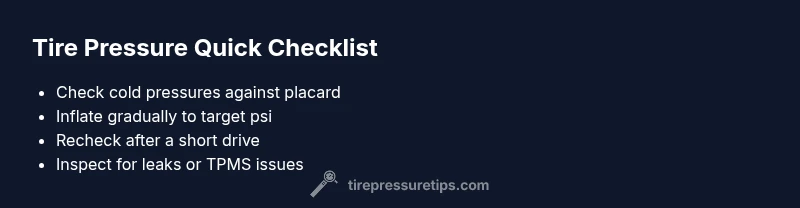
Locate the cold tire pressure specification on the driver’s door placard or owner’s manual. This is your target when inflating. Use a reliable gauge to confirm you’re starting from a cold reading.
Tip: Always use the same gauge when tracking readings to keep comparisons accurate. - 2
Check all tires
Measure each tire’s pressure when cold. Don’t forget the spare if you carry one. Note any tire that reads significantly below the others.
Tip: Record readings in a small notebook or a mobile note for trend tracking. - 3
Inflate to spec
Add air gradually and recheck after each addition until you hit the recommended pressure. Do not overinflate beyond the spec.
Tip: Inflate in small increments and pause to read the gauge to avoid overshooting. - 4
Recheck and balance
After inflation, drive a few miles to help tires settle, then recheck all four tires. Correct any remaining imbalances.
Tip: Recheck after a short drive because the tires will settle and the pressure can change slightly. - 5
Inspect for leaks or TPMS issues
If a tire continues to lose pressure, inspect for leaks, damaged valves, or bearlike bead seating. TPMS faults require professional service.
Tip: If in doubt, visit a tire shop; pressure checks are inexpensive and protect safety. - 6
Create a maintenance routine
Set a monthly reminder to check tire pressure and inspect for wear. Seasonal checks are especially important during temperature shifts.
Tip: Pair tire checks with oil changes or routine car maintenance for consistency.
Diagnosis: Tire pressure reads 25 psi on a cold tire or TPMS warning while driving?
Possible Causes
- highSlow leak from a nail, puncture, or compromised bead seal
- mediumValve stem or TPMS seal leak
- lowTemporary drop due to temperature change
Fixes
- easyCheck all tires with a reliable gauge when tires are cold; if 25 psi, inflate to the vehicle spec and recheck after driving 2-3 miles
- easyInspect for visible damage or nails; repair punctures and leaks per tire shop guidance, or replace if needed
- mediumIf the pressure remains low or TPMS remains illuminated after inflation, have a tire shop inspect for leaks, valve issues, or TPMS faults
Frequently Asked Questions
Is 25 psi safe for most cars?
Generally, 25 psi is below the recommended cold pressure for most passenger tires. It compromises handling and increases the risk of tire overheating during driving. Inflate to the spec before continuing your trip.
Usually not safe. Inflate to the recommended cold pressure before driving further.
Can I drive a short distance if I find 25 psi?
A short drive to a nearby service station is often possible, but you should not push the tires hard, maintain moderate speeds, and stop to check pressure again on arrival. If you can’t reach a station safely, call for roadside assistance.
You can drive a short distance if necessary, but proceed with caution and inflate as soon as possible.
What causes a tire to lose air slowly?
Slow leaks typically come from a puncture, valve stem issues, or bead seating problems. Inspect for visible damage and listen for a hissing sound at the tire edge. If in doubt, have a professional assess the tire.
Slow leaks come from punctures, damaged stems, or valve issues. Get it checked if it keeps losing air.
How often should I check tire pressure?
Check tire pressure at least once a month and before long trips. Temperature changes and seasonal shifts can alter readings, so more frequent checks are prudent in extreme weather.
Check once a month, and before long trips; more often in extreme weather.
What if TPMS stays on after inflation?
If TPMS remains illuminated after inflation, there may be a sensor fault or a slow leak. Have the TPMS system diagnosed by a tire or automotive technician.
If the light stays on after inflating, have the TPMS checked by a pro.
Watch Video
What to Remember
- Inflate to the manufacturer’s spec, not a guess.
- Underinflation reduces safety and fuel efficiency.
- Regular checks prevent leaks and TPMS surprises.
- Seasonal temperature changes affect tire pressure.