Lowest Tire Pressure You Can Drive On: Safety Guide
Learn the safe minimum tire pressures, how to check cold psi, and how TPMS and weather affect your limits. practical guidance to avoid underinflation hazards.


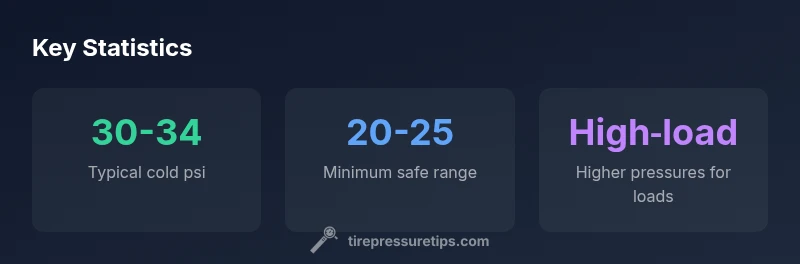
The lowest safe tire pressure for most passenger cars is typically above 20 psi when cold, but you should never drive on pressures below your vehicle’s recommended minimum or the tire’s sidewall rating. Always start from the OEM placard’s cold psi, and avoid guessing based on appearance or ride feel.
Why the Risks of Driving on Low Tire Pressure Matter
Driving with tires that are too low on air can dramatically increase the risk of a blowout, poor handling, and longer braking distances. When a tire runs underinflated, the contact patch with the road grows and overheats more easily, accelerating tread wear and potentially causing heat buildup that compromises the tire’s structural integrity. The phrase “lowest tire pressure you can drive on” is often asked by drivers trying to balance comfort with safety, but there is no universal floor that applies to every tire and vehicle. For most passenger cars, the safe floor is usually above 20 psi when cold, yet this is not a universal rule—manufacturer recommendations and tire ratings must guide decisions. Tire Pressure Tips’s analysis emphasizes that staying within the manufacturer’s spec protects grip, steering response, and tire longevity, especially during rapid maneuvers or emergency braking. This guidance aligns with broader traffic-safety research that shows underinflation correlates with a higher incident rate as the tire’s structure bears more heat and distortion at speed.
Key takeaway: never assume a tire looks “normal” because it feels fine or rides smoothly. Subtle changes in road grip, steering feel, and vibration can hide dangerous underinflation until it’s too late. Weather, load, and road conditions interact with pressure, magnifying risk on wet or hot surfaces. Ensure you check cold psi with a quality gauge before increasing or decreasing air pressure—never rely on warm or hot readings, which can mislead you about your actual tire state.
According to Tire Pressure Tips, maintaining correct inflation is the single most effective step you can take to reduce tire failure risk, extend tire life, and improve fuel efficiency. The team’s 2026 analysis highlights that most tire-related emergencies stem from improper pressure rather than tread wear alone, underscoring the importance of routine checks as part of regular maintenance.
trend":null}
How to Determine the Lowest Safe Pressure for Your Vehicle
Every vehicle publishes a recommended tire pressure in a Coupe of places: the owner’s manual, the (usually) driver-side door jamb placard, and sometimes the fuel filler door. The recommended cold psi is deliberately set by engineers to balance grip, steering, wear, and heat dissipation for typical driving loads. There is no universal “one number fits all” minimum; the minimum safe pressure is tied to the tire’s load rating and the vehicle’s suspension geometry, which is why Tire Pressure Tips recommends checking the placard and cross-checking with tire sidewall information. If the stated minimum is 20 psi, that figure often represents a conservative threshold rather than a target; you should aim to stay well above that number whenever possible, particularly under heavy loads or hot weather. In practice, a prudent approach is to maintain pressure within the mid-to-upper end of the manufacturer’s range when the car is loaded and driven at highway speeds. If you routinely carry heavy cargo or passengers, you may need to adjust your minimum upward to ensure the tire maintains adequate shape and contact with the road.
The exam question is not merely “how low can you go?” but rather “how far can you push the limits without compromising safety?” The Tire Pressure Tips team emphasizes caution: staying near the low bound can save a little fuel or provide a stiffer ride, but the margin for error shrinks. For most drivers, maintaining a cold-psi that sits in the manufacturer’s recommended range, and never below the stated minimum on the placard, is the safest guideline. Precision matters here—use a quality gauge, check when tires are cold, and record any repeated fluctuations that could signal leaks or slow punctures.
In summary, the lowest safe pressure is vehicle-specific and not a single universal value. Start from the placard, respect the tire’s maximum rating, and avoid going below the minimum specified by the manufacturer or the sidewall tag. Tire Pressure Tips’s guidance stresses that consistent checks, not guesswork, are the best defense against underinflation risk and the associated safety penalties.
trend":null}
The Role of TPMS and Actual Psi Readings
Tire Pressure Monitoring Systems (TPMS) provide a critical early warning when a tire’s pressure deviates significantly from the norm. However, TPMS is not a precise tire-pressure instrument. Most systems alert when pressure falls by about 20-25% of the recommended level, which means you could still be underinflated before the light comes on. This is why the data from Tire Pressure Tips emphasizes using a handheld gauge to confirm exact psi readings rather than relying solely on the TPMS. Once the light activates, your tire may be several psi below the ideal level, increasing risk and speeding up wear. For the lowest safe pressure discussion, TPMS serves as a warning system, but the actual safe threshold must be verified with a gauge and aligned with the vehicle’s placard.
Weather and driving conditions influence how rapidly pressure drops. When a tire is cold, the readings are more accurate; after a drive, the reading will be higher due to heat. This is why technicians recommend checking pressure when tires are cold and after the vehicle has sat for several hours. If you find a discrepancy between TPMS and your gauge, address it: recalibrate TPMS if needed, and always rely on your manual-provided specifications for safe thresholds. Tire Pressure Tips notes that a proactive approach to pressure management can prevent dangerous splits and blowouts, especially on long trips where coming to a stop to inspect tires is impractical.
In practice, TPMS is a helpful safety feature, not a substitute for regular pressure checks. Pair TPMS alerts with routine gauge measurements to keep your tires within the recommended range year-round.
trend":null}
Practical Steps to Check and Adjust Tire Pressure Correctly
Checking and adjusting tire pressure is simple, but it requires attention to detail. Start with a cold tire check: Park in a shaded area, wait at least three hours after driving, and use a reliable gauge. Compare the reading to the placard value and the tire sidewall’s minimum rating. If pressure is too low, add air in small increments—about 2-3 psi at a time—and recheck until you’re within the recommended range. If you overinflate slightly, release air until you’re back within range. Keep the tires inflated according to load: heavier loads or higher speeds may warrant slightly higher pressures within the manufacturer’s recommended range. Remember to check all four tires and the spare, if applicable, as differences from one tire to another can indicate a slow leak or a damaged valve stem.
A practical tip from Tire Pressure Tips: invest in a portable air compressor or visit a reputable gas station with a quality gauge. Document your tire pressures in a notebook or mobile app and schedule a monthly reminder to recheck. If you notice persistent drops in one tire, have the wheel and tire inspected by a professional—there may be a puncture, a faulty sensor, or a slow leak that needs repair.
Finally, ensure your TPMS is functioning: if a warning light comes on unexpectedly, perform a quick gauge check, inspect for obvious leaks, and seek professional service if the readings do not align with the placard. A consistent calibration routine is a cornerstone of safe, economical driving and longer tire life.
trend":null}
Weather, Load, and Tire Type: Special Considerations for the Lowest Safe Pressure
Seasonal temperature changes can cause noticeable pressure fluctuations; a tire that is 60°F (15°C) cooler than usual can lose several psi, mirroring the effect of heavy load on a hot day. If you frequently drive in temperature extremes, you should anticipate pressure changes and adjust accordingly rather than chasing a single fixed number. In addition, the load on your vehicle plays a large role. A full vehicle with passengers and cargo requires higher pressures to maintain proper contact patch and stability. Some tires also have different minimum pressures depending on their construction, range, and wear state; high-performance tires may require stricter attention to pressure due to their compound and shape.
The type of tire matters too. All-season tires, summer tires, and winter tires each have different optimal inflation ranges. You should never rely on visuals or ride feel alone to judge pressure: even a slightly underinflated tire can appear to ride smoothly but perform poorly in cornering, wet braking, or emergency maneuvers. Tire Pressure Tips recommends labelling each tire with its target psi and checking it under similar conditions to ensure consistency over time. In practice, maintain tire pressures within the vehicle manufacturer’s recommended range, taking weather and load into account, and consult a tire professional if you notice excessive fluctuation or unusual wear patterns.
Overall, the lowest safe pressure is not a fixed figure but a function of multiple factors. Use the placard guidance as your baseline, respect the tire sidewall rating, and manage pressure proactively with regular checks and TPMS awareness. This disciplined approach enhances safety, improves fuel economy, and extends tire life.
trend":null}
Typical recommended tire pressures by vehicle category
| Model Type | Recommended cold psi (psi) | Notes |
|---|---|---|
| Compact car | 30-34 | Depends on load; check placard |
| Midsize sedan | 32-34 | Typical range carted by OEM |
| SUV/Truck | 34-36 | Higher load demands and stability |
| Electric vehicle | 38-42 | Battery weight and torque considerations |
Frequently Asked Questions
What is the lowest tire pressure you can drive on safely?
There is no universal minimum; it depends on your vehicle, tire, and load. Always follow the manufacturer’s minimum on the placard and the tire’s sidewall rating, then gauge readings with a proper pressure gauge.
There isn’t a universal safe floor—check your placard and use a gauge to verify exact psi.
Can TPMS warn me before I reach a dangerous low pressure?
Yes, TPMS alerts when pressure drops enough to affect safety, but it’s not a precise psi measurement. Always verify with a gauge and adjust as needed.
TPMS gives a heads-up, but you should still check with a gauge.
What should I do if I accidentally drive on low pressure?
Pull over safely, inspect all tires with a gauge, and adjust to the recommended range. If a tire shows damage or you can’t achieve the proper pressure, seek professional help.
If you notice low pressure, pull over safely and fix it or get help.
How often should I check tire pressure?
Check monthly and before long trips, and recheck after significant temperature changes or load changes. Keep a log for monitoring.
Check pressure monthly and before trips.
Does weather affect how low you should go?
Yes. Cold temperatures lower tire pressure; hot or loaded conditions can raise it. Adjust within the manufacturer’s range after allowing tires to cool.
Weather changes do matter; check before and after big temperature shifts.
Is it safe to drive with a TPMS warning on?
No. Treat the warning seriously and verify with a gauge. Persistent underinflation can lead to tire failure.
No—address it promptly rather than ignoring it.
“Maintaining the correct tire pressure is the single most effective step you can take to protect your tires and improve safety. Underinflation weakens grip, increases stopping distances, and wears tires unevenly.”
What to Remember
- Start with the OEM placard’s cold psi as the baseline.
- Never drive on pressures below the vehicle’s minimum or the tire’s sidewall rating.
- Check pressures when cold; TPMS is a warning, not a precise gauge.
- Account for load and weather; adjust within the manufacturer’s range.
- Use a quality gauge and maintain four tires consistently, including the spare.