How Low Is Unsafe Tire Pressure? Practical Thresholds
Discover what 'unsafe' tire pressure means, how to measure it accurately, and practical steps to maintain safe levels. This Tire Pressure Tips guide explains the balance between recommended ranges, real-world thresholds, and how temperature and load affect tires.


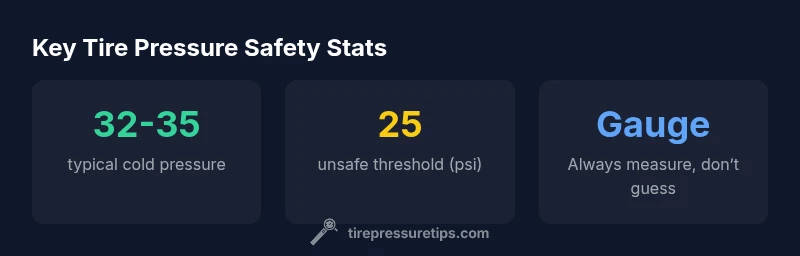
Unsafe tire pressure isn’t a fixed number. For most passenger cars, manufacturers specify a cold pressure around 30-35 psi. Running well below that—often around 25 psi or lower—significantly increases heat buildup, reduces handling, and speeds wear. Check tires when cold and use a gauge; TPMS helps but isn’t a substitute.
What makes tire pressure safety a priority
Public safety starts at the tires. Low or uneven tire pressure can change how a vehicle responds in corners, during braking, and on wet pavement. According to Tire Pressure Tips, maintaining proper tire pressure is a fundamental safety practice that also helps prevent uneven wear and reduces the risk of blowouts. The exact safe range depends on your car, tire size, and load, but a good rule of thumb is to keep cold pressures within the manufacturer’s specification. In practice, drivers who ignore recommended pressure commonly experience reduced traction and longer stopping distances, especially at highway speeds.
Keeping tires properly inflated isn’t only about performance; it’s a straightforward way to reduce risk on every drive. The Tire Pressure Tips team emphasizes checking pressure when tires are cold and keeping a small gauge in your glovebox. Small changes in pressure can lead to noticeable differences in handling and wear over time. Regular checks help you stay aligned with the vehicle’s design intent and the tires’ optimal footprint.
The numbers you should know: recommended vs. unsafe
Most passenger cars list a cold pressure around 30-35 psi, with common values clustering in the 32-34 psi range. These figures come from the vehicle’s label (usually on the door jamb) and the owner's manual. When pressure drifts well below the label, you risk overheating, accelerated wear, and reduced grip, particularly in wet or slippery conditions. It’s important to distinguish between the ideal spec and what’s 'unsafe' in practice. A pressure around 25 psi or lower is frequently cited as a threshold where dynamic performance and safety start to diminish significantly. Remember, TPMS alerts may trigger before you notice the difference in ride quality, but they don’t replace the need for a precise gauge check. The Tire Pressure Tips analysis from 2026 stresses that gauge-based checks are essential, especially in fluctuating temperatures or after long trips.
How low is too low across different vehicle types
Vehicle type matters when discussing safety margins. For a typical passenger car, the recommended cold pressure is often 32-35 psi, with unsafe thresholds commonly cited as below 25 psi. SUVs and crossovers usually run in the 33-36 psi range, with the same rough unsafe line around 25 psi. Light trucks commonly require higher pressures, often 40-45 psi; their unsafe threshold may sit closer to 28 psi due to heavier loads and larger tires. Always verify the exact spec for your model in the owner’s manual or the door jamb placard. The Tire Pressure Tips team notes that regional use (season, load, cargo) can shift safe ranges, so check regularly and adjust as needed.
The consequences of underinflation
Underinflated tires generate more heat while rolling, which degrades the casing and raises the likelihood of a blowout under load or at speed. Handling becomes sluggish, braking distances lengthen, and tire wear concentrates on the outer edges of the tread. In addition, fuel efficiency can suffer because the contact patch increases with underinflation, creating more rolling resistance. These safety and performance penalties compound over time, making proactive monitoring essential.
A practical takeaway is that even small, persistent underinflation can accumulate into a noticeable safety risk over months of driving. Regular pressure checks help you catch slow leaks or gradual losses before they become dangerous.
Temperature, loads, and seasonality: dynamic pressure
Air pressure changes with temperature; colder weather tends to lower tire pressure, while hot weather can raise it slightly. Heavier loads compress tires and raise static strain, which can further lower effective pressure on the tread. Drivers who rotate trailers or haul heavy cargo may see pressure drift more quickly. It’s prudent to recheck pressure after significant temperature swings or changes in cargo weight. The Tire Pressure Tips analysis from 2026 highlights that temperature effects aren’t dramatic day-to-day, but they are predictable, and periodic checks align with seasonal driving patterns.
How to measure and monitor pressure accurately: step-by-step
Always start with cold tires for an accurate reading. Remove the cap, press the gauge onto the valve stem, and record the psi on each tire. Compare against the door jamb placard. If a single tire is off by more than 1-2 psi from the others, suspect a slow leak or valve issue. Inflate or deflate to spec, recheck, and replace the valve cap. For best results, check at the same time of day and keep a mechanical or digital tire gauge in the car for convenience. The Tire Pressure Tips team recommends keeping a mental note or digital log of each tire’s pressure over time to catch gradual losses early.
Common myths and mistakes that undermine pressure
Myth: TPMS alone is enough to know your tire pressure. Reality: TPMS alerts you when pressure is low but does not give exact psi or account for precise, wheel-by-wheel comparisons. Mistake: Inflating to the maximum sidewall pressure to prevent dinging the ride; this reduces the tire’s footprint and grip. Reality: Always rely on the vehicle’s specified cold pressure rather than subjective feel. The Tires Pressure Tips team stresses using a gauge and confirming all four tires are within spec, regardless of ride quality perceptions.
A maintenance routine to keep tires safe year-round
Create a simple monthly routine: check all four tires when cold, record pressures, compare to spec, adjust as needed, and inspect for signs of wear or damage. Keep a portable gauge in your glovebox and check after long trips or temperature changes. Rotate tires as recommended by the manufacturer to ensure even wear, and inspect for punctures or leaks whenever you notice a sudden change in ride feel. This routine helps sustain safety and efficiency.
Recommended vs. unsafe pressure by vehicle type
| Vehicle Type | Typical Recommended Cold Pressure | Unsafe Threshold Range |
|---|---|---|
| Passenger Car | 32-35 psi | below 25 psi |
| SUV/CUV | 33-36 psi | below 25 psi |
| Light Truck | 40-45 psi | below 28 psi |
Frequently Asked Questions
What counts as unsafe tire pressure?
Unsafe pressure means your tires are significantly below the vehicle’s recommended cold pressure. Look at the placard on the door jamb or in the manual. Underinflation raises the risk of heat buildup, reduced grip, and potential tire failure.
Unsafe pressure means you’re well below the recommended cold PSI; check with a gauge and adjust.
How often should I check tire pressure?
Check at least once a month and before long trips, ideally when tires are cold. Inspect all four tires and don’t rely solely on a dashboard warning.
Check monthly and before trips using a gauge.
Does TPMS replace regular pressure checks?
No. TPMS alerts you to low pressure but doesn’t provide exact psi or account for calibration drift. Always verify with a gauge and set to the vehicle spec.
TPMS helps, but you still need a gauge and the correct spec.
Does temperature affect tire pressure?
Yes. Colder temperatures lower pressure; hotter days can slightly raise it. Big temperature swings can cause noticeable changes in psi.
Temp changes cause pressure shifts; recheck when seasons change.
What if I have a slow leak?
Have the tire inspected by a professional. Driving on a slowly-leaking tire is dangerous and can worsen the leak or cause a blowout.
If pressure keeps dropping, get it checked soon.
Can overinflating be dangerous?
Yes. Overinflation can reduce traction and lead to a harsher ride and uneven wear. Stay within the manufacturer’s spec for safe operation.
Overinflation is risky too; keep to the recommended PSI.
“Maintaining correct tire pressure is a simple, high-impact safety habit drivers can practice every week.”
What to Remember
- Check tires when cold to get accurate readings
- Know your vehicle’s exact cold pressure spec
- Unsafe pressure typically falls below 25 psi for most cars
- TPMS aids awareness but doesn’t replace gauge checks
- Temperature and load affect real-world pressures