How Low Can Tire Pressure Be and Still Drive: A Practical Guide
Learn how low tire pressure can safely go, how to test it, and the risks of driving with underinflated tires. This guide covers TPMS, safety, and practical maintenance tips from the Tire Pressure Tips team.


How low tire pressure can be driven safely depends on your vehicle, tire construction, and operating conditions. There is no universal minimum you can rely on; underinflation raises heat and wear, reduces handling, and can cause a blowout, especially at highway speeds. If you see a TPMS warning, adjust pressure promptly and consult your owner's guidelines.
Why Tire Pressure Matters
Maintaining correct tire pressure matters for safety, efficiency, and tire longevity. When tires run near the correct cold pressure, they maintain the intended contact patch with the road, which improves steering, braking, and handling. Underinflated tires heat up more quickly and wear unevenly, while overinflated tires ride harshly and can lose grip in potholes or wet conditions. The Tire Pressure Tips team emphasizes that even small changes in pressure can shift tire shape enough to affect fuel economy and traction. In everyday driving, steady, accurate inflation helps you get the most from your tires, your suspension, and your braking system. Remember that each vehicle has its own recommended range, often differing between front and rear tires, and that temperature swings can alter pressure readings. Always test when tires are cold and use the vehicle's sticker or owner's manual as your baseline. This baseline guides you through the decisions you make about maintenance, punctures, and seasonal changes.
Defining Safe Minimums and How Variables Affect It
Every tire and vehicle combination has a safe minimum that depends on load, speed, tire construction, and rim size. There is no universal number that applies to all cars. The safest approach is to stay within the range specified by the manufacturer and avoid letting pressure drop far below that range. The car's recommended PSI typically accounts for normal driving conditions and expected loads; heavy towing, aggressive cornering, or high speeds can require higher pressure. Tire type matters too: run-flat tires, low-profile tires, and different tread patterns handle inflation differently. Even the same model can perform differently when the tires are cold versus after a few miles of driving. When reading pressure, aim for the cold reading based on the sticker on the door jamb or your manual, not a reading taken after a drive. Treat the numbers as an operating guideline rather than a fixed rule.
How to Check Tire Pressure Correctly
To ensure accurate measurements, start with cold tires and use a reliable gauge. Remove valve caps, place the gauge on the valve stem, and note the reading. Repeat on all tires including the spare when applicable. Compare readings to the manufacturer’s recommended cold PSI for each tire. If you need to inflate, add air slowly in small increments and recheck after each adjustment. Replace valve caps and store the gauge for next time. Temperature changes from night to day or from winter to summer can shift readings; plan regular checks as part of your routine. Using a digital gauge can provide quick, precise numbers; an analog gauge is reliable if read carefully. Ensure the gauge isn’t blocked by dirt on the valve stem, and inspect any tire showing consistently low readings for leaks or damage.
The Risks of Driving with Low Tire Pressure
Driving on underinflated tires elevates heat buildup in the rubber and the sidewalls, increasing the risk of a blowout, especially at highway speeds. It also changes the tire’s contact patch, reducing grip in wet or snowy conditions and worsening braking distances. Underinflation makes steering less precise and can cause uneven wear that shortens tire life. The structural integrity of the tire can be compromised if pressure remains too low for a long period. If you notice a vibration, thumping, or a persistent warning, stop soon and assess the tire by safe means. Fuel economy often drops with underinflation because more energy is required to roll a larger, mis-shaped patch. The takeaway is to treat any low-pressure condition as a safety signal rather than a minor nuisance.
Interpreting TPMS Alerts
TPMS can help through non-visual indicators; it does not always show which tire is low. Some vehicles display a specific tire location, while others show a general warning. If a warning appears, inspect tires and inflate to the recommended cold pressure or seek service if the tire shows signs of damage. Regular system checks, including sensor health, ensure the readouts are accurate. Remember that TPMS targets a safe operating range, but it cannot detect slow leaks or punctures without user action. When TPMS lights up, treat it as a priority signal and verify all tires before continuing.
How to Inflate Safely to Target Pressure
Inflating starts with allowing the system to release moisture and calibrate; but basically you inflate to the manufacturer’s recommended PSI. Begin with the tire that shows the lowest reading, adjusting in small increments. Use the gauge to verify; avoid overinflating beyond the maximum listed on the tire sidewall. Check both front and rear tires, because load impacts may differ. After inflating, reseat the valve caps and re-check to confirm the readings lie within the recommended range. If you’re inflating multiple tires, do them one at a time and record the numbers to track changes over time.
Weather, Temperature, and Tire Pressure
Temperature affects tire pressure; readings taken in cold weather are lower than those just after driving in warm conditions. As outdoor temperatures rise or fall, pressure can swing several psi. Plan checks when the tires are cold and consider adjusting as seasons change. For daily driving, normal temperature swings rarely require frequent adjustments unless you notice a decrease in performance or a warning from TPMS. If you store tires or live in extreme weather, consider a quarterly check as part of your maintenance routine.
Maintenance Routine and Best Practices
Develop a simple maintenance habit: check pressure monthly and before long trips; inspect tires for wear or damage; replace worn or damaged tires; keep the valve caps on to protect from dirt and moisture. Use a consistent gauge; keep records; maintain vehicle alignment to prevent uneven wear that can mislead readings. Create a short, repeatable checklist you can perform in under ten minutes. If you drive in extreme heat or cold, adjust your checks to reflect how temperature affects readings. Regular maintenance reduces the likelihood of sudden tire issues and improves overall safety.
Common Myths and Practical Advice
Myth: Inflate tires to the maximum sidewall pressure for better fuel economy. Reality: over-inflation can worsen ride quality and reduce grip. Myth: All tires require the same pressure. Reality: front and rear tires often have different targets based on load and dynamics. Practical approach: follow the exact spec from the door jamb sticker or manual, verify with a reliable gauge, and avoid the urge to “guesstimate” for the sake of convenience. Seasonal changes and driving conditions can shift readings, so re-check after weather events or long trips.
Tools & Materials
- Tire pressure gauge (digital or analog)(Read accurate cold tire pressure; use a gauge with psi/kPa scale)
- Air compressor or access to an air pump(Needed to reach recommended pressure)
- Vehicle owner's manual or door jamb PSI chart(Find exact cold PSI for each tire and model)
Steps
Estimated time: 30-45 minutes
- 1
Park on a level surface and cool tires
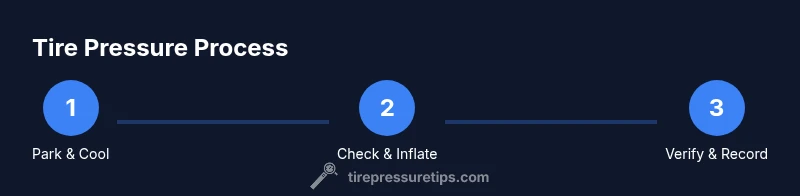
Before checking pressure, park on a flat, level surface and let tires cool for at least several hours since driving can raise the reading. This ensures you measure cold tire pressure, which is the reference value from the manufacturer.
Tip: Avoid checking after a long drive; hot tires show falsely high readings. - 2
Find the official cold tire pressure specification
Locate the recommended PSI for each tire from the door jamb sticker or the owner's manual. Note that front and rear tires may have different targets and that seasonal changes can affect the ideal range.
Tip: If the label is unreadable, consult the manufacturer’s website or a dealer for guidance. - 3
Remove valve caps from all tires
Take off each valve cap to access the valve stem. Keep caps in a safe place so they don’t get lost during the procedure.
Tip: Place caps somewhere you’ll remember for reattachment. - 4
Check pressure with the gauge
Place the gauge on the valve stem and read the pressure. Repeat for each tire and note the results to compare with the recommended cold PSI.
Tip: If readings differ widely between tires, re-test to confirm accuracy. - 5
Inflate in small increments to reach target
If a tire is below target, add air in small increments and recheck after each increment until you reach the recommended pressure.
Tip: Don’t overinflate—overinflation can reduce grip and cause a harsher ride. - 6
Re-check all readings and seal the tires
After inflation, re-check every tire to confirm it sits within the target range. Reinstall all valve caps to protect stems from dirt and moisture.
Tip: Always recheck after inflation to catch small adjustments you might miss. - 7
Inspect the spare and TPMS status
If your car has a TPMS, ensure the spare is properly inflated if applicable and verify TPMS status after adjustments.
Tip: Spare tires often sit unused; check them seasonally or before long trips. - 8
Record the new pressures
Log the updated readings in a notebook or digital app so you can track trends over time and notice slow leaks earlier.
Tip: Regular logs help you spot gradual pressure changes that signal issues. - 9
Know when to seek professional help
If you can’t reach the target or notice persistent leaks, bring the vehicle to a tire professional for inspection and repair.
Tip: Persistent low pressure is a sign of a leak, damaged valve stem, or failed seal.
Frequently Asked Questions
Can you drive with very low tire pressure?
You can, but it is dangerous. Very low pressure increases heat, reduces handling, and raises the chance of a blowout, especially on highways. If you notice a TPMS warning, stop and inflate soon.
Yes, you can drive briefly, but it’s risky. Inflate the tire as soon as possible and avoid high-speed driving.
What exactly is considered 'low' tire pressure?
Low is anything below your vehicle’s recommended cold PSI. There isn’t a universal threshold; it depends on the car, tire type, load, and conditions. Always aim for the cold reading from the door sticker or manual.
Low pressure means below the recommended cold PSI for your tires, per your vehicle’s guide.
How does temperature affect tire pressure?
Tire pressure drops as ambient temperature drops and rises with warmth. Temperature shifts can cause several psi changes, so check tires when cold and account for seasonal differences.
Temperature changes can change tire pressure; check when cold to ensure accuracy.
How often should I check tire pressure?
Check monthly and before long trips. Also check after significant temperature changes or any time you notice handling changes or warning lights.
Check at least once a month and before long trips.
Do TPMS sensors read low pressure in all tires?
TPMS helps monitor overall health and alerts you when pressure is low. It may not identify which tire is low without a location-specific display. Always verify with a manual check.
TPMS warns you when pressure is low, but you still need to check each tire manually.
Is it okay to inflate tires to the maximum sidewall pressure?
No. Inflating to the maximum sidewall pressure can overinflate the tire and reduce grip. Always target the manufacturer’s recommended cold PSI.
No—don’t inflate to the max; follow the recommended cold psi.
Watch Video
What to Remember
- Check tire pressure when cold before driving.
- Inflate to the manufacturer’s specified range.
- Use TPMS as a guide, not a guarantee.
- Keep a simple log of readings for trend detection.