Is It OK to Drive With Low Tire Pressure? A Practical How-To Guide
Learn how to safely handle low tire pressure, check accuracy, inflate properly, and maintain tires. Tire Pressure Tips explains TPMS roles, risks, and maintenance for confident driving.


Is it ok to drive with low tire pressure? This guide shows you how to assess, decide, and act safely when a tire is underinflated. You will learn how to check cold tires, decide whether to drive to a compressor or service station, and how to restore proper pressure and stay safe on the road.
Is It OK to Drive With Low Tire Pressure? Understanding the Question
Is it ok to drive with low tire pressure? The short answer is that underinflation affects safety, handling, and tire wear. According to Tire Pressure Tips, the safest approach is to address low pressure before or as soon as you notice it, and never rely on a gradual drop as a reason to push onward on a questionable tire. The question itself hinges on how far below the vehicle’s recommended pressure you are and where you plan to drive. The vehicle’s owner manual or the door placard states the correct range for each tire; deviating from that range can compromise stability, braking, and fuel efficiency while increasing the risk of a blowout. Remember, every tire has its own target pressure, and seasonal temperature changes can affect readings. For many drivers, the key is to treat low pressure as a warning call rather than an excuse for a long, uncertain drive.
- Openly acknowledge the risk
- Confirm the target PSI on the placard or manual
- Act promptly to restore proper pressure
What Happens to Handling and Safety If You Drive Low
When tires run below their recommended pressure, contact with the road increases. That contact patch grows, traction changes, and steering response can become sluggish. You may notice more tire squirm during cornering, a longer stopping distance, and a higher likelihood of uneven wear. Even a modest drop can alter ride quality and fuel economy, making everyday driving less predictable. The Tire Pressure Tips team emphasizes that gradual loss can still create unsafe conditions, particularly on wet roads, rough surfaces, or during steering inputs. If you’re currently on a load of luggage or carrying passengers, the effects of underinflation can worsen. The safest path is to stop and recheck rather than push through a potential hazard.
- Reduced cornering precision
- Longer stopping distances in wet or slippery conditions
- Increased tire wear and risk of heat buildup
- Higher fuel consumption
How to Check Tire Pressure Accurately When Tires Are Cold
Accurate tire pressure readings rely on cold tires, meaning the car has been stationary for several hours and hasn’t been run recently. Start by locating the recommended PSI on the door placard or in the manual. Remove the valve cap from each tire and press your gauge onto the valve stem to get a reading. Compare the number to the recommended PSI; if it’s lower, you’ll need to inflate. If you can, do this with a portable air compressor or at a gas station. After inflating, recheck to ensure you’ve reached the correct level. Remember, the pressure you measure when tires are hot can be misleading because heat increases reading values temporarily.
- Use a trusted gauge (dial or digital)
- Check all four tires plus the spare when possible
- Recheck after inflating to confirm accuracy
Should You Drive to a Workshop or Stop Now? Assessing Risk
If a tire is visibly deflated or the pressure is significantly below the recommended range, driving is not advised. A slow, short trip to a nearby station might be permissible if you can do so without overloading the vehicle or traversing long highway segments, but if you feel vibration, hear thumping, or notice the tread rubbing against the wheel rim, pull over safely and seek assistance. The key is to weigh distance, road type, speed, and the tire’s behavior. In most cases, towing or roadside assistance becomes the safer option when a tire’s integrity is compromised. Tire Pressure Tips recommends erring on the side of caution and avoiding highway speeds with an underinflated tire.
- Avoid highway speeds with a suspected leak or bubble
- Don’t drive on a tire that looks flat or bulges at the sidewall
- Seek professional help if you’re unsure
How to Inflate to the Recommended PSI and Recheck
Once you know the target PSI, inflate gradually using a station compressor or portable pump. Stop periodically to recheck with your gauge, ensuring you’re within the manufacturer’s specified range. If you’re near the limit, adjust in small increments to avoid overinflation. After you reach the target PSI, replace valve caps to protect against leaks, and recheck all four tires. If the tire’s shape or bead seems damaged after inflation, or if you notice slow air loss, have the tire inspected by a professional. Keeping tires at the correct pressure improves safety, handling, and longevity.
- Inflate in small increments and verify with a gauge
- Reinstall valve caps and inspect for leaks
- If air loss persists, schedule a tire inspection
TPMS: What the Light Means and How It Helps You
The Tire Pressure Monitoring System (TPMS) alerts you when a tire’s pressure falls below a safe threshold. Some systems are direct, with sensors in each tire, while others are indirect, relying on wheel speed data to infer underinflation. Either way, the TPMS notification is a critical cue to check pressure promptly. Remember that TPMS alerts are a guide, not a substitute for regular gauge checks. If the warning lights up while you’re driving, reduce speed and check the pressure as soon as you can safely do so.
- Direct TPMS vs indirect TPMS: what to know
- TPMS is a warning system, not a guarantee of safe pressure
- Respond promptly to any TPMS alert
Common Myths About Low Tire Pressure
Many drivers believe that a small drop in psi is harmless or that you can always compensate with higher speed. Both ideas are myths. Even modest underinflation can undermine braking, steering accuracy, and heat management in tires. Another myth is that you should always drive to “warm up” tires before checking pressure—checking when cold is the more reliable method. Tire Pressure Tips emphasizes relying on the official pressure range rather than personal assumptions about what “feels good.”
- Small drops aren’t harmless
- Pressure should be checked when cold for accuracy
- TPMS readings are guidelines, not guarantees
Preventive Maintenance to Avoid Pressure Loss
Regular maintenance reduces the chances of sudden pressure loss. Check tire pressure at least monthly and before long trips, especially in extreme weather. Inspect valve stems and caps for signs of wear or leaks, and look for nails, cuts, or punctures along the tread. Rotate tires according to your manual to ensure even wear. Consider scheduling periodic professional inspections if you notice persistent loss or irregular wear patterns. Consistent checks save money and improve safety over time.
- Monthly checks and before trips
- Inspect valves and potential leak sources
- Rotate tires as recommended by the manufacturer
Quick-Start Drive-Ready Checklist
Use this concise checklist before driving with any tire that shows lower-than-normal pressure:
- Confirm the target PSI from the placard/owner’s manual
- Check cold tire pressure with a trusted gauge
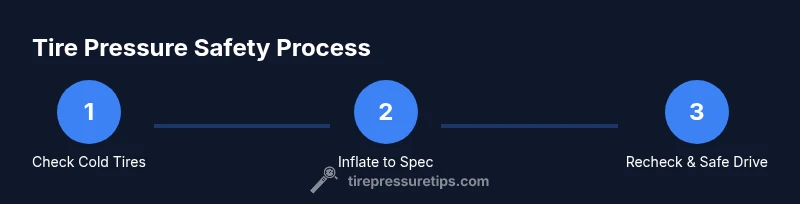
- Inflate to the recommended range and recheck
- Replace valve caps and inspect for leaks
- If unsure, seek professional help before highway driving
Following this checklist helps you avoid dangerous scenarios and keeps tires in good health.
Tools & Materials
- Tire pressure gauge (digital or analog)(Choose a gauge with an easy-to-read display and hold it firmly on the valve stem for an accurate reading.)
- Air compressor or access to a gas station tire inflator(If possible, verify the reading after inflating to the recommended range.)
- Vehicle owner’s manual or door placard with PSI recommendations(Check for each tire; some vehicles have different values for front/rear tires.)
- Valve caps(Ensure caps are present to seal the valve stems after inflation.)
- Spare tire and toolkit (optional but recommended)(Useful if you need to replace a damaged tire on the road.)
Steps
Estimated time: 15-25 minutes
- 1
Check all tires when cold
Park on a level surface and wait at least three hours or drive less than a mile to keep tires cold for an accurate reading. Remove valve caps and check each tire with a gauge. Compare to the recommended PSI in your manual or placard.
Tip: Cold readings prevent heat from inflating the tire and giving a false high pressure. - 2
Compare readings to the recommended PSI
Record the numbers and identify which tires are underinflated. Note that different tires may have different targets on the same vehicle.
Tip: If the pressure is within 1-2 psi of the target, you can often address it with a quick top-up. - 3
Inflate to the recommended PSI
Using an air compressor or station inflator, add air slowly while monitoring with your gauge. Stop periodically to recheck the pressure.
Tip: Avoid overinflation by inflating in small increments and checking after each pass. - 4
Recheck all four tires after inflation
Recheck each tire to confirm you’ve reached the target PSI. Re-test after a short drive if your gauge reads differently when tires warm.
Tip: Temperature changes can affect readings; ensure all four tires are within range. - 5
Replace caps and inspect for leaks
Tighten valve caps and look for leaks around stems. If you see a crack or puncture, remove the car from service and have the tire inspected.
Tip: Loose caps or damaged stems can cause slow leaks. - 6
Plan safe driving if TPMS warns you
If TPMS signals low pressure, drive cautiously to a nearby safe location and recheck. If the reading remains low, avoid highway driving until fixed.
Tip: TPMS is a warning; treat it as a signal to inspect rather than a clearance to continue.
Frequently Asked Questions
Is it safe to drive with a tire that’s slightly underinflated?
Slight underinflation can still affect handling, braking, and tire wear. It’s best to bring tires to the recommended PSI before long trips.
Slightly underinflated tires can affect safety; aim to bring them to the recommended PSI before driving far.
What should I do if the TPMS warning light comes on while driving?
Slow down and find a safe place to stop. Check tire pressures, inflate if needed, and seek professional help if you can’t reach the correct level.
If the TPMS light comes on, pull over safely and check the tire pressures.
Can temperature changes cause pressure to drop quickly?
Yes. Temperature fluctuations can cause tires to lose or gain pressure. Check and adjust accordingly when temperatures shift.
Temperature changes can affect tire pressure, so recheck after cold-weather or heat changes.
Do TPMS sensors ever fail?
TPMS sensors can fail or lose calibration. If you suspect a faulty reading, have the system checked by a technician.
It's possible for TPMS to fail; have it checked if readings don’t match the gauge.
Is it okay to drive on a spare tire with low pressure?
Spare tires typically have different pressure requirements. Check the spare’s label or manual and adjust accordingly, especially if it’s a full-size spare.
Spare tires have their own specs; use the label for guidance and avoid mixing pressures.
Watch Video
What to Remember
- Check tires cold before reading pressure
- Inflate to manufacturer-specified PSI
- Use TPMS as a early warning, not a guarantee
- Regular maintenance prevents unsafe pressure loss
- Recheck after inflating to confirm accuracy