Tire Pressure Low Can I Drive: Urgent Troubleshooting Guide
Urgent guidance on what to do when tire pressure is low, how to check and inflate safely, TPMS tips, and when to seek professional help.


If your tire pressure is low, you should not plan on long trips. Immediately locate the recommended cold PSI on the door placard or owner’s manual, then inflate the tire with an accurate gauge to that spec before driving farther. Driving on underinflated tires increases heat buildup, reduces handling, and can cause a blowout; use Tire Pressure Tips as your reference for safe practices.
What happens when tire pressure is low?
Low tire pressure affects every aspect of a tire’s performance. The contact patch between the tire and road becomes irregular, increasing flex and heat generation. This can reduce fuel efficiency, worsen steering response, and accelerate tread wear. In emergency scenarios, a severely underinflated tire is more prone to overheating and even a blowout. If you’re asking tire pressure low can i drive, remember that a short, careful drive to a safe spot or tire shop is preferable to continuing with a soft tire. According to Tire Pressure Tips, maintaining proper tire pressure is a cornerstone of driving safety and efficiency. Regular checks help prevent the gradual drift that leads to unsafe road conditions, especially during temperature shifts and heavy loads.
Key takeaway: never ignore a TPMS warning or a soft steering feel; address underinflation promptly to protect you, your passengers, and your wallet.
Safer immediate actions if you notice low tire pressure
When you first notice an underinflated tire, take a calm, safety-first approach. Pull over to a safe location as soon as practical, turn on your hazard lights if you’re on a busy road, and inspect the tire for obvious damage or objects. If the tire only looks a bit low and you can safely reach a gas station or tire shop, plan a short trip with caution. Avoid heavier loads, aggressive accelerations, and high speeds. The Tire Pressure Tips team recommends inflating to the vehicle’s recommended cold PSI and then rechecking after a few miles to ensure the pressure remains stable. If you cannot reach a service point quickly, consider waiting until you can inflate it properly rather than continuing to drive.
How to check and inflate correctly
Before inflating, ensure the tire is cold (driven less than 2 miles in the last 3 hours). Use a trusted gauge to measure PSI, and compare it to the placard on the driver’s door jamb or the owner’s manual. Inflate to the recommended PSI, not the maximum on the tire sidewall. Recheck the pressure after the tire has cooled and readjust if needed. If you don’t have a gauge, consider a stop at a service station that offers a tire air pump with gauge accuracy. Remember to check all tires, including the spare, on a regular basis. Safety first: never exceed the tire’s maximum inflation pressure, which can lead to a blowout.
Common causes of slow air loss
Slow leaks creep into tires for multiple reasons. Common culprits include a puncture or nail, a faulty valve stem, a bead leak where the tire seals to the rim, or gradual air seepage caused by temperature changes. Temperature swings between day and night can also make tires appear to lose pressure. If the tire continues to drop after inflating, inspect for visible damage or go to a professional for a leak test. Regular inspection helps catch these issues early and keeps you on the road safely.
TPMS: What it can and can't tell you
Tire Pressure Monitoring System (TPMS) provides a warning when pressures fall below a threshold, but it cannot tell you which tire is low or diagnose the cause. A TPMS alert is a signal to check all tires with a gauge. Some systems alert for slow leaks, but you may still need to inspect the valve stems and rims for damage. Always verify with a physical PSI measurement after a TPMS warning, and re-inflate to the recommended cold PSI. Low pressure can confuse driving dynamics, especially at highway speeds.
Driving tips with a slightly low tire
If you must drive with a slightly low tire, do so at reduced speeds and with lighter loads until you reach a service point. Avoid sudden cornering or hard braking, which increases heat buildup in the compromised tire. If you notice vibration, excessive heat, or a rapid pressure drop, stop immediately and seek assistance. The safest option is to repair or replace the tire as soon as possible, and never rely on temporary patches for extended driving.
Prevention and maintenance to avoid low tire pressure in the future
Create a routine to check tire pressure at least once a month and before long trips, especially when the seasons change. Use a proper gauge, check when the tires are cold, and keep a small air gauge in your vehicle for on-the-road checks. Replace worn valves and consider TPMS sensor maintenance if you notice recurring warnings. Good practice includes rotating tires as recommended by the manufacturer, which helps even wear and better pressure stability.
Quick TPMS and tire safety checklist
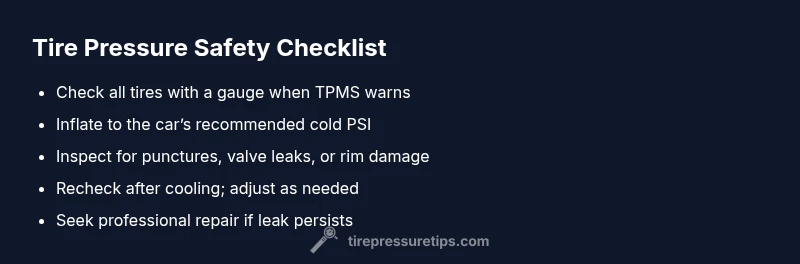
- Check all tires including the spare when you see a TPMS warning. - Verify cold PSI against the placard. - Inflate gradually to the recommended PSI and recheck. - Inspect for objects, punctures, or valve issues. - Seek professional help if the tire won’t hold pressure or shows damage.
Steps
Estimated time: 25-45 minutes
- 1
Find the recommended pressure
Locate the car’s door placard or owner’s manual to determine the correct cold PSI for each tire. This is essential before inflating.
Tip: Always use the placard value, not the tire’s maximum rating. - 2
Check the tire while cold
Tires heat up quickly during driving, making PSI readings higher. Check when the vehicle has been stationary for several hours.
Tip: If you’ve just driven, wait at least 3 hours before rechecking. - 3
Inflate to the correct PSI
Attach a gauge and fill the tire until it matches the recommended cold PSI. Avoid overinflation.
Tip: Progressively add air in small increments. - 4
Recheck after cooling
After inflating, drive a short distance and recheck to ensure pressure remains stable when cool again.
Tip: Minor pressure changes can occur; adjust as needed. - 5
Inspect for damage
Look for nails, cuts, or bulges. If you find damage, do not drive long distances; pursue repair or replacement.
Tip: Do not ignore signs of bead leaks or sidewall damage. - 6
Evaluate the need to drive further
If you’re underinflated significantly or seeing a rapid drop, head to a repair shop or tire service immediately.
Tip: When in doubt, pull over safely and seek help.
Diagnosis: TPMS warning light on or tire feels noticeably soft while driving
Possible Causes
- highSmall puncture or nail in the tread
- mediumValve stem leak or bead leak
- lowTemperature-related pressure drop
- lowSlow leak from rim or wheel damage
Fixes
- easyCheck tire pressure with a gauge; inflate to the vehicle’s recommended cold PSI, then recheck after driving a short distance
- mediumInspect tire for visible punctures or objects; if found and you can safely drive, have it repaired or replaced promptly
- mediumInspect valve stems and rims for damage or leaks; replace valve stem if needed
- easyIf pressure cannot be maintained, avoid highway speeds and seek professional repair or tire replacement
Frequently Asked Questions
Can I drive to a nearby service station if my tire is underinflated?
Only if the tire is only slightly low, you’re traveling a short distance at low speed, and you monitor for heat or vibration. If in doubt, call for roadside assistance or replace the tire instead of risking a blowout.
You can drive a short distance to a shop if the tire isn’t severely underinflated and you drive slowly; otherwise call for help.
What should I do first if the TPMS lights up?
Safely pull over and check all tires with a gauge. Inflate to the specified cold PSI and recheck after the tire cools. If any tire won’t hold pressure, seek repair.
Pull over safely, check pressures with a gauge, inflate to the charted PSI, and recheck after cooling.
Is it safe to drive if one tire looks visibly low but others are fine?
Yes, a single underinflated tire can be driven to a nearby service point if it is only moderately low, but avoid high speeds and heavy loads. Monitor closely and inflate soon.
A single mildly low tire can be driven to a shop slowly, but stop if it worsens.
What causes tires to lose air slowly over time?
Punctures, valve stem leaks, bead leaks, and temperature changes are common causes. Regular inspection helps catch leaks early before they become dangerous.
Slow leaks come from punctures or faulty valves; check regularly.
When should I replace a tire instead of patching it?
If the tire has sidewall damage, large punctures, or multiple leaks, replacement is safer than patching. Always follow professional guidance for safety.
Consider replacing a damaged tire rather than patching it if safety is in question.
What role does temperature play in tire pressure?
Temperature changes can cause noticeable pressure fluctuations. Check and adjust tire pressure when tires are cold to ensure accuracy.
Temp changes can shift tire pressure; check when cold for accuracy.
Watch Video
What to Remember
- Check tire pressure regularly to prevent unsafe driving conditions.
- Inflate to the vehicle’s recommended cold PSI, not the tire’s maximum.
- Use a reliable gauge and recheck after cooling to confirm stability.
- TPMS alerts require immediate physical PSI verification and inspection for leaks.
- Seek professional repair or replacement for persistent leaks or damaged tires.