Low Tire Pressure: What to Do
Learn how to safely handle a low tire pressure, check and inflate correctly, inspect for leaks, understand TPMS alerts, and when to seek professional help. Practical guidance from Tire Pressure Tips.


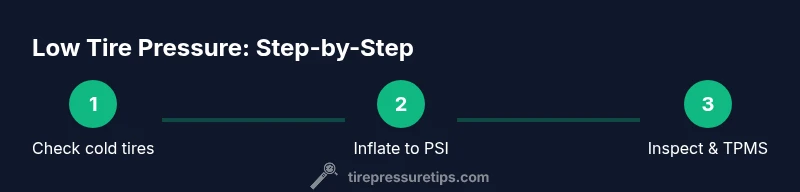
If you notice tire pressure is low, take immediate, safe action. Pull over when safe, check all tires with a reliable gauge, and reinflate to your vehicle’s recommended PSI. Inspect for punctures, valve leaks, and TPMS warnings, and address slow leaks promptly. Then recheck pressures after driving a few miles. The Tire Pressure Tips team notes that staying proactive protects your tire life, fuel economy, and overall safety.
Why Low Tire Pressure Happens
Tire pressure can drop for several reasons, including temperature changes, slow leaks from nails or screws, damaged valve stems, or TPMS alerts that reflect a tire’s actual condition after long drives. Colder mornings, frequent short trips, or carrying heavy loads can makes readings appear lower than usual. Even normal wear on tires can create small leaks over time. According to Tire Pressure Tips, monitoring pressure regularly helps you catch these issues early, preventing uneven wear, poor handling, and reduced fuel economy. Keeping a mental note of your tire pressure trend lets you act before a safety risk arises.
Key takeaway: temperature swings and wear are common culprits; proactive checks prevent surprises on the road.
Immediate Safety Steps If You Suspect a Leak
When you suspect a low tire, safety comes first. Find a safe place to pull over away from traffic. Turn on your hazard lights if you’re on a busy road. Before touching the wheel, ensure your vehicle is off and on stable ground. Inspect visually for obvious punctures or damage to the sidewalls. If you’re unsure, avoid driving long distances—towing or roadside assistance can be a safer option. The goal is to minimize risk while you determine the cause and fix it if possible. Keep a basic kit handy for quick checks and temporary fixes when you’re far from help.
Tip: a quick hand-held gauge and a portable air compressor can save time and keep you safer on the road.
How to Check Tire Pressure Accurately
Tire pressure readings are most accurate when tires are cold, meaning they haven’t been driven on for at least three hours. Remove the valve stem cap and place the gauge on the valve. Note the reading on all four tires, and compare with the manufacturer’s recommended PSI found on the door jamb or in the owner’s manual. If readings vary, recheck after cooling down for a few minutes and re-inflate as needed. Record dates and numbers to track changes over time, which helps identify slow leaks early.
Why cold readings matter: hot tires inflate slightly, giving a falsely high reading that hides the true pressure.
How to Inflate to the Right Level
After confirming the target PSI, inflate each tire in stages. Start with the tires most worn or most critical to steering control. Stop inflating as you approach the recommended PSI, then recheck with the gauge. Never exceed the maximum inflation on the tire sidewall; always use the vehicle’s target PSI instead. If you’re refilling at a station, recheck after a few minutes of driving to verify the reading remains stable.
Best practice: fill slowly and pause to check; sudden bursts can overshoot the mark.
Inspecting for Leaks or Damage
If a tire remains low after inflation, inspect for leaks, punctures, or bead seating issues. Look for nails, screws, screws, or embedded objects. For a quick test, mix soapy water and spray around the valve stem, bead, and tread; bubbles indicate a leak. If you find a puncture, determine whether it’s repairable based on location and size. A small puncture in the tread area often can be repaired, while sidewall damage usually requires a replacement. Keep your receipts and repair history for warranty purposes.
TPMS and Your Low Tire Warning
TPMS warnings are designed to alert you when a tire’s pressure is significantly low. A warning may appear after starting the car or while driving; in some cases, a tire may temporarily appear fine after inflation, only to drop again during use. If TPMS triggers repeatedly, inspect for slow leaks, sensor faults, or improper seat of the tire. If you suspect a sensor issue, have the TPMS system checked by a qualified technician to avoid misreads that could mislead your maintenance efforts.
Building a Simple Maintenance Routine
Set a simple weekly check-in for your tires, especially before long trips or when the weather shifts. Keep a small gauge in your glove box and a portable air compressor in the trunk. Record PSI readings and any notes about damage or leaks to monitor trends over time. This habit helps prevent unsafe conditions and protects your tire lifespan and fuel efficiency. Tire Pressure Tips emphasizes consistency: regular checks beat emergency repairs.
When to Seek Professional Help
If you notice a tire won’t hold air after multiple reinflations, or if you see sidewall bulging, crusty patches, or rapid pressure loss, it’s time to seek professional help. A persistent leak or damaged tire often requires repair or replacement. Do not drive on a tire that shows obvious damage; risking a blowout is unsafe. For TPMS warnings with no obvious cause, consult a tire professional to inspect sensors and seals. The Tire Pressure Tips team recommends treating unpredictable readings as a signal to check the tire system thoroughly.
Quick Reference Tire Pressure Checklist
- Check all tires when cold at least once a month and before long trips.
- Use a reliable gauge and the door jamb PSI chart for targets.
- Look for obvious damage and test for leaks with soapy water.
- Recheck after driving a short distance to confirm stability.
- Schedule professional TPMS inspection if warnings persist.
Tools & Materials
- Tire pressure gauge (digital preferred)(Calibrate and check cold tires for accuracy)
- Air compressor or access to a gas station with a working compressor(Monitor pressure as you fill to avoid overinflation)
- Owner's manual / door jamb PSI chart(Use specified PSI for each tire)
- Soap and water spray bottle(For quick leak testing around stems and beads)
- Notepad and pen(Record readings and dates to track changes)
- Spare tire and basic jack (optional)(Useful if you need to temporarily swap a damaged tire)
Steps
Estimated time: 30-60 minutes
- 1
Measure cold tire pressure
Read all four tires when they are cold to get an accurate baseline. Remove caps, place the gauge, and note each tire’s reading. Compare against the door jamb or manual targets and decide which tires need attention.
Tip: Always read when tires are cold for the most accurate measurement. - 2
Inflate to recommended PSI
Inflate tires in small increments, checking after each interval. Start with the tires that carry the most load, then move to the others. Stop when readings meet the recommended targets.
Tip: Avoid overinflating; if you’re unsure, inflate to the lower of front/rear targets. - 3
Check all tires and the spare
Inflate and inspect every tire, including the spare if you carry one. A single underinflated tire can affect handling, braking, and mileage. Keep a consistent check on all wheels.
Tip: Don’t assume the spare is fine—tire pressures can vary in storage. - 4
Inspect for leaks or damage
Look for nails, screws, or cuts in the tread. Test suspected leaks with a soap solution; bubbles indicate a problem. Mark and monitor any suspect area for changes.
Tip: If you find a leak, assess repairability based on location and size. - 5
Test TPMS and sensor accuracy
If TPMS shows a warning, verify readings and ensure sensors aren’t stuck or misread. A persistent TPMS warning with normal readings may indicate sensor issues requiring professional service.
Tip: Never ignore a TPMS alert; treat it as a signal to inspect promptly. - 6
Recheck after driving a short distance
Drive 3-5 miles, then recheck each tire’s pressure. Temperature changes during driving can affect readings, so confirm stability before concluding a job.
Tip: If pressure drops again, plan a professional inspection soon. - 7
Address slow leaks or damaged tires
Treat a slow leak as a repair situation. If you can’t identify or fix the source, replace or professionally repair the tire. Do not rely on temporary fixes as a long-term solution.
Tip: Keep records of repairs and replacements for warranty purposes. - 8
Set up a maintenance reminder
Put a recurring reminder to check tire pressure weekly or before long trips. This habit helps you prevent unsafe conditions and extend tire life.
Tip: Consider a seasonal routine for temperature-related changes.
Frequently Asked Questions
Why does tire pressure drop overnight or with cold weather?
Tire air contracts in the cold and expands with heat. Temperature shifts cause readings to change, so readings can appear lower in the morning or during season changes. Regular checks help you stay on top of实际 pressure and safety.
Cold weather makes tires seem underinflated, so check in the morning and adjust as needed.
How often should I check my tire pressure?
Check at least once a month and before long trips. If you drive in extreme temperatures or carry heavy loads, check more often. Regular checks help prevent uneven wear and improve fuel economy.
Check monthly, or before long trips, especially in extreme temperatures.
Can I drive with low tire pressure safely?
Driving on underinflated tires is unsafe and can cause poor handling, overheating, and increased wear. If the tire is visibly deflated, replace or inflate promptly and avoid long trips until corrected.
Unsafe to keep driving on low pressure; inflate or replace as needed.
Is TPMS always accurate?
TPMS is a warning system and can sometimes misread due to sensor faults or calibration issues. If readings don’t match, have the system checked by a professional to confirm accuracy.
TPMS helps, but it isn’t perfect—get it checked if in doubt.
What should I do if a tire won’t hold air after multiple reinflations?
Persistent loss after reinflation indicates a leak or damage. Inspect for punctures or valve leaks; if not fixable, replace the tire or seek professional repair.
If it won’t hold air after reinflation, get professional help.
Should I repair or replace a damaged tire?
Repairability depends on puncture location and size. Sidewall damage typically requires replacement. A professional can determine the best option based on tire condition.
Sidewall damage usually means replacement; consult a pro for repairs.
Watch Video
What to Remember
- Check cold tires first for accurate readings
- Inflate to the vehicle’s recommended PSI
- Inspect for leaks and damage
- Address TPMS alerts promptly
- Establish a simple weekly maintenance routine