Is It Okay to Drive with 25 PSI Tire Pressure? A Practical Guide
Discover if driving with 25 psi is safe, how to verify your vehicle's recommended inflation, and the correct steps to inflate tires. Tire Pressure Tips breaks down risks, checks, and best practices for confident, safer driving.


What 25 PSI Really Means for Your Car
Is it safe to drive with a tire pressure reading of 25 psi? The short answer depends on your specific car model and the current load. For most passenger cars, the manufacturer specifies a cold-inflation pressure on the door placard or in the owner’s manual. That target is chosen to balance load carrying ability, handling, tread wear, and fuel economy. When you watch a reading of 25 psi, you’re looking at a level that is commonly below that target, which can introduce several safety and performance risks. According to Tire Pressure Tips, the exact safe range varies by vehicle and tire type, so you should always confirm the recommended pressure for your tires rather than assuming 25 psi is acceptable. If your tires are labeled “max pressure” on the sidewall, that value is not the same as the recommended operating pressure. Always aim for the manufacturer’s target and adjust for conditions like heavy loads or high ambient temperatures.
How Low Tire Pressure Impacts Safety and Performance
Low tire pressure affects stability, braking, and steering response. A tire that is underinflated develops more sidewall flex, which raises heat buildup during driving and can accelerate wear on the tread edges. Handling can feel sluggish, especially in corners or emergency maneuvers, and fuel economy tends to decline due to greater rolling resistance. The contact patch expands irregularly, which can increase tire wear and the risk of a puncture under heavy loads. In wet or snowy conditions, underinflated tires lose grip faster, increasing stopping distances and the chance of hydroplaning. The Tire Pressure Tips team emphasizes that maintaining the correct inflation improves safety margins and consistency across different driving scenarios.
Checking and Confirming the Correct Cold Inflation Pressure
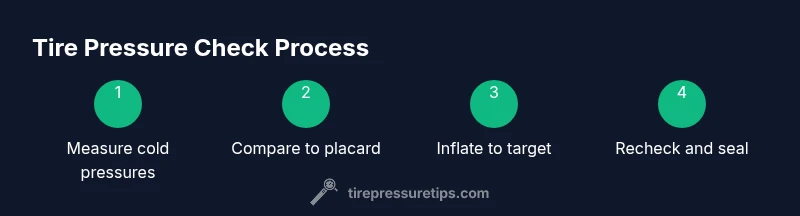
Begin by locating the recommended cold inflation pressure for your vehicle on the door placard (driver’s door jamb) or in the owner’s manual. Measure tire pressure when the tires are cold, ideally before you’ve driven or at least three hours after a drive. Use a reliable tire pressure gauge and record the reading for each tire. If a tire reads below the placard value, plan to inflate it to the specified target. Remember that readings can vary by temperature: hot tires will show higher numbers, while cold readings provide the baseline for safe inflation.
When 25 PSI Might Be Temporarily Acceptable
There are rare, limited circumstances where a temporary drive with low pressure might be necessary, such as a short trip to a nearby service station with a tire defect that isn’t leaking rapidly or if you’re attempting to move a vehicle to a safer location after a minor incident. Even then, do not exceed moderate speeds and minimize distance. The moment you suspect a slow leak, a nail, or a damaged valve, stop and assess. If you can’t reach the recommended pressure quickly, seek professional help rather than continuing to drive long distances.
The Right Inflation Process: From Measurement to Maintenance
To restore proper inflation, start with cold tires and the manufacturer’s target pressure. Remove the valve cap, attach a gauge securely, and read the pressure. If underinflated, add air in small increments, rechecking after each addition. If overinflated, release air until you reach the target. Recheck all four tires, especially if you have a spare, and replace valve caps to seal the stems. After inflating, take a short test drive and recheck once more to ensure pressure remains within the correct range.
The Role of TPMS and Practical Safety Tips
Tire Pressure Monitoring Systems (TPMS) provide a warning when a tire drops significantly below the target. Use the TPMS as a cue to verify with a gauge, because the system may not reflect small changes in pressure or may be slow to update after inflation. If the TPMS light comes on, inspect for punctures, leaks, or damaged valves, and inflate to the recommended level if safe. Maintain even pressure across tires to preserve handling balance, and avoid overinflating, which can cause a harsh ride and uneven wear.
Real-World Scenarios: Planning for 25 PSI Situations
In cooler months or when carrying extra load, pressure readings can shift. Temperature drops cause tire pressure to fall, so it’s wise to check and adjust before trips, especially on long commutes or highway drives. If you find 25 psi, plan for a dedicated inflation stop at a service station or tire shop and verify both front and rear tires. Planning ahead reduces the risk of underinflation-related incidents and helps maintain optimal fuel economy and tire life. The Tire Pressure Tips analysis highlights that proactive checks yield safer, more consistent performance across seasons.