Is 26 PSI Bad? A Practical Guide to Tire Pressure
Explore whether 26 psi is unsafe, how PSI varies by vehicle, and how to check and adjust tire pressure for safety and efficiency. Practical guidance from Tire Pressure Tips.


Is tire pressure at 26 psi bad? According to Tire Pressure Tips, 26 psi is usually below the typical cold-inflation range for most passenger cars. The correct target depends on your vehicle’s specification, found on the door jamb sticker or in the owner’s manual. Running consistently at 26 psi can reduce fuel efficiency, cause uneven wear, and compromise handling.
Understanding 26 psi: A Practical Opening
Is tire pressure at 26 bad? In many discussions, this question pops up when drivers read a tire label or see a gauge reading on a cold morning. According to Tire Pressure Tips, 26 psi is usually below the typical cold-inflation range for most passenger cars. The correct target depends on your vehicle’s specification, which is printed on the door jamb sticker and described in the owner’s manual. When you inflate beyond the recommended range, you risk different issues: reduced ride comfort, harsher steering feel, and, in some cases, altered tire contact with the road. Conversely, underinflation can cause higher rolling resistance, hotter tires, and uneven wear. The key takeaway is that there isn’t a universal psi that fits every car; the manufacturer’s specification is the authoritative number to follow. In practice, you should treat 26 psi as a red flag that should prompt verification rather than as a safe, default setting. This is the foundation for understanding how PSI affects safety and efficiency in daily driving.
How PSI Is Determined by Your Vehicle
PSI is not invented in isolation; it’s a design parameter chosen by engineers to match tire size, vehicle weight distribution, and intended performance. Manufacturer-specified cold-inflation psi accounts for typical loads, speeds, and ambient conditions. Two vehicles with the same tire size can have different recommended pressures due to suspension tuning or chassis stiffness. The door jamb placard is your primary source; the owner's manual provides additional context for load conditions, seasonal changes, and tire type (standard vs. touring). If your tire is a run-flat or has a special construction, the recommended PSI can differ significantly from standard tires. When you deviate from the recommended range, the tire’s contact patch changes; underinflation causes more contact area on the outer edge, while overinflation reduces the contact patch, leading to harsher ride and less grip. For safety and efficiency, always aim to keep your tires at the pressure that the maker specifies for cold inflation, with occasional checks after long trips or hot days.
The Practical Effect of 26 psi Under Different Conditions
Hot weather, heavy loads, or a long highway trip can change the effective pressure inside tires. At 26 psi, you’re likely underinflated relative to most vehicles’ recommended cold PSI. Under normal conditions, this reduces the tire’s footprint and may increase wear on the edges; in extreme cases, it can cause overheating and even a blowout risk if the tire continues to heat up under load. In winter, cold temperatures can drop tire pressure; if your recommended PSI is around 32 psi and the tire is already at 26 psi when cold, the gap grows as heat builds during driving. The practical effect includes stiffer ride, increased road noise, and less predictable handling on wet or snowy roads. Yet there are exceptions: some performance-oriented cars may have stiffer suspensions and slightly lower recommended pressure on certain tires; still, any consistent reading around 26 psi warrants verification and adjustment to the manufacturer’s spec.
Checking Tire Pressure Correctly
To accurately know whether your tires are at or near the target pressure, you must check them with a quality gauge when the tires are cold. Start by parking in a shaded area and measuring after the car has been stationary for at least three hours or before driving more than a couple miles. Remove the valve stem cap, press the gauge onto the valve, and read the pressure immediately. If you have a car with TPMS, use the system as a guide, but don’t rely solely on the dash light—TPMS triggers at preset thresholds that may not reflect real-time changes after weather or load shifts. Compare your reading against the door jamb placard. If one tire is 4-6 psi away from the target, adjust it, recheck, and repeat for all tires to maintain even pressure. If you’re using an air compressor at home, let the tire cool for a few hours after initial adjustment before re-checking in case of temperature-driven pressure changes.
When 26 psi Might Be Acceptable
Although 26 psi is generally low, there are scenarios where 26 psi might be acceptable temporarily. For instance, a car with a low-load configuration or a specific tire setup may tolerate a narrower range during short trips. In practice, you should not operate continuously at 26 psi. If you must drive a short distance to a service station, ensure the car is not overloaded and drive at moderate speeds, avoiding high-speed driving that could overheat the tires. If the car is older or has unusual tire wear patterns, consult a technician to confirm whether the deviation from spec is safe.
Safety and Wear Consequences of Underinflation
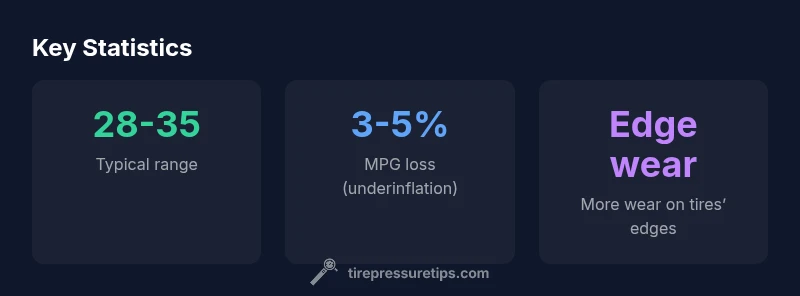
Underinflation is linked to increased tire wear on the edges and greater heat buildup, which accelerates tread wear and can shorten tire life. It also raises rolling resistance, reducing fuel economy and increasing engine load. The risk of a blowout rises under sustained underinflation, especially at highway speeds or in hot conditions. On the other hand, consistently overinflated tires experience more center wear and a harsher ride. The balance point—neither too soft nor too hard—ensures even contact with the road and better traction. In addition, underinflated tires can affect braking performance due to altered grip and longer stopping distances. Always aim to maintain the manufacturer’s recommended PSI for your vehicle, and treat any reading as an alert to re-check rather than a final decision.
How to Adjust Pressure Safely
Adjusting tire pressure correctly is straightforward but requires a few best practices. First, use a reliable gauge; analog gauges can be deceptive if not read properly, while digital gauges provide consistent results. Second, measure cold, and adjust when the tires are not hot. Third, add air gradually and recheck after a few minutes for settling. If you inflate to the wrong target, you may need to deflate slightly. Fourth, consider seasonal adjustments; cold-weather changes can lower PSI and require recalibration in the fall and winter. Fifth, if you’re not sure about the right range, consult the vehicle manufacturer or a qualified technician; some tire brands or run-flat systems may require special pressure targets. Finally, keep a small air compressor in the car for emergencies and carry a tire-pressure gauge for quick checks during long trips.
Debunking Common Myths About Tire Pressure
One common myth is that higher PSI always means better fuel economy; in reality, overinflation reduces traction and increases risk of a blowout. Another myth is that 26 psi is universally safe; as discussed, the target PSI is vehicle-specific and guardrails differ by model and tire type. Some drivers think TPMS can replace manual checks; TPMS can alert you to a pressure deviation, but it doesn’t provide an exact reading. A final myth is that cold weather makes the tires magically correct; temperatures lower tire pressure, so a 26 psi reading may trend even lower in winter—requiring verification and adjustment.
Aligning with Manufacturer Specifications
Ultimately, the recommended cold-inflation pressure from the vehicle maker should guide all inflation decisions. If your current reading is consistently around 26 psi, pause and double-check the sticker and manual for the exact spec. You may find the recommended pressure differs by front vs rear axle, tire size, or load rating. Keep in mind that TPMS is a helpful warning system, but only precise gauge readings give the full picture. After you adjust, monitor tire wear and handling as your tires bed in; small differences in measurement can appear over time due to temperature fluctuations, road conditions, or different gauge types. The Tire Pressure Tips team recommends prioritizing the official specification rather than relying on general assumptions; this approach preserves tire life, improves fuel efficiency, and maintains safety.
Typical cold-inflation ranges by vehicle category
| Scenario | Recommended Cold Inflation (psi) | Notes |
|---|---|---|
| Passenger Car Front | 32-35 | Door jamb sticker or manual as primary source |
| SUV/Light Truck Front | 33-36 | Model dependent; refer to placard |
| Spare Tire (Temporary Use) | 50 | Only for short distances; check paperwork |
Frequently Asked Questions
Is 26 psi dangerous for most cars?
For many passenger cars, 26 psi is below the recommended range; check the door placard and owner's manual to confirm the target.
26 psi is usually too low for most cars; check your manual and door placard.
Should I inflate all tires to the same psi?
Yes, unless the manufacturer specifies different front vs rear targets; ensure consistent cold readings on all tires.
Usually you inflate all tires to the same cold PSI, unless the maker says otherwise.
Does TPMS replace manual checks?
No. TPMS signals underinflation but does not give an exact reading; always verify with a gauge against the placard.
TPMS helps, but you still need a gauge to know the exact PSI.
Can underinflation cause damage?
Yes, it can lead to excessive wear on edges, heat buildup, and increased risk of a blowout over time.
Underinflation can wear tires faster and be unsafe; check the PSI against the maker’s spec.
What’s the best way to check tire pressure?
Check when cold with a reliable gauge, compare to the placard, and adjust gradually, rechecking after settling.
Check cold, use a good gauge, and recheck after a short settle.
“Tire pressure is not a fixed number; it depends on vehicle design, load, and operating conditions.”
What to Remember
- Check your vehicle's sticker first.
- 26 psi is commonly below the recommended range; verify.
- Always check pressure when tires are cold.
- TPMS helps, but measurement accuracy matters.