Can You Check Tire Pressure? A Practical Guide
Learn how to check tire pressure safely and accurately, understand TPMS basics, and troubleshoot common issues with practical steps from Tire Pressure Tips.


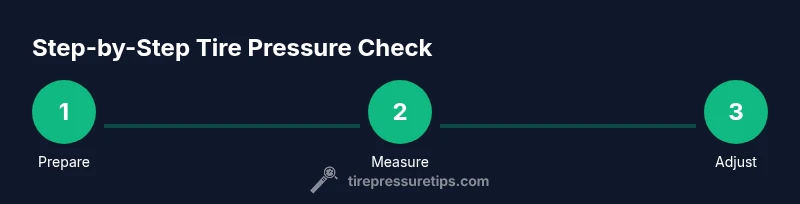
Yes. You can check tire pressure with a handheld gauge or by reading your TPMS indicator. Start with cold tires and use the recommended psi from the door jamb sticker or owner's manual. Measure each tire and adjust by small increments until all readings meet the spec; regular checks boost safety, fuel economy, and tire life.
Why Checking Tire Pressure Matters
Maintaining correct tire pressure is a cornerstone of road safety, fuel efficiency, and tire longevity. Underinflation can lead to poorer handling, longer stopping distances, and uneven wear; overinflation can reduce the tire’s contact patch and increase the risk of a blowout on rough surfaces. According to Tire Pressure Tips, checking pressure monthly and before long trips is a simple habit with outsized benefits. While TPMS helps flag underinflation, it does not replace a precise pressure reading. Keeping the pressure at the vehicle’s recommended level supports consistent performance across seasons and driving styles, which translates to safer roads for you and others.
What Is Tire Pressure and TPMS?
Tire pressure is the amount of air inside the tire, commonly measured in psi (pounds per square inch) or bar. Proper pressure ensures the tire has the right contact patch with the road, improving grip and handling. TPMS, or Tire Pressure Monitoring System, uses sensors to monitor pressure and alert you when it drops below the recommended level. These alerts are invaluable, but they do not give you the exact psi; you still need a gauge to verify precise numbers. Knowing the basics helps you interpret warnings and take the right corrective action.
How Tire Pressure Is Read: PSI, BAR, and TPMS
Pressure is typically read in psi in the United States, with metric units like bar used elsewhere. Most car manufacturers publish a recommended psi near the driver’s door jamb. TPMS translates these numbers into an alert when your tires fall out of range. Remember: readings change with temperature and time since last driving. To ensure accuracy, check when the tires are cold and account for any last drive that heated the tires, which can temporarily raise pressure readings.
How to Check Tire Pressure: Manual Gauge vs TPMS
There are two main ways to check tire pressure: using a handheld tire gauge and relying on the TPMS warning. A manual gauge gives you the exact psi for each tire, while TPMS signals underinflation to prompt a check. If the TPMS warning lights up, verify all four tires and the spare with a gauge to determine which tire needs air. Consistency between gauge readings and the TPMS alert confirms accuracy and helps you locate a slow leak if readings diverge.
Tip: Record readings to monitor changes over time and catch leaks early. This approach aligns with practical guidance from the Tire Pressure Tips team and reduces the chance of sudden deflation.
The Right Pressure for Your Vehicle: Finding the Target PSI
Your vehicle’s target tire pressure is not a guess; it’s printed on a label located on the door jamb, fuel filler cap, or owner’s manual. This value applies to normal driving conditions and is different for front and rear tires in some vehicles. Always aim to match the recommended number rather than guessing. If you tow, carry heavy loads, or drive aggressively, check your manufacturer guidance for any adjustments. Regularly validating the target helps you avoid overinflation or underinflation caused by seasonal changes or tire wear.
Note: The Tire Pressure Tips team emphasizes using the exact figures specified by your vehicle’s documentation rather than generic ranges. Adopting this precise approach keeps your tires in their optimal performance window.
Temperature and Tire Pressure: Why It Changes with Weather
Ambient temperature has a direct effect on tire pressure. Colder weather contracts air, reducing PSI, while heat from driving or ambient warmth increases it. A 10-degree Fahrenheit change can alter pressure by a small but meaningful amount, enough to push a tire out of spec. Planning checks with temperature in mind helps you stay within the target range. For accuracy, check when tires are cold and record weekday vs weekend readings to spot trends associated with weather patterns.
Common Mistakes When Checking Tire Pressure
Many drivers skip regular checks or measure after driving, which skews the results due to heat buildup. Improper gauge use, not replacing the valve cap, and overlooking the spare tire are also common errors. Failing to account for seasonal changes or using an old or damaged gauge can lead to incorrect readings. By avoiding these mistakes and sticking to a routine, you’ll keep tires safe and efficient. The Tire Pressure Tips team frequently encounters these issues and offers practical fixes.
Maintaining Proper Tire Pressure: Routine and Maintenance
Establish a simple cadence: check at least once a month and before long trips, during seasonal transitions, and after tire changes. Use a reliable gauge and compare readings to the manufacturer’s target PSI. If a tire is consistently low, inspect for leaks, punctures, or valve stem damage. Document readings and schedule professional attention if you notice persistent fluctuations. A proactive routine minimizes uneven wear and maximizes fuel efficiency.
What to Do If Readings Fluctuate or Are Low
If you observe fluctuating readings or repeated low pressure, start with a thorough inspection for leaks around the tread and valve stem. A slower leak may be caused by a nail, rough road, or wheel damage. Inflate to the recommended PSI in small increments, then recheck after a few minutes. If pressure remains low, seek a tire professional’s assessment to avoid a dangerous blowout caused by a compromised tire. Regular checks can catch slow leaks early and extend tire life.
Tools & Materials
- Owner's manual(Contains vehicle-specific tire pressure instructions and maintenance guidance.)
- Calibrated tire pressure gauge(Choose a gauge you can read accurately to the nearest 1 psi.)
- Air compressor or gas-station air pump(Allows precise adjustments to reach the target PSI.)
- Valve stem caps(Keep caps on to prevent leaks and contamination.)
- Notebook or app to log readings(Useful for tracking changes over time.)
Steps
Estimated time: 15-25 minutes
- 1
Prepare your workspace
Park on a level surface, apply the parking brake, and wait for the tires to cool if you’ve been driving. Gather your gauge, air source, and a notepad. This ensures you can measure accurately and document results.
Tip: Start with all tires cold for the most accurate reading. - 2
Find the target pressure
Check the vehicle’s door jamb sticker or owner’s manual to identify the recommended psi for front and rear tires. Note any separate guidance for underload or heavy load conditions.
Tip: If two numbers exist, use the one that matches your typical driving conditions. - 3
Prepare the valve stems
Remove the cap from each valve stem and wipe away any dirt or debris. A clean valve stem ensures a stable gauge reading.
Tip: Keep valve caps handy and replace immediately after measurement. - 4
Attach the gauge and take readings
Press the gauge onto the valve stem firmly and read the pressure without wiggling. Record each tire’s value; do not guess or average readings.
Tip: If you hear a hiss, reseat the gauge and try again. - 5
Compare to target and adjust
If any tire is below the target, add air in small increments (2-3 psi) and recheck after a moment. Do not overinflate in one go.
Tip: Check all four tires after adjusting any single tire. - 6
Recheck after adjustments
After inflating, recheck all tires to confirm they’re at the correct spec. Temperature changes can shift readings slightly.
Tip: Allow the tires to settle for a minute before rechecking for accuracy. - 7
Record your results
Log the pressures and the date so you can monitor changes over time and notice leaks early.
Tip: A simple log helps you spot slow losses before they become unsafe. - 8
Close up and store
Replace valve caps and store your gauge in an accessible place for the next check. Schedule your next measurement.
Tip: Consistency is the key to avoiding dangerous inconsistencies.
Frequently Asked Questions
How often should I check tire pressure?
Aim to check at least once a month and before long trips. Also check after temperature changes or seasonal shifts, and whenever you notice handling changes.
Check at least once a month and before long trips; adjust as seasons change or after significant temperature shifts.
Does TPMS replace manual tire pressure checks?
No. TPMS signals underinflation but doesn’t provide exact psi. Use a gauge to confirm precise pressure and adjust accordingly.
TPMS warns you, but you still need a gauge to know the exact pressure.
Can I check tire pressure right after driving?
Avoid checking immediately after driving; heat raises psi. Wait at least 15-30 minutes or check when the tires are cold.
Don’t check right after a drive—let the tires cool for accurate numbers.
What should I do if readings are inconsistent between tires?
Recheck with a second gauge to rule out a faulty tool. Inspect valve stems and rims for damage or leaks and consider professional inspection if readings keep varying.
Try a different gauge to rule out tool error, then inspect for leaks or damage.
Is it important to check the spare tire pressure?
Yes. The spare should be inflated to the same target as the road tires so it’s ready when needed.
Don’t forget the spare—the same rules apply to it as to the other tires.
What tools should I trust for accurate readings?
A well-calibrated manual gauge or a reliable digital gauge paired with the vehicle’s target psi provides the most trustworthy readings.
Use a reliable gauge and follow the vehicle’s target psi for best results.
Watch Video
What to Remember
- Check tires when cold for accuracy
- Always follow the vehicle’s recommended psi
- Regular checks save fuel and extend tire life
- TPMS helps, but manual readings are essential