Big Tire Pressure: Practical Guide for Oversized Tires
Learn how to check, adjust, and maintain big tire pressure with TPMS insights and a step-by-step approach from Tire Pressure Tips. Improve safety, handling, and tire life.


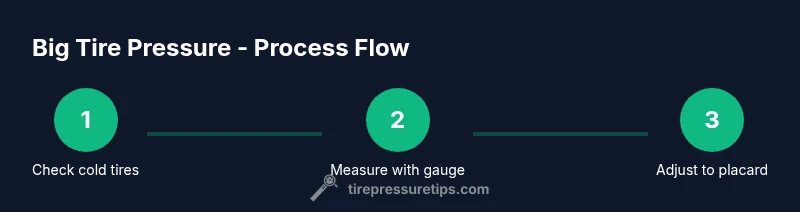
Quick Answer: You’ll learn how to identify, check, and adjust big tire pressure safely, plus how to use TPMS and gauges to stay within vehicle- and tire-spec limits. This guide emphasizes checking cold tires, matching pressure across axles, and using manufacturer placards. According to Tire Pressure Tips, consistent, thoughtful tire pressure care improves safety, fuel economy, and tire life.
Big Tire Pressure: What It Means for Safety and Performance
When you drive with big tires—whether aftermarket upgrades or factory oversized options—the simple act of inflating them correctly becomes a safety and performance lever. Big tire pressure affects grip, braking, ride quality, and tire wear. Big tire pressure needs vary by tire size, vehicle weight, load, and driving conditions. Always start with the vehicle placard and the tire specification for your model, then adjust within those ranges based on load and use. Understanding the relationship between tire size, contact patch, and air pressure helps reduce risk of sudden deflation, heat buildup, or uneven wear. According to Tire Pressure Tips, careful attention to tire pressure for large tires pays off in safer handling and longer tire life.
How to Determine the Right Pressure for Large or Oversized Tires
The process starts with the placard on the door jamb or owner's manual, which lists cold inflation targets by axle. For big tires, the target may differ between front and rear due to weight distribution. Consider load changes from passengers, cargo, or towing. If you’re upgrading to larger tires, consult the tire manufacturer’s guidance and your vehicle's ratings. In practice, start at the placard values, then fine-tune based on handling, ride comfort, and tire wear observations. The Tire Pressure Tips team notes that precise adjustments are a small but meaningful lever for performance and safety. Always measure when the tires are cold and the vehicle hasn’t been driven more than a short distance, to avoid heat-inflation effects.
Cold vs Hot Tires: Why Temperature Affects Big Tire Pressure
Tire pressure changes with temperature. Cold tires reflect the baseline recommended by the placard; hot tires after driving or in warm weather can appear higher, leading to over-inflation readings if measured immediately. For big tires, temperature effects can be more noticeable due to larger contact patches and heavier loads. The best practice is to check pressure when tires are cold, and recheck after a long drive or heavy load changes.
Using TPMS and Gauges to Verify Pressure on Big Tires
A tire pressure monitoring system (TPMS) provides alerts when a tire’s pressure deviates from the target. Use a reliable gauge to verify TPMS readings. Digital gauges give numeric readings; analog gauges offer quick visual checks. When using an air compressor, fill gradually and recheck frequently to avoid overshoot. The combination of TPMS alerts and a good gauge gives confidence that you’ve achieved the correct pressure.
Common Mistakes with Big Tire Pressure and How to Avoid Them
Rushing inflations, ignoring differences between axles, or inflating to what you think looks ‘right’ are common mistakes. Never rely on sidewall maximum pressure as your target; those numbers indicate maximum capacity, not a recommended operating pressure. Do not mix tire sizes and ensure matching tires on the same axle when possible. Also avoid measuring hot tires; always use cold readings for accuracy. The Tire Pressure Tips consultancy emphasizes methodical checks and documentation.
Special Considerations for Different Vehicle Types
Different vehicle platforms respond differently to larger tires. A light pickup may tolerate moderate pressure adjustments, while heavy-duty pickups and SUVs with oversized tires may require more frequent checks due to load variability and off-road use. If you tow or carry heavy payload, consult the placard and consider dedicated load-rated tires. The guidance from Tire Pressure Tips highlights the importance of aligning tire pressure with load index and vehicle design.
Adjusting Pressure for Heavy Loads and Off-Road Use
When carrying heavy loads or venturing off-road, adjust pressure with caution. Higher inflation can improve stability and reduce sidewall pinch on challenging surfaces, but over-inflation can reduce traction and increase risk of impact damage. Aim for gradual adjustments, test in safe environments, and monitor wear patterns. Always revert to the placard target when back on normal roads.
Tools and Techniques: Gauges, Air Sources, and Calibration
Use a quality tire pressure gauge and a reliable air source. Calibrate gauges by testing against known reference pressures. Keep the gauge stem clean and free of debris; replace damaged stems. Use a two-step approach: read current pressure, then adjust in small increments, and recheck. For large tires, ensure the air supply can deliver low-volume, steady flow to avoid overshooting.
Maintenance Schedule: When to Check and Recheck
Create a simple cadence for big tire pressure checks, especially after changes in load, weather, or driving conditions. Check during routine maintenance or before long trips. If you notice changes in handling, vibration, or tire wear, recheck promptly. Document readings to track trends over time, which helps spot leaks or slow air loss.
Safety First: Risks of Over- or Under-Inflation with Big Tires
Over-inflation reduces footprint contact at the edges, weakening grip and ride comfort; under-inflation causes heat buildup, faster wear, and potential blowouts. With big tires, these risks are amplified by heavier loads and rougher terrain. Follow placard guidance closely and use methodical checks to prevent dangerous conditions.
Quick Reference: How to Read Your Placard and TPMS Readings
Keep a copy of the placard in your glovebox and refer to it when adjusting pressure. If your TPMS shows a warning, verify with a gauge, then adjust accordingly. Always restate the target pressure after any tire changes or replacements.
Tools & Materials
- Tire pressure gauge (digital or analog)(Choose a gauge with a clear readout and a chuck that fits your valve stems)
- Air compressor or reliable air source(Prefer a compressor with adjustable pressure and slow fill to avoid overshoot)
- Vehicle placard or owner's manual(Used to identify cold inflation targets by axle)
- TPMS tool or app (optional)(Helpful for reading sensor IDs and verifying alerts)
- Wheel chocks or parking brake(Stabilize the vehicle while measuring and adjusting)
- Clean cloth(Wipe valve stems and stems before reconnecting to air source)
Steps
Estimated time: 15-25 minutes
- 1
Prepare workspace and tools
Park on a flat surface, engage the parking brake, and place wheel chocks. Gather your gauge, air source, placard, and a cloth for any valve-stem cleaning. This setup reduces the risk of movement and ensures accurate readings.
Tip: Have all tires accessible and ready to measure before you begin. - 2
Find the cold baseline for each tire
Locate the manufacturer’s cold inflation targets for your axle from the placard. If you’ve installed oversized tires, reference the tire’s own guidance, while considering load and usage. Ensure tires are cold to avoid heat-related inflation changes.
Tip: Measure after the vehicle has been stationary and off for several hours. - 3
Check current pressure with a gauge
Attach the gauge to the valve stem and take a steady reading. Note any variance between front and rear tires or between tires on the same axle. Document the initial reading for comparison after adjustments.
Tip: If a tire is difficult to read, try the gauge at a slightly different angle or re-seat the chuck. - 4
Add or release air to reach the target
Using the air compressor, add or release air in small increments. Re-check after each adjustment to avoid overshooting the target. Aim to reach the placard target or the recommended alternative for your load.
Tip: Work gradually and verify across all affected tires before concluding. - 5
Recheck all tires
Measure every tire again to confirm consistency across the axle and between tires on the same end of the vehicle. Make small refinements if needed to balance ride and wear.
Tip: Keep notes of readings and the conditions during measurement. - 6
Reset or verify TPMS if needed
If you’ve adjusted tires or replaced wheels, reset or reprogram TPMS to reflect new targets. Use the vehicle manual or TPMS tool guidance to ensure alerts trigger correctly.
Tip: Do not rely solely on TPMS; manual gauge verification confirms accuracy. - 7
Document readings and monitor
Record the final pressures, tire sizes, and the date. Monitor for gradual changes over time, which can indicate slow leaks or seal issues that require attention.
Tip: Create a simple log that you review quarterly or before long trips. - 8
Inspect for wear and safety checks
While you’re at it, inspect valve stems and tread wear. Look for cracks, bulges, or unusual wear patterns that could signal pressure issues or damage.
Tip: Address any abnormal wear promptly; safety depends on reliable inflation.
Frequently Asked Questions
What is meant by big tire pressure and why does it matter?
Big tire pressure refers to inflating oversized or heavier tires to match vehicle load and handling needs. Proper pressure affects grip, braking, wear, and fuel efficiency. Following the placard and using a gauge helps ensure safety and performance.
Big tire pressure is about inflating large tires correctly for safe handling and wear. Always use the placard and a gauge to verify.
How often should I check big tire pressure?
Check cold tire pressure regularly, especially after load changes or weather shifts. Before long trips, re-check all tires to confirm consistency and safety.
Check cold pressures regularly, and re-check before long trips.
Can TPMS replace manual gauges for big tires?
TPMS is a helpful alert system, but manual gauges are essential for precise verification. Use both to confirm the target pressure.
TPMS helps warn you, but you should still confirm with a gauge.
What risks come with under-inflation of big tires?
Under-inflation can cause heat buildup, faster wear, reduced fuel efficiency, and poorer handling, especially with heavy or oversized tires.
Under-inflation leads to heat buildup and faster tire wear, especially with big tires.
Is inflating to the maximum sidewall pressure safe?
No. Maximum sidewall pressure is not the operating target. Always follow the vehicle placard and tire manufacturer guidance for preferred operating pressure.
No—the max pressure on the sidewall isn’t your target; trust the placard.
How do I recalibrate TPMS after changing tires?
Use the vehicle’s reset procedure or TPMS tool instructions after changing tires. If in doubt, consult the owner’s manual or a qualified shop.
Reset TPMS through your manual or tool instructions if you change tires.
Watch Video
What to Remember
- Check cold tires first to set an accurate baseline.
- Use TPMS in tandem with a gauge for verification.
- Avoid sidewall max pressure as a target.
- Balance pressures across axles for even wear and safe handling.
- Document readings and monitor for changes.