Best Tire Pressure for Snow and Ice: A Practical Guide
Discover how to set the best tire pressure for snow and ice. Learn to use your cold-pressure spec, understand winter temp effects, check TPMS, and follow practical steps for safer winter driving.


To achieve the best tire pressure for snow and ice, start with your vehicle’s cold-pressure spec from the door placard or owner's manual, then adjust for winter conditions and driving load. Regularly check TPMS and avoid underinflation to maintain traction and steering control on slick roads.
What is the best tire pressure for snow and ice?
There is no universal number that works for every vehicle or every winter condition. The phrase best tire pressure for snow and ice depends on your car, weight, tire size, and whether you are carrying cargo or passengers. In winter, cold air reduces internal tire pressure, which changes the contact patch and can affect grip. Your goal is to keep tires within the manufacturer’s recommended cold range while accounting for temperature, load, and driving style. When set correctly, tires maintain even contact with the road, improve steering response, and reduce unnecessary wear on cold, slick surfaces. For most passenger cars, the baseline comes from the vehicle placard; trucks and SUVs may show slightly different values between front and rear. Tire Pressure Tips emphasizes verifying pressure when tires are cold and using TPMS to catch drops caused by temperature changes, so you stay confident on snowy or icy roads.
Start with the manufacturer’s cold-pressure specification
Your vehicle’s cold-pressure specification is usually listed on the door placard or in the owner's manual. This value represents the tire pressure when the tires are cold and the vehicle has minimal load. Always start here, and never inflate based on readings taken after a drive when tires are warm. Front and rear tires may have different recommended pressures, especially on vehicles with independent suspension or staggered tire sizes. If your tires are different sizes front vs. rear, use the value called out for each axle. The Tire Pressure Tips team emphasizes keeping these baseline numbers as your reference point for winter checks, and adjusting only within the manufacturer’s recommended range to avoid over- or underinflation.
How temperature affects tire pressure and grip
Temperature changes have a direct effect on tire pressure. As outdoor temperatures fall, the air inside your tires contracts, causing a drop in pressure. This reduction can alter the tire’s contact patch, which influences grip and steering response. The effect is more pronounced when the vehicle is idle for long periods or when cold starts are common. To maintain consistent performance, check pressures when tires are cold—ideally before driving—and remember that a small pressure change can impact traction on packed snow or ice. The goal is stable, within-range pressures that keep even contact with the road, not extremes of overinflation or underinflation.
Winter tires and other traction considerations
Winter tires are designed to provide better grip in cold temperatures, snow, and ice through specialized rubber compounds and tread patterns. If you regularly drive in severe winter conditions, pairing winter tires with correct pressure management can markedly improve traction and braking. If you opt for all-season tires in winter, keep in mind that their grip diminishes as temperatures drop, so adherence to the cold-pressure spec remains crucial. In addition to tire choice, consider weight distribution (cargo vs. passengers) and how it affects axle pressures. The Tire Pressure Tips team notes that maintaining balanced pressures across all tires supports predictable handling and reduces the risk of a blowout or a skid.
How to check and set your tire pressure in winter
Checking tire pressure in winter requires a reliable gauge, access to an air source, and a planned routine. Always measure when tires are cold, use the manufacturer’s recommended values as your target, and adjust each tire (including the spare, if you carry one) to that target within the safe range. If you notice a consistent pressure drop in one tire, inspect for leaks or damage and consider professional assessment. After adjusting, recheck once the tires have cooled to ensure accuracy. Documenting your target pressure helps you stay consistent as outdoor temperatures fluctuate.
Using TPMS and maintaining accurate readings
TPMS helps you monitor tire pressure, but it can’t replace manual checks. Temperature changes, fuel economy, and driving style all influence readings. Learn how your TPMS alerts you to pressure changes and verify that sensors are functioning correctly. If you have wheels rotated or replaced, recheck the sensor placements and reprogram if necessary. The goal is to use TPMS as a safety check while performing precise manual measurements to maintain safe traction in winter conditions.
Common mistakes and maintenance routines for snow and ice driving
Common mistakes include inflating to maximum tire pressure in an attempt to reduce rolling resistance or neglecting the spare tire, which may also be underinflated. Another pitfall is ignoring gradual pressure changes caused by freezing weather; these shifts can accumulate and reduce traction. A simple winter maintenance routine—weekly checks during cold snaps and before long trips—helps you stay ahead of issues and keeps grip on snow and ice. The Tire Pressure Tips team recommends a consistent, data-backed approach rather than ad-hoc inflations.
Practical winter routine you can adopt today
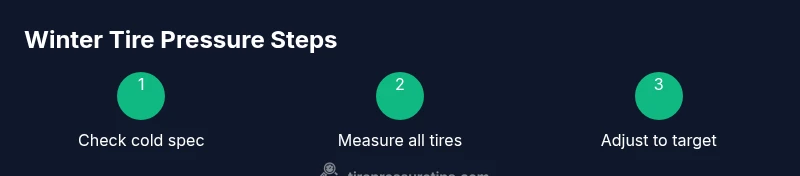
Create a monthly winter pressure check: record the cold-pressure spec, measure all tires when cold, adjust to target, and recheck after a few miles of driving to account for heat buildup. Keep a dedicated note or app entry so you can compare readings over time and identify gradual leaks or sensor faults. A simple routine reduces the risk of driving on underinflated tires and helps you drive with confidence on snow and ice.
Tools & Materials
- Digital tire pressure gauge(Calibrate before use; test on a known standard if possible)
- Air compressor or access to a gas station with air(Use when tires are cold for accurate readings)
- Vehicle owner’s manual or door placard(Record front/rear and axle-specific values)
- Pen or notebook or digital note tool(Log your target pressure and date of checks)
- TPMS reader or smartphone TPMS app (optional)(Helps cross-check sensor readings and reset if needed)
Steps
Estimated time: 25-40 minutes
- 1
Gather tools and locate the spec
Pull together a gauge, air source, and your vehicle’s cold-pressure spec from the placard or manual. Confirm whether front and rear pressures differ and note the targets for each axle.
Tip: Having the targets written down prevents guesswork later. - 2
Check tires when cold
Park in a shaded, temperature-stable area. Wait for at least 3 hours after driving, or check first thing in the morning before any trips.
Tip: Cold readings are essential for accuracy; warm tires give inflated numbers. - 3
Measure all four tires
Take a reading on each tire, including the spare. Compare each value to the target; note any outliers.
Tip: Record discrepancies to identify slow leaks. - 4
Adjust to target
Add air or release air as needed to reach the specified cold-pressure target for each tire. Recheck after adjustments.
Tip: After adjusting, recheck with the tires cold to confirm accuracy. - 5
Recheck after a cold snap
If temperatures drop significantly, recheck within 24 hours to account for pressure loss due to cold air.
Tip: Frequent checks during cold weather prevent surprises on the road. - 6
Document and monitor
Note the final pressures and date. Review monthly during winter and whenever you rotate tires or replace wheels.
Tip: Keeping a log helps detect slow leaks early.
Frequently Asked Questions
Should I inflate all tires to the same pressure in winter?
Not always. Some vehicles have different recommended pressures for front and rear axles, especially with certain tire sizes. Use the manufacturer’s spec for each axle and keep readings cold for accuracy.
Use the front and rear specs as listed by the manufacturer, and always read the tires when cold.
Do cold temperatures cause tire pressure to drop?
Yes. Colder air reduces pressure inside the tire. Check and adjust pressures more frequently during cold spells to maintain consistent grip.
Cold weather lowers tire pressure, so check more often when it’s cold.
Is it better to use winter tires year-round?
Winter tires are designed for cold-weather performance and can wear faster in warm conditions. In winter climates, they typically provide better traction, but switch back if temperatures stay above moderate levels for extended periods.
Winter tires perform best in cold weather; switch to all-season or summer tires when it’s consistently warm.
How often should I check tire pressure in winter?
Check at least weekly during rapid temperature changes and before long trips. If you notice a TPMS alert or a soft feel, inspect sooner.
Check weekly in winter and before long trips.
What if TPMS pops a warning but the tire looks fine?
Treat TPMS alerts seriously. Recheck with a gauge and inspect for leaks, valve stem issues, or sensor faults. If in doubt, have a professional inspect the wheel assembly.
If TPMS warns, verify with a gauge and inspect for leaks or sensor faults.
Can overinflation help with snow travel?
Overinflating reduces the contact patch and can worsen grip on slick surfaces. Stay within the manufacturer’s recommended cold-pressure range for safety.
Don’t overinflate; it reduces grip on snow and ice.
Watch Video
What to Remember
- Start with the vehicle’s cold-pressure spec
- Check pressures when tires are cold and keep within range
- Use TPMS as a safety check, not a replacement for manual checks
- Winter tires plus correct pressure improve traction
- Document pressures to spot leaks early