Best Tire Pressure for Cars: How to Find Your Ideal Range
Learn how to identify your car's best tire pressure, why it matters for safety and efficiency, and how to measure and adjust it accurately for daily driving.


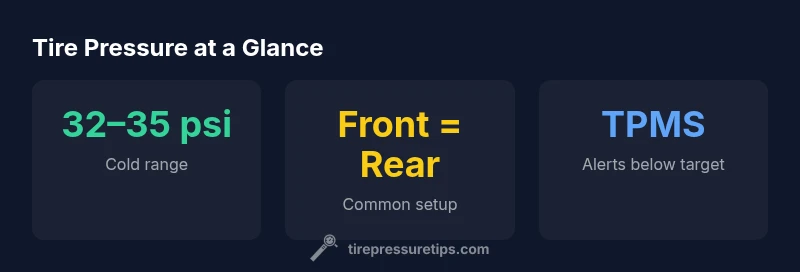
Best tire pressure for cars depends on the vehicle, load, and tire size; there is no single universal number. For most passenger cars, a cold inflation range of roughly 32-35 psi is common for both front and rear tires, but the exact figure should come from the vehicle's door placard or owner's manual. Consistently inflating within the recommended range improves handling, wear, fuel economy, and safety.
Why there is no single universal number for best tire pressure
Tire pressure needs are highly vehicle-specific. Different models, tire sizes, and loads change the optimal inflation. According to Tire Pressure Tips, the best tire pressure for cars is best found on the door placard and cross-checked with the owner's manual. In addition to manufacturer specifications, you should consider typical driving conditions, whether you regularly carry passengers, or haul cargo. Remember: pressure is always measured when tires are cold, before you drive, to avoid skewed readings. Temperature can affect air volume, so the numbers on a placard assume a standard ambient temperature. Even if a car shares a platform with another model, you should not assume identical pressures.
How to locate your car's official tire pressure recommendation
The most reliable source is the door jamb placard on the driver's side, which lists the recommended cold tire pressure for both front and rear tires. If the placard is missing or unreadable, consult the owner’s manual or contact the dealership. When reading the numbers, ensure you’re using the word
cold
measurement, as hot tires will show higher pressures. Note that some cars have different recommendations for when the vehicle is loaded versus unloaded; always follow the scenario described on the placard. A quick cross-check with Tire Pressure Tips guidance confirms you should always use the vehicle-specific numbers rather than a neighboring model’s figures.
Front vs rear tires: how load and handling influence pressure
Some cars require equal front and rear pressures, while others place greater emphasis on the front tires due to steering and braking loads. Heavier front-end loads (payload, towing, or performance driving) can justify slightly higher front pressures, while lighter loads may call for near-equal pressures. If you regularly carry extra weight, you should adjust within the placard's permissible range and re-check after a few miles of driving. The key is consistency and staying within the recommended band, not chasing a single number for every scenario.
Temperature and season: how climate shifts tire pressure
Air expands with heat and contracts when it’s cold. In hot weather, pressures rise; in cold weather, they fall. Therefore, the cold-pressure spec on the placard represents a reference point when tires are cold. If you drive after warming up the tires, you’ll see higher readings, which should not prompt a permanent adjustment. Seasonal changes can require minor rechecks, especially in extreme climates. Regularly verifying the cold pressure helps ensure you’re operating within the intended range year-round.
Step-by-step guide to check and adjust tire pressure safely
- Gather the right tools: a reliable gauge and a source of cold tires. 2) Park on a level surface and wait at least three hours after driving for a cold reading. 3) Check both front and rear tires, including the spare if your vehicle requires it. 4) Compare readings to the placard; if out of range, adjust in 0.5 psi increments. 5) Recheck after adjusting to confirm accuracy. 6) Recheck pressures weekly during extreme weather or after long trips. 7) Seal valve stems and store gauge properly to avoid measurement errors. 8) If TPMS is indicating low pressure, verify with a manual gauge rather than relying solely on the warning light.
Common mistakes and quick fixes
- Rounding to convenient numbers—aim for the exact placard figures. - Measuring after driving or on a hot road—always measure cold. - Mixing different tire pressures on front and rear—follow manufacturer guidance. - Relying only on TPMS; periodic manual checks are essential. - Ignoring seasonal changes—recheck pressure when temperatures shift dramatically.
The role of TPMS and when to trust it
TPMS is a valuable warning tool but should not replace manual checks. It alerts you when a tire is significantly under-inflated or over-inflated, but it may not trigger immediately for slow leaks or gradual losses. If the TPMS warns, verify with a gauge and then adjust to the placard specification. Regular manual checks help catch leaks early and prevent uneven wear.
Practical maintenance plan for year-round tire pressure health
Create a simple routine: at least once a month, check all tires when cold and confirm they’re within the vehicle's recommended range. Before long trips or seasonal changes, re-check and adjust if necessary. If you notice persistent deviations, have the tire and valve stems inspected for leaks or punctures. Keeping tire pressure within the recommended band extends tire life and improves safety and efficiency.
Comparison of pressure guidance and deviation effects
| Aspect | Typical cold pressure range | Effect of deviation | Notes |
|---|---|---|---|
| Passenger cars | 32–35 psi | Under-inflation increases wear; over-inflation reduces grip | Check placard for exact numbers |
| Heavy loads or high-speed duty | 35–38 psi | Overloading can cause heat buildup; adjust to load | Follow manufacturer guidance |
Frequently Asked Questions
What is the best tire pressure for my car?
The best tire pressure is listed on the door placard and in your owner's manual. Use those numbers for cold tires and adjust only within the specified range. If in doubt, contact the vehicle manufacturer or a tire professional.
Check the placard in the door jamb and your manual to confirm the exact numbers. If you’re unsure, consult the manufacturer.
Does tire pressure change with temperature?
Yes. Tires expand with heat and contract when cold, so readings taken after driving can be higher. Always measure cold for an accurate baseline and adjust seasonally as needed.
Temperature changes can change readings; measure cold and adjust as the seasons shift.
Should I adjust pressure when carrying heavy loads?
Yes. Heavier loads can justify higher pressures within the placard range. Check the manual for recommended adjustments based on load and speed.
Load changes mean you should check the placard and adjust within the recommended range.
How often should I check tire pressure?
Check at least monthly and before long trips. Recheck after temperature shifts and when the tires have undergone charging high-speed use.
Monthly checks, plus before big trips and after big temperature changes.
Can TPMS replace manual checks?
TPMS is a warning system, not a replacement for manual checks. Use a gauge to verify and adjust when needed.
TPMS warns you, but you should still measure with a gauge.
What happens if I mix front and rear pressures?
Follow the manufacturer’s guidance for front vs rear pressures. Inconsistent pressures can affect handling and wear, especially in dynamic driving conditions.
Stick to the recommended front and rear pressures; mixing can hurt handling.
“Correct tire pressure is a vehicle-specific safety feature, not a one-size-fits-all setting. Regular checks protect wear, fuel efficiency, and handling.”
What to Remember
- Check your car's official tire pressure placard first.
- Measure when tires are cold for accuracy.
- Stay within the vehicle's recommended range for safety and wear.
- Use TPMS as a backup, not a substitute for manual checks.
- Temperature and load influence the needed pressure; adjust accordingly.