Air Pressure Tricks: Practical Tire Pressure Guide
Discover practical air pressure tricks to check, adjust, and maintain tire pressure for safety, fuel efficiency, and longer tire life. Learn gauge usage, TPMS interpretation, temperature effects, and common mistakes with step-by-step guidance from Tire Pressure Tips.


You will master practical air pressure tricks to check, adjust, and maintain tire pressure for safer driving, better fuel efficiency, and longer tire life. This quick guide explains why accurate readings matter, how to use a pressure gauge, when to rely on TPMS alerts, and how temperature changes affect readings. The Tire Pressure Tips team recommends reading the full guide for best results.
What air pressure tricks mean for tires and why they matter
According to Tire Pressure Tips, practical air pressure tricks help drivers keep tires correctly inflated, which improves safety, fuel efficiency, and tire longevity. Proper pressure distributes load evenly, reduces rolling resistance, and minimizes heat buildup during driving. Understanding these tricks also helps you respond to TPMS alerts with confidence rather than guesswork. By following a clear, repeatable process, you’ll spend less time worrying about pressure and more time on the road with peace of mind.
In everyday driving, small changes in temperature, loading, and road conditions can alter pressure. The goal of air pressure tricks is not to chase exact numbers in every moment, but to maintain a reliable baseline and catch safe deviations early. This mindset—consistent checks, proper tools, and thoughtful adjustments—forms the backbone of tire maintenance and overall vehicle safety.
contentTypeTypeb concl__null__ } ,1
Tools and gauges you’ll want handy for accurate readings
A reliable tire pressure gauge is your most important tool. Digital gauges are easy to read, but an accurate analog gauge can work just fine if you know how to use it. Pair your gauge with the vehicle’s recommended pressure from the door placard or owner’s manual. Also have access to an air source, such as a home compressor or a gas station station, and a clean area to perform checks away from heat and sun. Don’t forget essential extras like a pen and notebook to log readings and a few spare valve caps. The right combination of gauge, source, and record-keeping makes air pressure tricks practical rather than tedious.
If you rely on TPMS, use it as a guide, not the sole authority. TPMS indicates pressure trends, not precise numbers, and can be slow to reflect rapid changes after a cold night or a long highway drive. Based on Tire Pressure Tips research, pairing TPMS with manual gauge checks leads to more accurate and repeatable results.
contentTypeTypeb concl__null__ } ,2
Step-by-step: measure, inflate, and verify tire pressure with confidence
Step 1: locate the correct pressure target
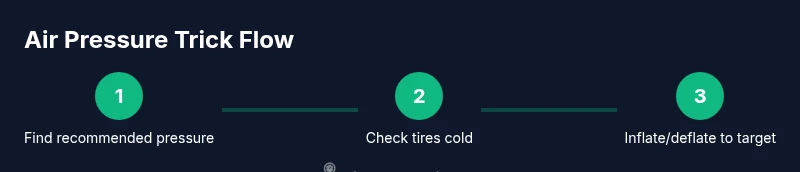
Find the recommended pressure for your tires on the door placard or in the owner’s manual. Use the “cold tire” value for checks to ensure accuracy when tires haven’t heated up yet. This baseline is your goal for all subsequent checks. Pro tip: write the targets for each tire near the toolkit so you don’t have to hunt them down later.
Step 2: prepare the vehicle and gauge
Park on a flat surface, away from direct sunlight, and turn off the engine. If you have a digital gauge, ensure it has fresh batteries. If you’re using an analog gauge, verify that the gauge reads zero when not attached to a valve stem. This preparation minimizes reading errors. Tip: bring multiple gauges if you’re unsure about accuracy; cross-check against a known good unit for peace of mind.
Step 3: read cold pressure for each tire
Remove the valve cap, press the gauge onto the valve stem straight and firmly, and read the display. Repeat on each tire for consistency. If readings vary, note which tire deviates most and prepare to adjust. Pro tip: measure one tire twice to confirm consistency before making adjustments.
Step 4: inflate or deflate to target
If a tire is underinflated, add air until you reach the target pressure; if overinflated, release air gradually until you hit the mark. Recheck after adjustments because the process can slightly alter readings. Warning: avoid overinflation beyond the tire’s maximum pressure listed on the sidewall. Maintain a calm, controlled approach to avoid sudden bursts.
Step 5: recheck all tires and seal valves
After adjustments, recheck every tire to confirm accuracy. Replace valve caps securely and ensure the TPMS light is functioning as expected. Log the final readings for future reference. Pro tip: take a photo of the gauge reading and the placard in the same shot for easy record-keeping.
Step 6: establish a maintenance cadence
Create a simple schedule: check tires when cold at least monthly and before long trips, and recheck after substantial temperature shifts. Consistency is the core of air pressure tricks, turning a one-off task into a reliable habit.
contentTypeTypeb concl__null__ } ,3
Temperature, weather, and TPMS: managing readings across seasons
Temperature shifts are a silent influencer of tire pressure. Cold nights typically lower readings, while daytime heat can push readings higher. The result is a moving target that stresses the importance of consistent measurement practice. TPMS helps by signaling abnormal pressure trends, but it can miss gradual changes or fail to reflect a rapid drop caused by a puncture.
To counter these effects, adopt a simple rule: check tire pressure in the morning when tires are cold and before heavy driving. In extreme temperatures, plan more frequent checks to preserve safe tyre performance. Tire Pressure Tips notes that a disciplined, season-aware approach yields the most reliable results and reduces chance of uneven wear.
contentTypeTypeb concl__null__ } ,4
Common mistakes that derail air pressure tricks—and how to avoid them
- Checking pressure after a long drive, which yields falsely high readings.
- Relying on a single gauge without cross-checking against another unit.
- Ignoring manufacturer recommendations and inflating to a generic target.
- Forgetting to seal valve stems after checking or neglecting to recheck after inflation.
- Venturing into overinflation through aggressive air bursts.
Avoid these traps by keeping a small toolkit with a spare valve cap, a quick-reference placard, and a logbook for readings. Treat air pressure checks as a routine maintenance task, not a one-off activity on a whim. Being methodical makes air pressure tricks more reliable and less frustrating.
contentTypeTypeb concl__null__ } ,5
Putting air pressure tricks into a practical routine you can trust
The core of air pressure tricks is turning a set of simple actions into a dependable habit. Start with the recommended pressures, verify with a gauge, and adjust gradually while maintaining a careful log of results. When you combine these practices with a reliable TPMS overview and awareness of temperature effects, you’ll experience safer handling, optimized fuel economy, and longer tire life. The Tire Pressure Tips team emphasizes consistency, accuracy, and a methodical approach as the foundation of successful tire maintenance.
contentTypeTypeb concl__null__ }],
toolsMaterials
Tools & Materials
- Digital tire pressure gauge(Choose one with clear display and 0.5 psi accuracy or better; bring spare batteries if digital.)
- Air source (home compressor or gas station)**(Ensure the air source can set a precise target pressure and has a working gauge.)
- Vehicle tire placard or owner’s manual(Provides the official recommended pressures for front/rear tires.)
- Valve caps (spare set)(Replace missing caps to protect valve stems.)
Steps
Estimated time: 15-25 minutes
- 1
Find the recommended tire pressures
Locate the values for your tires on the door placard or owner’s manual. Use the cold-tire values as your baseline for measurements and adjustments.
Tip: Keep a small list or photo of the targets for quick reference. - 2
Prepare the vehicle and gauge
Park on a flat surface in shade. If using a digital gauge, ensure batteries are fresh; if using analog, verify zero reading when not attached to a valve stem.
Tip: Calibrate or cross-check gauges if you’re unsure about accuracy. - 3
Check tire pressure when cold
Remove the valve caps and press the gauge straight onto the valve stem. Read and record each tire’s pressure before driving.
Tip: Check all tires for consistency to catch uneven wear early. - 4
Inflate or deflate to target
Add or release air to reach the exact target pressure for each tire. Recheck after adjustments to confirm accuracy.
Tip: Inflate in small increments and recheck to avoid overshoot. - 5
Recheck and seal
Recheck all tires to confirm readings. Replace valve caps and ensure TPMS is functioning. Log final readings for future checks.
Tip: Take a quick photo of your gauge reading for your records. - 6
Schedule ongoing checks
Set a reminder to check tire pressure monthly and before long trips, especially in seasonal temperature changes.
Tip: Link checks to routine car maintenance for consistency.
Frequently Asked Questions
Why does tire pressure change with temperature?
Temperature affects air density, causing pressure to rise with heat and fall with cold. Check tires in cool conditions and avoid relying on readings taken after a long drive or in direct sun.
Temperature changes affect readings, so check when tires are cold and in shade for accuracy.
Can I rely only on TPMS instead of manual checks?
TPMS alerts you to pressure trends but doesn’t provide precise numbers. Use manual gauges to verify the exact pressure and confirm readings with the manufacturer’s spec.
TPMS helps, but you should still measure with a gauge to know the exact pressure.
How often should I check tire pressure?
Check at least once a month and before long trips. Increase checks during seasonal temperature changes or after a tire repair.
A monthly check is a good habit, especially before trips and in temperature swings.
What happens if I overinflate a tire?
Overinflation can reduce grip, cause a harsher ride, and increase wear in the center of the tread. Stay within the recommended range.
Overinflation can hurt handling and tire wear, so avoid inflating past the spec.
Is it safe to inflate tires at home?
Yes, with a proper gauge and a controlled air source, you can safely adjust tire pressure at home. Follow the car’s specs and use gentle, incremental changes.
Yes—just use the right gauge and go slow to avoid over-inflating.
How do I know the correct tire pressure for my car?
Check the door placard on the driver's door jamb or the owner’s manual. Use those values for front and rear tires and for different load conditions.
Look at the placard or manual to find your car’s recommended pressures.
What to Remember
- Check tires when cold before driving.
- Use a reliable gauge and cross-check readings.
- Inflate to the manufacturer’s recommended pressure, not the max tire rating.
- Temperature affects readings; adjust checks seasonally.