Tire Pressure or Air Pressure: A Practical Guide
Learn how to check tire pressure (air pressure) accurately, read TPMS signals, and maintain the correct levels for safety, fuel efficiency, and tire life with practical steps from Tire Pressure Tips.


This guide clarifies tire pressure and air pressure, explains how to check it accurately, and shows how to set the correct levels for safety, fuel economy, and tire longevity. You’ll learn to read labels, interpret TPMS alerts, and avoid common mistakes. Tire Pressure Tips provides practical steps to keep tires properly inflated.
Tire Pressure Basics: Definition and Scope
Tire pressure and air pressure refer to the same concept—the amount of air inside the tire measured as pressure. In everyday talk, people often drop the word “air” and say tire pressure, but the practical task remains identical: measure, compare to the vehicle’s specification, and adjust as needed. According to Tire Pressure Tips, the terminology is interchangeable in practice, yet the goal is constant: ensure a safe, efficient, and reliable inflation level. Reading results come from a gauge, and reliability improves when tires are cold, since driving heat temporarily raises internal pressure. Temperature, altitude, recent road conditions, and the measuring device all affect readings. By grasping these factors, you’ll be ready to maintain proper inflation, minimize wear, and improve safety on every drive. This article expands on how to check pressure, interpret TPMS signals, and keep tires in peak condition.
Why Correct Tire Pressure Matters for Safety and Longevity
Proper tire pressure enhances grip and steering response, reducing the risk of blowouts on rough roads or during sudden maneuvers. It also promotes even tread wear, which extends tire life and lowers the chance of uneven handling. When tires are underinflated, the tire’s sidewalls bear more load, causing extra heat and faster wear, while overinflation can skip contact patches and worsen ride quality. In practical terms, correct inflation improves braking performance, cornering stability, and tire longevity—all of which contribute to safer driving and lower overall maintenance costs. Tire Pressure Tips emphasizes that maintaining recommended pressure is a simple, high-impact habit that pays dividends over the life of the tires and vehicle.
Reading and Interpreting Tire Pressure Labels and TPMS
Most cars carry a tire pressure placard on the door jamb or in the owner’s manual. This placard lists the manufacturer’s recommended psi for front and rear tires, which can vary by load and speed. TPMS (tire pressure monitoring system) alerts you when a tire drops below the recommended level, but a gauge check remains essential for precise numbers. Always compare your gauge reading to the car’s specification rather than the TPMS warning alone. Tire Pressure Tips notes that TPMS is a helpful early warning, not a substitute for a physical pressure check, especially after temperature shifts or tire repairs. Keep valve caps on for protection and use a reliable gauge every time you measure.
Temperature and Pressure: How Weather Affects Your Tires
Ambient temperature and recent driving both influence tire pressure. Cold mornings typically report lower readings, while hot pavement and long drives can raise readings due to heat transfer. This doesn’t mean your tires have more air; it means the air expands with heat. A practical approach is to check inflations when tires are cold, or after the vehicle has sat for several hours, to avoid skewed readings. In climate-sensitive regions, plan routine checks with seasonal changes in mind, because temperature swings can create consistent, measurable shifts in tire pressure.
Tools You Need to Check Tire Pressure
The core toolkit includes a reliable tire pressure gauge (digital or analog), access to an air compressor or inflation station, your vehicle’s manual or the door placard with the recommended psi, and valve caps. Optional tools—like a notebook or digital log—help track readings over time. A stable, well-lit workspace is helpful, and keeping the gauge calibrated periodically ensures accuracy. The combination of a precise gauge and a steady inflator makes it fast and repeatable to reach the manufacturer’s target pressure.
How to Check Tire Pressure Correctly: A Practical Guide
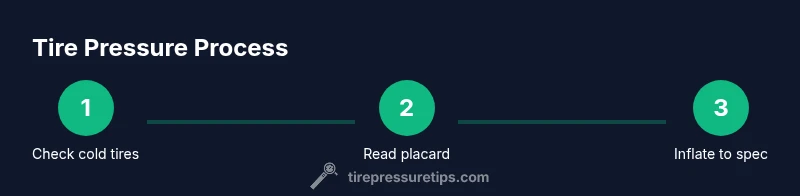
Begin with the right conditions: tires should be cold, the vehicle stationary, and the gauge ready. Remove the valve cap, place the gauge on the valve stem, and take a quick reading. Compare the result to the specification on the placard; if it’s low, inflate gradually, checking after each small adjustment until you reach the target. If it’s high, bleed air in small increments and recheck. Refit the valve cap to protect the stem and tissues, then repeat on the remaining tires. Finally, recheck all four tires to ensure uniform inflation, and note the readings for your records. Consistency matters more than exact numbers on any single day.
How to Inflate Tires Safely and Accurately
When inflating, stay within the recommended psi shown on the placard. Avoid inflating beyond the maximum printed on the tire sidewall, as this can increase the risk of blowouts. Use a steady, controlled pressure flow and pause to recheck the reading often. If your car has a spare tire that’s frequently overlooked, do not neglect its pressure—spares can degrade if left under-inflated. For heavier loads, consult the placard for potential adjustments and check tire pressure more often during travel.
Seasonal Guidance and Vehicle-Specific Specs: Finding the Right Pressure
Vehicle-specific pressures sometimes vary with load, speed, and aerodynamic conditions. Check the door placard and the owner’s manual for the exact numbers; these are tailored for your car. Seasonal changes, such as hot summers or freezing winters, can subtly alter inflation; regular checks help you catch gradual drift. If you frequently drive with a heavy load, you may require a higher pressure within the manufacturer’s acceptable range. Tire Pressure Tips recommends keeping a simple routine: check every month and before long trips, especially when temperatures swing, to maintain consistent performance.
Common Mistakes and How to Avoid Them
Common errors include measuring after a drive, relying solely on TPMS warnings, inflating to any number that looks “close,” and failing to replace valve caps. Another frequent slip is using a gauge that’s not calibrated or that reads incorrectly due to fouling from dust or moisture. To avoid these, always measure cold, use a reliable gauge, and reference the placard for the exact numbers. Make it a habit to check all four tires and the spare if applicable, and consider recording measurements for trend tracking. By following best practices, you reduce risk and extend tire life.
Tools & Materials
- Tire pressure gauge(Choose a reliable gauge that reads in psi and shows an easy-to-read display.)
- Air compressor or inflation station(Access to a compressor (gas station or portable unit) helps achieve precise inflation.)
- Owner's manual or door placard with recommended psi(Represents vehicle-specific tire pressure; use it as the target.)
- Valve caps(Keep caps on to protect the valve stems and prevent dirt ingress.)
- Notepad or digital log(Optional but useful for tracking readings over time.)
Steps
Estimated time: 15-25 minutes
- 1
Gather tools and locate specs
Collect your gauge, inflator, and the vehicle placard or manual. Confirm the recommended psi for each tire and note any special instructions for heavy loads or seasonal changes.
Tip: Have the exact target pressures written down to avoid guessing during inflation. - 2
Check tires when cold
Park in a shaded area and wait for the tires to cool if you’ve been driving. Cold readings give a stable baseline, which you’ll compare against the placard values.
Tip: If you’re pressed for time, check first thing in the morning before driving. - 3
Remove valve caps and attach gauge
Carefully remove the valve cap from a tire and firmly place the gauge on the valve stem to obtain a reading. Read the gauge without applying extra pressure to the stem.
Tip: Keep caps in a safe pocket so you don’t lose them. - 4
Inflate or deflate to spec
If the reading is low, inflate gradually, checking after small increments. If high, release air slowly through the valve and recheck until you hit the target.
Tip: Avoid overfilling; a few psi off can matter for handling and wear. - 5
Seal and recheck all tires
Replace the valve caps and recheck every tire to ensure uniform inflation. Record the readings for future reference.
Tip: Consistent readings across tires indicate balanced performance. - 6
Plan your next check
Set a reminder to recheck tires regularly, especially before trips or seasonal transitions.
Tip: A simple calendar reminder makes maintaining pressure easier.
Frequently Asked Questions
How often should I check tire pressure?
Check at least monthly and before long trips. Tires can gradually lose pressure over time, and temperature shifts can alter readings.
Check at least monthly and before long trips. Tires can gradually lose pressure, and temperature shifts can change readings.
Can TPMS replace a physical gauge?
TPMS provides warnings when pressure is low, but a physical gauge gives an exact measurement. Use both for accuracy.
TPMS warns you, but always verify with a proper gauge.
What happens if tires are over-inflated?
Over-inflation reduces the contact patch and can cause harsh ride and uneven wear, especially in the center of the tread.
Over-inflated tires wear unevenly and ride harsher.
Should I use nitrogen in tires?
For most drivers, normal air is sufficient if pressures are regularly checked and maintained. Nitrogen offers no major, practical advantage for daily use.
Nitrogen isn’t necessary for everyday driving; regular checks are enough.
How do temperature changes affect tire pressure?
Temperatures influence pressure; cold weather lowers readings while heat from driving raises them. Check and adjust accordingly after seasonal changes.
Temps affect pressure; check after weather changes.
Can I inflate tires beyond the max PSI on the sidewall?
Never exceed the recommended PSI on the placard. The maximum on the sidewall is not a target for normal inflation.
Do not exceed the recommended PSI; never rely on the sidewall maximum.
Watch Video
What to Remember
- Check tires when cold before driving
- Always use the vehicle’s recommended pressure
- TPMS helps but isn’t a substitute for a gauge
- Temperature affects readings; account for it
- Log readings for ongoing maintenance