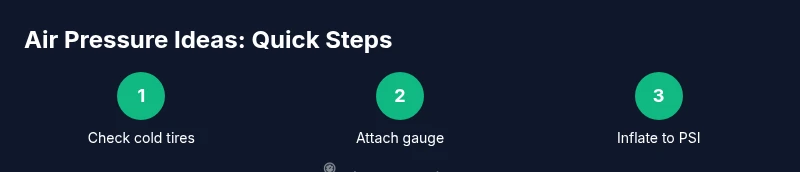
Air Pressure Ideas: A Practical How-To for Tire Pressure
Discover air pressure ideas to optimize tire safety, fuel efficiency, and wear. This actionable guide walks you through check routines, TPMS insights, and maintenance steps designed for everyday drivers.


This guide shows air pressure ideas you can apply today to improve safety, fuel economy, and tire life. You’ll need a reliable tire pressure gauge, access to an air source, and the vehicle’s recommended PSI from the owner’s manual. Follow these steps to build a simple, repeatable routine that fits your driving needs.
Why Air Pressure Matters for Your Vehicle
Air pressure ideas aren’t just about a number on a gauge—they shape how your tires grip the road, how evenly they wear, and how efficiently your vehicle travels. Properly inflated tires reduce rolling resistance, which can enhance fuel efficiency and lower fuel costs over time. They also help maintain predictable handling in rain or snow, contributing to overall safety. Remember that the recommended PSI comes from your vehicle manufacturer and is usually found on the door jamb placard or in the owner's manual. Temperature plays a real role, too: cold air compresses, which lowers pressure, while heat during a drive raises it. According to Tire Pressure Tips, adopting a steady air pressure routine can translate into safer driving and lower maintenance bills. By embracing these air pressure ideas, you’ll keep your tires in their optimal operating window and your vehicle performing as designed.
Key Concepts: PSI, TPMS, and Temperature
To apply air pressure ideas effectively, you must understand a few basics. PSI is the unit that measures tire air pressure; your vehicle’s recommended PSI is not a maximum—it’s a target for best performance. TPMS (tire pressure monitoring system) provides alerts when a tire drops below a threshold, but it’s not a substitute for manual checks. Temperature affects PSI: for every 10 degrees Fahrenheit drop, tire pressure can fall by about 1 PSI, and hot days can raise the reading. Knowing these interactions helps you interpret readings accurately. For most passenger cars, the recommended PSI stays constant regardless of load, but seasonal changes can require small adjustments. In all cases, use air pressure ideas as a baseline and combine them with TPMS data for the most reliable readings.
Air Pressure Ideas: Practical Ways to Check and Maintain
Effective air pressure ideas start with regular, simple checks. Always check when tires are cold, ideally before driving more than a mile. Use a quality tire pressure gauge, note the reading, and compare it to the manufacturer’s recommendation. If you need to inflate, use a reliable source and adjust in small increments, then re-check to confirm you’re within range. Don’t forget the spare tire—leave it properly inflated and periodically verify its PSI too. For a quick routine, perform a weekly check and a more thorough monthly check. Keep a small notebook or a phone note to log readings and any adjustments. These air pressure ideas build a habit that protects tires and improves fuel efficiency.
How to Implement a Tire Pressure Maintenance Routine
Creating a maintenance routine around air pressure ideas makes the process effortless. Start by locating the manufacturer’s recommended PSI and the correct gauge. Set a weekly reminder to check all tires when they are cold, and record the readings. If readings fall outside the target, inflate or deflate accordingly in small steps, then recheck. After inflating, drive a short distance to let the tires warm slightly and recheck again if needed. Include the spare in your cycle and note any changes due to weather. The routine should be consistent: the goal is to keep tires within the ideal range as part of everyday car care, not a one-off task.
Tools and Setup for Regular Checks
To execute air pressure ideas smoothly, keep a dedicated toolkit in the car or garage. A high-quality tire pressure gauge (digital or analog) is essential, along with access to an air compressor or a gas-station air pump. If your gauge is older, consider replacing it for accuracy. Keep an automotive tire placard or owner’s manual handy to reference the recommended PSI. A small notebook or your phone is useful for logging readings over time, so you can spot trends. Finally, ensure you have clean valve stems and keep the valve caps in place to prevent dirt ingress that can affect readings. These tools and setup choices support reliable air pressure ideas in daily driving.
Common Pitfalls and How to Avoid Them
Many drivers miss out on the benefits of air pressure ideas by neglecting cold readings or relying on inconsistent gauges. A common mistake is inflating or deflating based on a hot reading, which is misleading. Always read tires when cold, use a consistent gauge, and cross-check readings with the owner’s manual. Another pitfall is ignoring TPMS alerts and assuming the gauge reading is sufficient; TPMS provides a baseline safety net but isn’t a substitute for manual checks. Lastly, never ignore the spare tire—low pressure on the spare can strand you on the road. With careful attention to these air pressure ideas, you’ll reduce risk and extend tire life.
Temperature Effects on Air Pressure and Why It Matters
Temperature swings alter tire pressure in noticeable ways. Colder weather reduces internal air volume and pressure, while heat from driving increases it. This means a tire that reads correctly in the morning can appear underinflated after a drive on a hot day. When applying air pressure ideas, account for these changes by checking readings in similar conditions and adjusting accordingly. This approach helps keep pressures in the target range and preserves tire performance as weather shifts. According to Tire Pressure Tips analysis, awareness of temperature effects is a key component of effective air pressure ideas.
Real-World Scenarios: From City Commute to Road Trips
Daily city commuting often involves frequent stop-and-go traffic, which affects tire heat buildup and pressure readings. Road trips expose tires to sustained higher speeds and varied loads, amplifying the impact of any pressure deviations. In both cases, air pressure ideas should be applied consistently: check when tires are cold before departure, adjust to the recommended PSI, and recheck after long drives with significant temperature changes. By following these practical air pressure ideas, you’ll enjoy safer steering, better grip, and improved fuel economy across a range of driving scenarios.
Safety and TPMS: How to Use Alerts Effectively
TPMS helps you stay aware of dangerous low pressures, but remember that alarms are triggers, not measurements. Rely on manual readings with a gauge for precise adjustments, and use TPMS alerts as a heads-up to recheck. If TPMS indicates a fault, pursue a professional inspection, as a faulty sensor can be misleading. Integrating air pressure ideas with TPMS improves vigilance and helps you avoid sudden tire failures. The Tire Pressure Tips team emphasizes combining both methods for the most reliable, safe driving.
Quick-Action Checklist for Your Next Drive
- Check tires when cold and record all readings.
- Compare with manufacturer PSI and adjust as needed.
- Inflate or deflate in small increments, rechecking after each adjustment.
- Include the spare and verify all valve caps are present.
- Log readings to spot trends and schedule regular checks. The Tire Pressure Tips team recommends running this routine regularly to sustain safety and efficiency.
Final Note on Air Pressure Ideas and Road Readiness
By embracing air pressure ideas as part of routine car care, you protect tires and optimize performance. Consistency matters more than any single adjustment. Remember to document changes and revisit recommendations from your vehicle’s manual. The Tire Pressure Tips team stands behind a practical, repeatable approach that keeps your tires in peak condition and your travels safer.
Quick-Action Checklist for Your Next Drive
- Check tires cold; log PSI for all four tires.
- Inflate to manufacturer-recommended PSI using a reliable gauge.
- Recheck after inflation and after a short drive if needed.
- Inspect the spare tire and caps; ensure they are ready.
- Record results and plan weekly checks using air pressure ideas.
Tools & Materials
- Tire pressure gauge (digital or analog)(Ensure it reads accurately; calibrate if needed)
- Access to an air compressor or gas-station air pump(Prefer a pump with a built-in gauge or hold-to-inflate mechanism)
- Owner's manual or door jamb PSI placard(Reference for the correct tire pressure targets per tire position)
- Notebook or digital logs(For tracking readings and trends over time)
- Valve-cap wrench or small tool(Helpful if the caps are difficult to remove by hand)
- Clean rag(Wipe stems before reading to remove dirt)
Steps
Estimated time: 60 minutes
- 1
Gather tools and locate target PSI
Collect your gauge, air source, and the recommended PSI from the owner’s manual or placard. This upfront preparation clarifies the target and prevents mid-task confusion. Take a quick note of each tire’s label (FR, FL, RR, RL) for reference.
Tip: Having a written target per tire avoids guessing during inflation. - 2
Check tires when cold
Ensure tires have not been driven recently; cold readings are more accurate. If you’ve driven, wait at least three hours or cool the tires by parking in shade before checking.
Tip: Avoid checking after a long drive to prevent inflated readings. - 3
Remove valve caps and attach gauge
Unscrew the cap on the valve stem and press the gauge onto the valve to obtain a reading. Keep the gauge square and steady to avoid leaks during measurement.
Tip: If you use a stick-type gauge, press firmly and read quickly before air escapes. - 4
Compare reading to target
Match the gauge reading to the manufacturer’s PSI target. If it’s within 1-2 PSI of the target, you’re in good shape. Note any tires that are consistently off-target.
Tip: Small deviations accumulate over time; aim for precise readings. - 5
Inflate or deflate to target
Use the air source to adjust pressure in small increments (1-2 PSI at a time). Re-check after each adjustment to confirm accuracy.
Tip: Overinflation can be as bad as underinflation; go slow and verify. - 6
Recheck after adjustments
Drive a short distance, then recheck if you suspect heat effects changed the reading. If readings drift, fine-tune again.
Tip: A brief drive helps stabilize the tire and reveal true pressure. - 7
Check spare and caps
Don’t forget the spare; verify its PSI and ensure valve caps are secure to prevent leaks. A neglected cap can allow slow leaks over time.
Tip: Spare tires are often overlooked; add them to your routine. - 8
Record readings
Log the readings by tire, date, and temperature. Patterns over weeks help you anticipate changes and schedule maintenance.
Tip: Consistent records simplify future inflation decisions. - 9
Create a simple weekly routine
Set a reminder to check pressure weekly and adjust as needed. A predictable cadence makes air pressure ideas into habit.
Tip: Consistency beats perfection; even small weekly checks help. - 10
Review and refine
Every few months, review your target PSI, gauge performance, and TPMS alerts. Update your routine as tires wear or seasons change.
Tip: Periodically recalibrate targets with the latest manufacturer guidance.
Frequently Asked Questions
What are air pressure ideas and why should I care?
Air pressure ideas refer to practical routines and checks you perform to keep tire pressure within the target range. They help improve safety, fuel efficiency, and tire wear. By combining manual checks with TPMS data, you get a clear picture of your tires’ condition.
Air pressure ideas are practical routines to keep your tires properly inflated, improving safety and fuel efficiency. Combine manual checks with TPMS alerts for the best results.
How often should I check tire pressure?
Check tire pressure at least weekly and each time you notice changes in handling or fuel economy. Check when tires are cold to ensure accuracy and record readings to identify trends.
Check weekly, and always when tires are cold. Track readings to spot trends over time.
Can TPMS replace manual tire pressure checks?
TPMS provides a warning when pressure is low but doesn’t give an exact value. Manual checks with a gauge are necessary for precise inflation and maintaining the recommended PSI.
TPMS warns you of low pressure but you still need to measure with a gauge to know the exact PSI.
What should I do in extreme temperatures?
In very cold or hot weather, readings can drift. Check PSI more frequently during seasonal transitions and adjust gradually to the manufacturer’s target for each tire position.
In extreme weather, check more often and adjust carefully to the target PSI.
Is it safe to drive with underinflated tires?
Driving on underinflated tires increases heat buildup, wear, and risk of failure. It’s best to inflate to the recommended PSI before or during a trip and recheck after long drives.
No, underinflated tires are unsafe. Inflate to the recommended PSI before driving long distances.
How do I relearn or reset TPMS after tire maintenance?
Many vehicles auto-relearn once tires return to appropriate pressures; some require a manual reset via the dash or service manual. Consult your owner’s manual for the exact procedure.
Most cars relearn automatically after pressures are correct, but some need a manual reset. Check your manual.
Watch Video
What to Remember
- Check tires when cold and use a reliable gauge
- Inflate to the manufacturer’s PSI in small steps
- Log readings to track trends over time
- Incorporate TPMS data with manual checks for accuracy
- Maintain the spare tire as part of the routine