What to Do When Tire Pressure Is Low: Urgent Troubleshooting
A practical, step-by-step troubleshooting guide to diagnose, inflate, and fix low tire pressure safely, with TPMS insights and prevention tips.


If you notice a warning light or a soft ride, what to do tyre pressure low is to pull over safely, verify pressure with a reliable gauge, and inflate to the recommended PSI. Start with the simplest checks: inspect for visible damage, nail, or leak, then recheck. Quick, calm actions now prevent blowouts later.
What to do when tyre pressure is low: urgent first steps
If you notice a soft ride, a hissing sound, or a warning light, you’re facing low tyre pressure. When asked what to do tyre pressure low, the immediate answer is to pull over safely and verify the pressure with a reliable gauge before continuing. According to Tire Pressure Tips, quick, calm checks can prevent tire damage, improve fuel efficiency, and reduce the risk of a blowout on the highway. Start by finding a safe spot to stop, turn on hazard lights, and inspect the tires for obvious visible signs of damage, nails, or objects embedded in the tread. This initial step is critical to prevent minor issues from becoming expensive repairs.
Safety-first actions before you touch the tire
Safety should come first. Do not drive on a visibly underinflated tire, and avoid abrupt braking or high-speed driving. If you’re on a busy road, use hazard lights and, if possible, place reflective triangles. Once you’ve stopped, check the spare and ensure the wheel wrench is accessible. For a quick check, squeeze the tire with your hand; it should feel firm, not “squishy.” Even a slight soft spot can indicate low pressure or a slow leak. Always check after a cool-down period if the car has been driven recently; heat raises PSI and can mask the real level.
How to check tire pressure accurately with a gauge
To get a reliable reading, measure tire pressure when the tires are cold (not driven recently). Remove the valve cap, press the gauge onto the valve stem, and note the PSI. Compare with your vehicle’s placard, usually found on the driver’s door jamb or owner’s manual. If the reading is below the recommended range, you need to inflate the tire. If you see it fluctuating or refusing to rise, there may be a leak or a faulty valve stem. In that case, avoid overfilling, which can over-stress the tire.
Understanding recommended tire pressure: PSI and front vs rear
Tires don’t pressurize identically on all axles; many vehicles have different front and rear PSI requirements. Always use the vehicle’s recommended PSI rather than the maximum pressure listed on the tire sidewall. Front tires often carry more load in cornering, while rear tires manage weight transfer during acceleration. The placard provides the exact numbers. If you operate in extreme temperatures, remember that cold weather reduces PSI; plan to check and adjust pressure more frequently in winter.
Causes of low tire pressure: nails, leaks, temperature, and wear
Low tire pressure can come from multiple sources. A nail or a puncture leads to continuous leakage. A faulty valve stem or a cracked rim can also cause slow air loss. Temperature fluctuations, especially in cold mornings, will drop PSI by a small amount, which can accumulate over days. Worn or damaged tires may lose pressure due to bead leaks. Inspect each tire for signs of tread separation, cracking, or bulges; these indicate service is required.
How to fill and reseat a tire safely
First, ensure you have a reliable inflator or access to an air compressor. Attach the gauge and inflate in short bursts, checking pressure frequently to avoid over-inflation. Stop once you reach the recommended PSI, then re-check the reading. A common mistake is overfilling; result is a harsher ride and increased risk of a blowout. After inflating, reseat the valve cap securely and inspect the tire for any signs of a leak around the valve stem or bead area.
TPMS and monitoring: what to know when the warning light comes on
The Tire Pressure Monitoring System (TPMS) helps track tire pressure, but it can be slow to react if you’ve just inflated. If the warning persists after inflating, recheck with a gauge and drive a short distance to allow the system to recalibrate. A TPMS sensor fault or a dead battery in the sensor could also trigger false readings. In cold weather, the system may show a low-pressure reading due to temperature effects rather than a real leak. In any case, avoid ignoring the warning light.
When to replace a tire vs patch/repair
If you discover a puncture larger than a small nail in the tread, or if there is sidewall damage, a repair may not be safe. In many cases, the tire should be replaced rather than repaired. If the tire has a slow leak that cannot be sealed, replacing is the safer option. Always consult a professional if you are unsure whether a repair is viable, particularly on run-flat tires or high-performance tires.
Prevention: maintenance routines to prevent low tire pressure
Regularly check your tires, at least once a month and before long trips. Keep the pressure at the recommended level all year round, adjusting for temperature changes. Rotate tires as recommended by the vehicle manufacturer and inspect valves, rims, and TPMS sensors for wear or damage. A simple habit of carrying a portable gauge and inflator can prevent most low-pressure issues. By staying on top of pressure, you improve safety, fuel economy, and tire longevity. The Tire Pressure Tips team advocates consistent checks to avoid avoidable issues.
Steps
Estimated time: 40-60 minutes
- 1
Park safely and inspect tires visually
Find a level, safe spot and engage parking brake. Visually inspect all tires for nails, cuts, bulges, or objects that could indicate a leak. This step helps you determine if the issue is obvious before you start inflating.
Tip: Take a flashlight and check the inner sidewalls where leaks often hide. - 2
Check pressure with a gauge
Remove the valve cap and place the gauge squarely on the valve stem. Read the PSI and compare with the vehicle placard. If the reading is low, you’ll need to inflate soon; if it’s fluctuating, there may be a leak or faulty valve.
Tip: Record the reading for each tire to track changes over time. - 3
Inflate to the recommended PSI
Attach the inflator or air compressor and add air in short bursts, pausing to recheck the pressure after each burst. Stop when the gauge matches the recommended PSI. Avoid overinflation, which reduces tire contact with the road and can cause a blowout.
Tip: If you don’t have an inflator, use a cold gas station pump with a gauge. - 4
Re-check and inspect for leaks
After inflating, recheck all tires to ensure even pressure. Look for signs of ongoing leaks around the valve stem, bead, or tread edge. If a tire continues to lose air, do not drive on it; seek professional help.
Tip: Even small differences between tires can indicate a leak in one location. - 5
Decide on repair or replacement
If leaks persist or damage is present, determine whether repair is viable or if replacement is necessary. For run-flat tires or significant damage, replacement is often the safe option.
Tip: Consult a professional if you are unsure about repair viability.
Diagnosis: Tire pressure warning light or visibly soft tire
Possible Causes
- highPuncture, nail, or slow leak
- mediumTemperature drop causing pressure decrease
- lowTPMS fault or sensor issue
- lowValve stem leak or bead leak
Fixes
- easyInspect tires for damage; identify puncture sites
- easyUse a gauge and inflate to the vehicle's recommended PSI
- mediumPatch or plug a punctured tire or replace if necessary
- mediumReset or recalibrate TPMS; replace faulty sensor if needed
- easyCheck for leaks around valve stem/bead and seal
Frequently Asked Questions
Why is my tire pressure dropping so quickly?
Common causes are a puncture, slow leak, or temperature changes. Inspect for nails, leaks around the valve stem, or bead leaks. If the tire loses air despite no visible damage, consider a professional evaluation for TPMS or structural issues.
A puncture, a slow leak, or temperature changes are common causes; check for leaks and consider professional help if it keeps losing air.
Can I drive with a low tire pressure?
Minimal driving on a slightly low PSI is sometimes possible, but it’s unsafe and reduces handling and fuel efficiency. If you’re near or below the recommended PSI, reduce speed and head to a safe location to inflate or repair.
You should not drive long distances on a low tire; find a safe place to inflate or fix it.
How often should I check tire pressure?
Check at least once a month and before long trips. Temperature changes and seasonal shifts can affect PSI, so periodic checks are essential for safety and efficiency.
Check your tires at least monthly and before trips for safety and efficiency.
What if the TPMS warning stays on after inflation?
If the warning remains after inflation, recheck with a gauge and drive a short distance for recalibration. If it persists, the TPMS sensor or battery may be faulty and require service.
Recheck, drive a short distance for recalibration, then seek service if it stays on.
Is it safe to ignore minor PSI fluctuations due to temperature?
Small fluctuations due to temperature are normal, but persistent declines indicate a leak or valve issue. Always verify with a gauge and fix underlying causes.
Small temperature-related changes are normal, but persistent drops need checking.
Watch Video
What to Remember
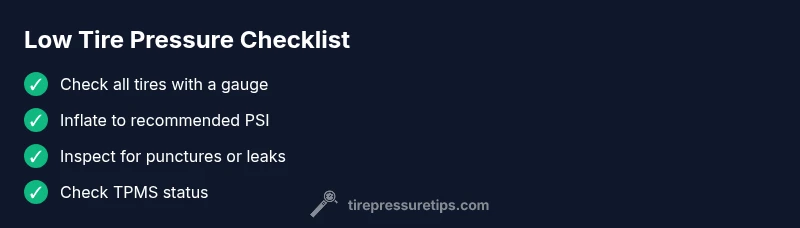
- Check tires when you notice warning lights.
- Inflate to the vehicle’s recommended PSI, not the max on the tire.
- Inspect for punctures and leaks before driving.
- TPMS recalibration can require a drove distance to update.
- Prevent low pressure with monthly checks and proper maintenance.