Tire Pressure Low Light Troubleshooting Guide for Drivers
Urgent, practical guide to diagnosing and fixing the tire pressure low light on modern vehicles. Learn quick checks, TPMS tips, safe steps, and prevention strategies to restore proper pressure and keep you safe on the road.


Why the tire pressure low light pops up
According to Tire Pressure Tips, the tire pressure low light is most often triggered by underinflation in one or more tires. Temperature swings, rapid driving, and aging valve stems can all cause pressure drift that lights the warning. In many cars, the indicator also illuminates after a tire has a slow leak or when the TPMS sensor is out of calibration. The key is to treat the light as a symptom, not a final diagnosis. Start by confirming the basics: is every tire depressurized relative to the vehicle's recommended level? Is there a visibly soft sidewall or uneven tread wear? The Tire Pressure Tips team recommends checking for changes since your last tire service and noting any recent temperature changes or road trips. A quick check can prevent a dangerous situation and protect tire life.
Quick Checks You Can Do Right Now
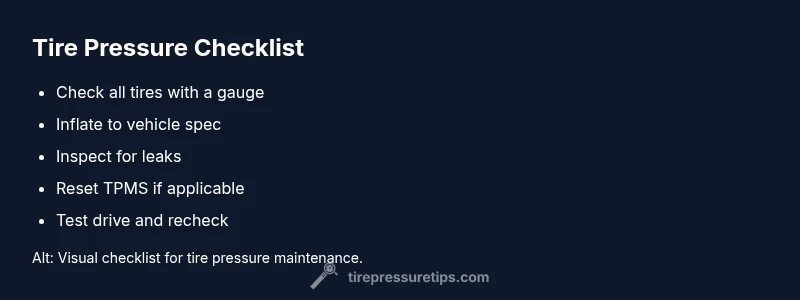
Before you drive, perform a fast, safety-first inspection. Park on a flat surface, engage the parking brake, and gather a reliable gauge. Check the inflation in all four tires and the spare if your vehicle uses one. Compare readings to the door jamb label or owner's manual rather than guessing by feel. If any tire is significantly underinflated, top it up, then recheck after warming up. If the light remains after inflation, repeat the check using a second gauge to rule out a faulty tool. Remember to inspect for obvious damage, punctures, or bead leaks that could cause pressure loss. If you are unsure, contact Tire Pressure Tips for guidance.
How Temperature Changes Impact Tire Pressure
Temperature has a noticeable effect on tire pressure. Colder air shrinks the air inside the tire, while heat from driving expands it. In practice, a chilly morning can drop tire pressure enough to trigger a warning, and a late-day drive can cause a spike that self-corrects. This is why many drivers see the light come on in the morning and disappear later in the day. The Tire Pressure Tips analysis shows that consistent pressure maintenance hinges on regular checks, especially during seasonal transitions. Use a gauge you trust and always inflate to the labeled specification.
Common Causes of the Light Staying On
If inflation alone doesn't clear the warning, other culprits include a slow leak from a nail or bead leak, a cracked valve stem, or a failing TPMS sensor. Some vehicles require a reset after inflating or wheel service. In older cars, the TPMS sensor batteries can fail over time, triggering false positives. If you notice rapid deflation after a drive, the issue is more likely a slow leak. If you suspect a sensor fault, schedule a service appointment; the diagnostic flow can save you time and money.
Step-by-Step Fixes You Can Try Today
This section offers a practical sequence you can follow to bring the tire pressure light to rest. Start with the simplest check and escalate as needed. First, validate all four tires and the spare with a trusted gauge. Then inflate each tire to the manufacturer’s recommended PSI on the door jamb label or owner’s manual, and recheck readings. If the light persists, carefully inspect each tire for visible leaks or embedded objects. Finally, if no issue is found but the light remains, a TPMS calibration or sensor replacement may be required. Safety comes first—avoid driving long distances with uncertain pressure.
Safety Considerations When Dealing with Low Tire Pressure
Driving on underinflated tires can increase the risk of blowouts, reduced steering response, and uneven tire wear. Never underestimate the danger of a tire failure, especially at highway speeds. Use gloves and eye protection when testing or changing tires, and place warning triangles if you must work on a roadside. If you hear unusual thumping or notice a bulging sidewall, stop and seek professional help. Always recheck pressure after any correction and confine driving to short, cautious trips if you suspect a leak or sensor fault.
Tools You’ll Need for Quick Checks
Keep a digital tire gauge, a tire inflator with a built-in gauge, and a flashlight handy. A second gauge helps verify readings and rules out faulty tools. If you have a torque wrench or locking lug wrench for wheel removal, you can inspect the valve stems and TPMS sensors more thoroughly. Storing a small patch kit can be useful for temporary repairs if you suspect a nail or puncture, but remember that permanent repairs require professional service.
Prevention: Maintaining Proper Tire Pressure
Regular checks prevent the tire pressure low light from catching you off guard. Schedule monthly checks and couple them with temperature-sensitive seasonal changes. Keep a record of readings and adjust for changes when the ambient temperature shifts. Use a tire-pressure maintenance routine that aligns with the vehicle's label and your driving conditions. The Tire Pressure Tips team recommends training all drivers in your household to verify PSI before long trips and to understand the TPMS alerts. Prevention is cheaper than roadside assistance.
When to See a Professional
If you cannot identify a leak, if the TPMS light stays on after inflating and rechecking, or if the tire shows signs of sidewall damage or bead leaks, it's time to seek professional help. A tire shop can perform a thorough leak test, TPMS reset/calibration, and sensor replacement. In cases of rapid deflation or sudden tire failure, avoid driving and call for roadside assistance.