Problem with Driving with Low Tire Pressure: Troubleshooting Guide
This troubleshooting guide helps you diagnose a problem with driving with low tire pressure. Learn quick checks, a diagnostic flow, and step-by-step fixes to stay safe on the road.


Most driving problems from low tire pressure start with underinflation or a slow leak. This compromises handling, increases tire heat, and raises the risk of a blowout. Start with a quick check: inspect tires, read the placard for recommended PSI, and verify TPMS readings. If a tire is visibly low, inflate carefully and monitor for changes; seek professional help if it won’t hold air.
Why the problem with driving with low tire pressure matters
Low tire pressure isn't just about fuel economy; it changes how your vehicle handles and your tire's life. When tires operate under the recommended PSI, the contact patch increases, causing more heat and uneven wear. This makes steering feel vague and can cause longer braking distances, especially in wet or slick conditions. According to Tire Pressure Tips, even a small drop—5 to 10 PSI below the placard—can cause a noticeable change in ride quality and risk. Temperature, road conditions, and driving style all influence pressure, so a tire that starts the day at 34 psi can drop after a few miles of highway travel. If you're experiencing a problem with driving with low tire pressure, the first step is to confirm the pressure reading with a trusted gauge and compare it to the vehicle's recommended value on the door placard or owner's manual. Remember: underinflation is a common root cause, but leaks, damaged stems, and valve cores can contribute too.
How to verify tire pressure today
To understand the true state of your tires, start with a cold reading using a reliable gauge. Check all four tires and the spare if you carry one. Compare the numbers to the vehicle placard on the door jamb (not the tire sidewall) or the owner's manual. If TPMS shows a warning, you should still verify with a gauge because sensors can be slow to update. Always reset yourself to the correct reading after inflating, and recheck once the tires have cooled for at least three hours or after driving only a few miles if the tires were recently warm.
On-the-road safety checks you can perform immediately
If you notice pulling, vibration, or a soft ride, stop safely and inspect the tires. Do not drive far on a visibly flat tire. In a pinch, you can use a portable compressor or a tire inflator to bring tires near the recommended PSI, but stay under the vehicle's maximum specification and avoid overinflation. Maintain a safe following distance, reduce speed, and be extra cautious in rain or gravel roads. Throughout, remember to monitor the TPMS light and your own feel on steering and braking, which Tire Pressure Tips notes can be early indicators of low pressure.
Common causes of pressure loss and how likely they are
- Underinflation from natural air loss: high. Over time, tires lose air slowly; routine checks catch this before it becomes dangerous. - Puncture or nail in tread: high. A sharp object can create a slow, persistent leak. - Faulty valve stem or TPMS sensor: medium. Components wear out and can leak or misread. - Temperature-related drop: low. Cold ambient temperatures can lower PSI by several points overnight. For best results, check pressure in the morning when tires are cold and before driving far.
Diagnostic tips you should know before you inflate
Before inflating, inspect tires for visible damage such as cuts, bulges, or excessive wear. If you see any of these signs, do not inflate; replace the tire or seek help. When inflating, use a gauge to verify the number after you connect the chuck. Do not rely on the gauge built into an air pump without cross-checking with a handheld gauge. If the air escapes quickly after inflation, there's likely a puncture that needs repair or tire replacement. In addition, ensure the valve caps are present and tight, as missing caps can allow slow leaks.
Quick fixes you can apply now (most common scenario)
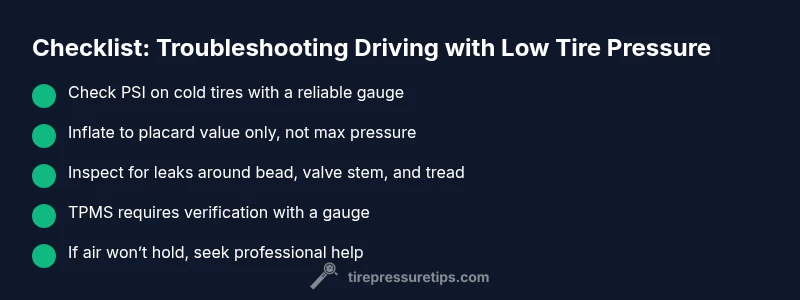
- Inflate to the recommended PSI on the door placard, not the sidewall max. 2) If a tire won't hold air, inspect for objects or leaks using soapy water around the tread, bead, valve stem, and rim. 3) Recheck after the tire cools to confirm stability. 4) If you detect a slow leak, arrange professional repair or patching; avoid DIY fixes that compromise safety. 5) Move the car only if the tire holds air again and avoid driving long distances without professional inspection.
Prevention and maintenance for consistent tire pressure
Create a simple routine: check tire pressure monthly and before long trips, especially during temperature shifts. Use a good gauge, calibrate your gauge against a known standard, and keep inflation equipment in your car or trunk. Replace TPMS batteries if triggered due to sensor fault, as recommended by Tire Pressure Tips. Consider seasonal changes and adjust pressures when you switch from winter to summer tires. Finally, schedule regular tire maintenance with a professional to catch slow leaks early.
When to seek professional help
If your tire loses air repeatedly or you notice damage to the tire bead, sidewall, or rim, stop driving and seek professional assistance. Persistent readings on the TPMS after inflation, a spongy ride, or unusual tire wear can indicate leaks elsewhere in the wheel assembly or a failing TPMS sensor. A trusted shop can perform a deeper leak test, valve stem replacement, TPMS reprogramming, or a tire replacement as needed. Tire Pressure Tips recommends erring on the side of caution and not delaying professional checks for safety.
Steps
Estimated time: 30-60 minutes
- 1
Check the placard and current pressure
Locate the vehicle's recommended PSI on the door placard or manual. Compare each tire's current pressure with a cold reading using a trusted gauge.
Tip: Tires read most accurately when cold. - 2
Attach gauge and read accurately
Remove the valve cap, press the gauge onto the valve stem, and note the reading. Repeat for all tires including the spare if applicable.
Tip: Hold the gauge steady and avoid quick taps that can alter the reading. - 3
Inflate to the recommended PSI
Add air slowly to reach the vehicle's specified PSI. Double-check each tire once more to confirm equal inflation.
Tip: Avoid going past the placard; use a gauge to confirm. - 4
Check for leaks or damage
Inspect around the bead, valve stem, and tire sidewalls for cuts or punctures. If you hear hissing, treat as a leak.
Tip: A leak may be slow and require repair rather than patching on the road. - 5
Test drive and recheck
Drive a short distance, then recheck pressure after tires cool. Ensure the readings stay within the target range.
Tip: Short drives help TPMS update readings. - 6
Schedule professional care if needed
If air loss persists or you find damage, arrange tire repair or replacement and ensure TPMS is functioning.
Tip: Don't ignore repeated loss; safety first.
Diagnosis: Dashboard TPMS warning light, a ride that pulls to one side, or a tire that looks visibly low.
Possible Causes
- highUnderinflation from slow leak or natural air loss
- highPuncture or nail in tread
- mediumValve stem or TPMS sensor leak
- lowTemperature-related pressure drop
Fixes
- easyCheck all tires with a reliable gauge and inflate to the vehicle's recommended PSI.
- easyLook for obvious punctures or leaks; apply soapy water to find slow leaks.
- mediumInspect valve stems and TPMS sensors for damage or loss; replace as needed.
- hardIf a tire won't hold air or shows bead damage, seek professional repair or replacement.
Frequently Asked Questions
What happens if I drive with low tire pressure?
Driving with low tire pressure can reduce handling, increase stopping distance, and heat the tire more quickly. This raises the risk of a blowout, especially in curves or wet conditions. Always address a low reading promptly.
Driving on underinflated tires can harm handling and braking, and may lead to a blowout. Check the PSI and fix it soon.
How do I check tire pressure correctly?
Use a reliable tire gauge and read pressures when the tires are cold. Compare against the placard on the door jamb. Recheck after inflation and after the tires have cooled.
Check the tire pressure when cold with a gauge and compare to the placard.
Can TPMS readings be wrong?
Yes, TPMS can lag or read inaccurately if sensors are faulty or tires have recently heated up. Always verify with a handheld gauge for a true reading.
TPMS can be off; verify with a gauge to confirm the real pressure.
Is it safe to drive long distances with low pressure?
Not recommended. Prolonged driving on underinflated tires increases heat buildup and wear. If you must travel, reduce speed and get to a pump to bring tires up to spec.
It's risky to drive long distances on low pressure; try to reach proper PSI before continuing.
Should I repair or replace a leaking tire?
A slow leak can sometimes be repaired if the damage is in the tread. If there's a bead leak, sidewall damage, or multiple leaks, replacement is safer.
Small punctures can be repaired, but damaged sidewalls usually require replacement.
What’s the difference between cold and hot tire pressure?
Cold readings reflect true tire pressure. Hot pressures rise with driving; use cold readings for maintenance planning and adjust after tires cool.
Cold readings show true pressure; hot readings aren’t reliable for setting PSI.
Watch Video
What to Remember
- Check tire pressure cold before driving.
- Trust the placard PSI, not the sidewall max.
- Address slow leaks and TPMS issues promptly.
- Incorporate monthly checks and seasonal adjustments.