Low Tire Pressure Sign: Diagnose and Fix Fast
Learn to identify the low tire pressure sign, diagnose causes, and safely restore proper inflation with practical checks, TPMS guidance, and prevention tips from Tire Pressure Tips.


The most likely cause of a low tire pressure sign is underinflation from a slow leak or natural PSI drop, especially with cold weather. Start by checking all tires with a reliable gauge when they're cold, inflate to the vehicle placard, and inspect for nails or bubbles. If the warning persists, inspect TPMS and seek professional help if needed.
Why Low Tire Pressure Sign Demands Immediate Attention
A tire underinflated is not just a soft ride—it's a safety concern and a potential fuel-waster. According to Tire Pressure Tips, the moment you notice a low tire pressure sign, such as a dashboard light, a change in steering feel, or a visibly soft tire, you should investigate promptly. Tire Pressure Tips analysis shows that even a small PSI drop across one tire can alter handling, braking performance, and wear patterns. Before you drive off, verify each tire’s pressure when cold, compare to the vehicle placard, and inspect for obvious defects like nails or cuts. The sooner you confirm a real pressure drop and take corrective action, the sooner you can reduce risk of a puncture, blowout, or excessive tire wear. This block helps you distinguish real underinflation from sensor glitches and outlines practical steps you can take today.
Common Causes of Low Tire Pressure Sign
There are several plausible reasons you might see a low tire pressure sign. The most common is a slow puncture from a nail or object that leaks air gradually. Cold temperature extremes can reduce PSI slightly, so you may notice a dip after a cold night. A malfunctioning TPMS sensor or weak battery can also trigger a warning even if the tire is fine. Valve stem leaks, wheel rim leaks, and bead leaks are less frequent but real culprits. Finally, road hazards or curb damage can crack a wheel or bead, causing slow air escape. Understanding these causes helps you choose the right fix rather than simply inflating and hoping for the best.
How to Verify the Sign with a Quick Check
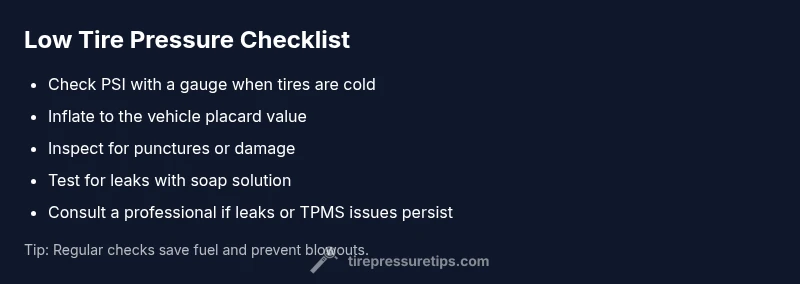
To verify the sign, start with a cold check using a reliable gauge. Note the PSI on each tire and compare it to the recommended specification on the door placard. Inflate any underinflated tire to the recommended level, then recheck all tires after a few minutes of driving, since the TPMS can reflect transient changes. If a tire continues to lose air or the TPMS warning remains after inflation, inspect for leaks, punctures, or damaged valves. This approach helps separate temporary dips from persistent issues that require repair or replacement.
Diagnosing the Root Cause: TPMS vs. Mechanical Leak
TPMS can trigger a low tire pressure sign even when a tire isn’t severely underinflated, due to sensor issues or calibration errors. Mechanical leaks include punctures, bead leaks, valve stem failures, and bead seating problems. A systematic approach—confirm PSI, inspect tires visually, perform a soap-test at valve stems and bead areas, and test the TPMS function—will help you identify whether the issue is sensor-based or a real air loss. If you suspect a TPMS fault, recalibration or sensor replacement may be necessary.
Safe, Step-by-Step Fixes to Restore Proper Pressure
- Gather tools: a reliable tire gauge and a portable inflator or access to a pump. 2) Check all tires when cold; record the PSI and compare to the placard. 3) Inflate underinflated tires to the recommended PSI and re-measure. 4) Inspect tires for signs of punctures or damage; if found, determine repair or replacement feasibility. 5) If the TPMS warning persists after inflation, recalibrate or replace sensors as needed. 6) Recheck all tires after driving a short distance, and monitor for any recurring pressure loss.
Prevention: Keep Your Tires Properly Inflated
Regularly checking tire pressure is the best defense against low tire pressure signs. Schedule monthly checks and before long trips, especially in cold weather when pressure drops are more likely. Use the vehicle placard as your inflation target and perform a quick visual inspection for bulges, cuts, or visible damage. Finally, replace aging TPMS sensors before they fail, and consider keeping a portable inflator or a tire pressure gauge in your trunk for on-the-spot checks.
Steps
Estimated time: 45-60 minutes
- 1
Prepare tools and space
Gather a reliable tire gauge, a portable inflator, and a flashlight. Ensure the vehicle is in a safe, level area away from traffic.
Tip: Check your gauge calibration with a known-good tire. - 2
Check all tires cold
Read the PSI on each tire when the tires are cold, ideally before driving. Note any tire that is below the placard value.
Tip: A cold reading is the most accurate baseline. - 3
Inflate to recommended PSI
Inflate underinflated tires to the manufacturer’s recommended PSI as shown on the door placard. Do not exceed the sidewall maximum.
Tip: Inflating gradually helps avoid overinflation. - 4
Inspect for leaks
Look for visible punctures, cracks, or objects embedded in the tread. Perform a soapy-water test around valve stems and beads to locate leaks.
Tip: Bubbles indicate a leak: mark the spot for repair. - 5
Address the root cause
If a nail or puncture is found, determine if a repair is feasible or if the tire must be replaced. If TPMS is involved, calibrate or replace sensors as needed.
Tip: Err on the side of safety if you’re unsure. - 6
Test and monitor
Recheck all tires after a short drive and monitor for any recurring loss. If you continue to lose air, seek professional service.
Tip: Keep a log of readings for patterns.
Diagnosis: Dashboard TPMS warning or uneven ride indicating one tire is underinflated
Possible Causes
- highSlow puncture or nail penetration causing gradual air loss
- mediumCold temperature causing natural PSI drop
- mediumTPMS sensor or battery fault causing erroneous low readings
- lowValve stem leak or bead seal compromised
- lowDamaged wheel or sidewall leak
Fixes
- easyCheck all tires with a reliable gauge and inflate to the vehicle placard
- mediumInspect tires for punctures or damage; repair or replace as needed
- mediumTest TPMS by resetting or recalibrating; replace sensors if needed
- easyPerform a soap test around valve stems and beads to locate leaks
- easyIf the leak is present or the tire cannot be safely repaired, visit a tire professional
Frequently Asked Questions
What is a low tire pressure sign?
A low tire pressure sign indicates one or more tires have reduced PSI, often shown by the TPMS or dashboard warning light. Check all tires and inflate to the recommended level.
A low tire pressure sign means a tire is underinflated; check with a gauge and inflate to the recommended PSI.
How do I check tire pressure correctly?
Use a reliable gauge and check tires when cold. Compare to the door placard, inflate to spec, and recheck after a few minutes of driving to account for any TPMS changes.
Check all tires with a gauge when cold, then inflate to the recommended PSI and recheck.
What if I find a puncture or leak?
If you locate a puncture, assess whether a permanent repair is possible. If not, replace the tire. For leaks around the valve stem or bead, you may need professional repair.
If you find a puncture or a suspect leak, repair or replace the tire as recommended by a professional.
Can TPMS be faulty even if tires are fine?
Yes, TPMS sensors can fail or lose calibration. If readings don’t align with a ground-truth check, have the system tested and sensors serviced or replaced.
TPMS can be faulty; if readings don’t match the actual tires, get the system checked.
When should I seek professional help?
If you cannot locate a leak, if a tire shows bulges or sidewall damage, or if TPMS remains on after inflation, visit a tire shop. Complex leaks and TPMS issues require expert inspection.
If you’re unsure after checks, a tire professional can safely diagnose and fix the issue.
Watch Video
What to Remember
- Check tire pressure promptly when warning signs appear
- Use a trusted gauge and inflate to the placard specification
- Inspect tires for leaks and confirm TPMS health
- Regular checks prevent unsafe driving and boost efficiency