Low Tire Pressure in Cold: Troubleshooting Guide
A practical, urgent troubleshooting guide to diagnose and fix low tire pressure in cold weather. Step-by-step checks, safe inflation, and maintenance tips to prevent flats and maximize efficiency.


Low tire pressure in cold weather is usually caused by air contraction as temperatures drop. Quick checks: use a reliable gauge, compare to the vehicle's recommended psi, and inflate each tire to spec. Look for slow leaks or embedded objects. If a tire won’t hold pressure, consult a tire professional promptly.
Why cold weather lowers tire pressure
According to Tire Pressure Tips, low tire pressure in cold weather is usually caused by air contraction as temperatures drop. As the air inside tires cools, it occupies less space, so the pressure reads lower on your gauge. This isn’t a sign of a permanent problem, but it can affect handling, braking, and fuel economy if not corrected. Tire Pressure Tips analysis shows that winter readings often dip when the tires are still cold, which is why it’s essential to check pressure before driving. We’ll walk you through safe, practical steps to verify and restore proper pressure, plus how to prevent future cold-weather issues.
In addition, remember that the goal is to protect tire integrity and maintain safe contact with the road. Cold-weather pressure changes can reveal slow leaks or minor defects you might otherwise overlook. By following a structured approach, you avoid sudden flats and wasted fuel while keeping your vehicle performing as designed.
Quick checks you can do now
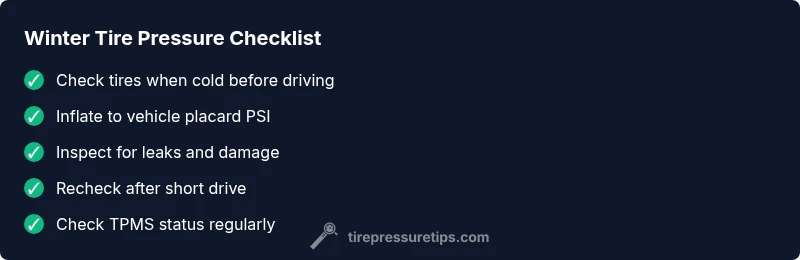
Before you drive, run through a simple checklist. Ensure tires are cold for an accurate reading, use a reliable gauge, and inflate to the vehicle placard value. Inspect for obvious issues like embedded objects or sidewall damage. If any tire won’t hold air after inflation, stop and seek professional help. Keep a record of readings to spot trends over time.
- Check tires when they are cold, not after freeway driving.
- Use a trusted gauge and compare to the placard on the door jamb.
- Inflate each tire to the recommended psi; don’t rely on the sidewall rating.
- Look for nails, screws, or cracks; listen for hissing sounds around valves.
- Recheck pressure after a short drive to settle the tire.
How temperature affects tire pressure
Temperature shifts directly influence air pressure inside tires. When air cools or moisture content changes, the internal pressure changes accordingly. Warmer days can increase readings slightly, while cold snaps can drop them noticeably. This is normal so long as pressure returns to the recommended level after tires warm up. The key is to measure when tires are cold and to recheck after a few miles of driving on a fresh inflation.
Understanding this helps you avoid overreacting to a single low reading. Instead, establish a routine: check when cold, inflate to spec, and monitor changes across several weeks. This proactive approach keeps tire contact with the road consistent and maintains efficiency and safety.
Common causes of low tire pressure in cold
Low tire pressure in winter is rarely caused by a single factor. The most common culprits include temperature-induced contraction, slow leaks from nails or cracks, valve stem leaks, and TPMS sensor faults. Be mindful that cold weather can exaggerate small leaks that would otherwise go unnoticed. Regular inspection helps you catch issues early and prevent road hazards.
Additionally, road salt and moisture can corrode components around valve stems and bead seats, leading to gradual pressure loss. If you notice persistent drops, perform a thorough leak test and consider replacing aging valves or damaged beads to restore a reliable seal.
Safe inspection and leakage diagnosis
A careful leak check is essential for safety. Start with a visual inspection for cracks, bulges, or embedded objects. Use soapy water around the valve stem and bead area to reveal slow leaks—bubbles indicate escaping air. If the tire still won’t hold air after inflation, perform a more rigorous leak test or take the vehicle to a tire shop for bead seating and TPMS verification. Never ignore a tire that repeatedly loses pressure, as it can lead to a sudden flat.
If you suspect a defect, schedule a professional assessment. A trained technician can perform a more thorough leak test, examine the TPMS sensor accuracy, and verify the tire’s structural integrity.
Inflate correctly and maintain pressure
Inflation is the cornerstone of tire health. Check the tire when cold, attach your gauge, and add air until the reading matches the recommended psi on the placard. Do not exceed the maximum pressure listed on the tire sidewall. After inflation, drive a short distance and recheck to confirm the pressure has stabilized as the tire warms. Adjust for load if you regularly carry heavy cargo or passengers. Keeping a small portable gauge in your vehicle makes it easy to stay on top of changes as temperatures shift.
For accuracy, recheck first thing in the morning or after the tires have cooled for a few hours. The routine should become part of your winter maintenance to prevent slow leaks from turning into a dangerous situation.
When to replace or repair tires in winter
If a tire continues to lose pressure after a proper inflation and leak checks, there could be a more serious issue such as bead seating problems, internal damage, or a failing TPMS sensor. In winter conditions, it’s critical to address these problems promptly to avoid blowouts. Replace or repair as recommended by a tire professional, especially if the tire shows sidewall damage, bulges, or tread separation. Proactively addressing these signs improves safety and vehicle handling in cold driving scenarios.
Tools and gear you’ll need
Having the right tools makes cold-weather checks quick and reliable. A digital or dial tire gauge, a portable air compressor or access to an inflate station, soapy water for leak detection, and a tire repair kit maximize your ability to diagnose and fix issues on the go. Store spare gauges and a basic repair kit in your glove box for emergencies.
Preventing future cold-weather pressure issues
Establish a winter tire-pressure checklist. Check pressures weekly, especially during sudden temperature drops, and before long trips. Consider a TPMS test if you notice readings behaving inconsistently. Retain a digital gauge and inspect tires for wear or damage regularly. By making this routine part of your vehicle maintenance, you reduce the risk of flats, improve fuel economy, and maintain safer driving in cold conditions.
Steps
Estimated time: 30-45 minutes
- 1
Gather tools and locate the placard
Collect a reliable tire gauge, a portable inflator or access to air, and your vehicle's recommended psi placard. Ensure tires are cold before starting. Having the right tools prevents improvisation errors.
Tip: Keep a gauge in the glove box for quick checks. - 2
Check all tires when cold
Measure current pressures on all four tires plus the spare, using the gauge. Record the readings to spot patterns over time. Do not rely on a single reading after driving; warm tires will show higher pressures.
Tip: Shift to a comfortable, well-lit space to read accurately. - 3
Inflate to the vehicle's recommended psi
Inflate each tire to the psi printed on the placard or owner's manual. Do not exceed the tire’s maximum pressure; stay within the recommended range for your vehicle and load.
Tip: Inflate gradually and recheck after a minute of rest. - 4
Recheck after a short drive
Drive 3–5 miles to let the tires warm slightly, then recheck. If pressure remains low, investigate leaks or valve issues before continuing to drive long distances.
Tip: Avoid hard braking or aggressive steering immediately after inflation. - 5
Inspect for leaks and damage
Check for visible punctures, cracked beads, or damaged sidewalls. For suspected leaks, apply soapy water to the valve stem, bead area, and tread to see bubbles.
Tip: If you see bubbles, address the leak promptly. - 6
Decide on repair or replacement
If a tire won’t hold pressure or shows damage, replace or repair it according to tire shop guidance. A persistent leak or TPMS fault needs professional attention.
Tip: Do not delay if the tire shows signs of safety risk.
Diagnosis: Tire pressure keeps dropping after inflation in cold weather
Possible Causes
- highTemperature-induced pressure loss (cold air contracting)
- mediumSlow leak due to puncture or nail (leak may be slow in cold)
- lowValve stem or TPMS leak (seal loss or sensor fault)
- lowBead seal issues or aging tire leading to air seepage
Fixes
- easyCheck all tires with a gauge when cold, inflate to the vehicle's recommended psi
- easyInspect for nails, punctures, or sidewall damage; repair or replace as needed
- mediumInspect valves and TPMS sensors for leaks or faults; reseat or replace if necessary
- easyIf pressure drops again after inflation, have a professional leak test or tire replacement
Frequently Asked Questions
Why does cold weather cause my tires to lose air?
Cold weather causes air to contract, lowering tire pressure readings. Inflate to the recommended psi when tires are cold and monitor changes with the seasons.
In cold weather, air contracts and tire pressure drops, so you should inflate to the recommended psi when the tires are cold.
Can I drive safely with a little low tire pressure?
A small drop in pressure can affect handling and fuel economy. Inflate to the recommended PSI as soon as possible and recheck after a short drive.
Yes, but it's safer and more efficient to bring the pressure back to the recommended level as soon as you can.
How often should I check tire pressure in winter?
Check at least once a month and before long trips, increasing frequency during rapid temperature swings or severe winter.
Check every month, and more often when it’s very cold or you’re planning long trips.
What if a tire won’t hold pressure after inflation?
A tire that won’t hold pressure may have a slow leak, bead seal issue, or TPMS fault. Seek professional inspection to diagnose and repair.
If it won’t hold air after inflation, get it checked by a professional as soon as possible.
Do TPMS readings change with cold weather?
Yes, temperature changes can affect TPMS readings. Always verify with a gauge when tires are cold to avoid misinterpretation.
Temperature changes can affect TPMS readings; use a gauge when cold to confirm.
Should I replace tires if they show slow air loss in winter?
If a tire shows persistent slow loss after inspection and repair attempts, replacement may be necessary for safety and reliability in winter driving.
Persistent slow loss warrants professional evaluation and possibly tire replacement.
Watch Video
What to Remember
- Check tires cold to ensure accurate readings
- Inflate to the manufacturer’s PSI, not the tire sidewall
- Inspect for leaks; replace damaged tires promptly
- Regular winter checks prevent flats and boost safety