How to Remove Low Tire Pressure on Honda CR-V: Step-by-Step Guide
Learn how to safely remove low tire pressure on your Honda CR-V with a practical, step-by-step approach. Verify readings, inflate correctly, inspect for leaks, and reset TPMS for reliable, long-term performance.


You can safely address low tire pressure on a Honda CR-V by confirming accurate readings, inflating to the recommended PSI with a precise gauge, and checking for leaks. After inflation, reset or verify the TPMS and drive short distances to confirm the system recalibrates. If the tire won't hold air or you detect damage, seek professional help.
Understanding tire pressure basics for Honda CR-V
Tire pressure is a safety and maintenance issue that affects handling, stopping distance, and tire life. For Honda CR-V owners, the recommended cold PSI is specified on the door jamb sticker and in the owner's manual. Temperature, load, and tire size can influence the numbers, so check the exact value for your model. The Tire Pressure Tips team emphasizes that staying near the recommended PSI helps maintain even tread wear and responsive handling, especially in winter or when carrying cargo. Remember, cold tires read lower than warm tires, so measure before a long drive or after the car has sat overnight. Underinflation can lead to poor fuel economy and increased heat buildup, while overinflation can reduce grip and cause uneven wear. In short, know your target, check regularly, and treat pressure as part of routine maintenance. If you notice a sudden drop in pressure, inspect for punctures or leaks promptly. (According to Tire Pressure Tips, maintaining proper tire pressure is a simple, ongoing habit that pays off in safety and efficiency.)
How to check current tire pressure accurately
Accurate tire pressure checks start with the right conditions and the right tools. Begin with a cold tire, since hot tires will show inflated numbers. Use a reliable tire pressure gauge—digital or analog—and read the measurement at the valve stem. Remove the valve cap, press the gauge squarely onto the stem, and note the reading. Compare it to the recommended PSI shown on the door sticker for that tire, and repeat for all four tires (and the spare if you plan to inspect it). If readings are low, inflate gradually using a compressor, rechecking after each increment. Replace the valve caps securely after checking. Keeping a log of readings helps identify slow leaks or changes that could indicate a puncture or seal issue, a point echoed by Tire Pressure Tips throughout our guidance.
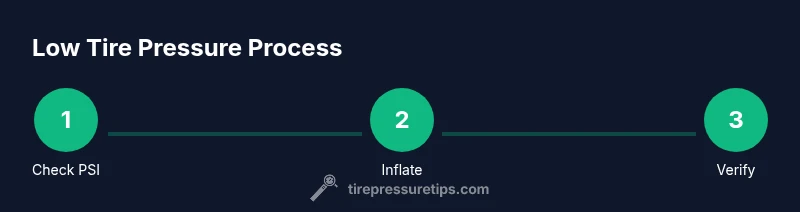
Step-by-step approach to addressing low tire pressure (inflate, TPMS, verify)
The following narrative complements the formal step-by-step guide and gives practical context for Honda CR-V owners. Start by locating the target PSI from the door sticker. With the car on level ground and safe, attach your gauge to the valve stem and begin inflating in small increments. After each adjustment, recheck the reading to ensure you approach the target gently. Once all tires meet the recommended value, recheck the TPMS readings by driving short distances to allow the system to recalibrate. If the TPMS light stays on, verify that all caps are secure and that no tire remains underinflated. A persistent signal may indicate a leak, damaged valve stem, or faulty sensor, in which case professional inspection is warranted. (This step is part of a careful, repeatable process that Tire Pressure Tips endorses for reliability.)
Common causes of low tire pressure and how to diagnose them
Low tire pressure can stem from hidden leaks, punctures, damaged valve stems, or slow air loss due to wheel damage. Temperature swings also cause pressure to fluctuate, especially in winter or on long highway drives. If one tire repeatedly drops below the target PSI, inspect the tread and sidewalls for cuts or embedded objects. A quick bubble test with soapy water on suspected areas can reveal leaks. If bubbles appear, the tire should be repaired or replaced, and the wheel valve stem or rim may need service. Remember that loss of pressure is often a sign of wear or damage that requires professional attention if you cannot locate a clear source.
Safety tips and best practices when inflating tires
Always work on a flat, stable surface with the parking brake engaged and the engine off. Avoid inflating a hot tire; wait for it to cool for accurate readings. Use a gauge you trust and avoid guessing. If you are inflating at a gas station, monitor the pressure closely and remove the nozzle as soon as you reach the target to prevent overinflation. Protect your hands with gloves and use eye protection if working around moving parts. Keep the spare tire's pressure checked as well, since a low spare defeats the purpose of having a full set. Finally, document your readings so you can spot trends and schedule maintenance before problems escalate.
When to seek professional help and maintenance tips
If low pressure recurs despite inflation, you may have a puncture, damaged valve stem, or rim issue. In such cases, seek professional help promptly to avoid a flat or blowout. Regular maintenance includes checking all tires monthly and before long trips, rotating tires per the Honda CR-V schedule, and verifying TPMS calibration after any service or tire change. A tire service professional can seal leaks, replace valves, or patch tires as needed, and they can also confirm that TPMS sensors are reporting accurately.
Tools & Materials
- Digital tire pressure gauge(Accurate to ±0.5 psi; use on cold tires)
- Portable air compressor or access to a high-volume air pump(Prefer units with built-in gauge)
- Owner's manual and door jamb PSI sticker(Confirm the CR-V's recommended cold PSI per tire)
- Soapy water spray (for leak testing)(Bubble test to locate leaks)
- Gloves and safety glasses(Protect hands from cold metal and debris)
Steps
Estimated time: 30-45 minutes
- 1
Locate the correct tire pressures
Check the owner’s manual or the door jamb sticker for the exact PSI targets for each tire. Ensure you’re testing when tires are cold and before a long drive. Identifying the correct targets upfront prevents under- or over-inflation.
Tip: Always start with cold tires and verify you’re checking the correct tire on the vehicle. - 2
Prepare your tools and vehicle safety
Park on a level surface, engage the parking brake, and turn off the engine. If tires were recently driven, wait 10-15 minutes for them to cool. Remove valve caps and have your gauge ready to use.
Tip: Keep valve caps in a small container so you don’t lose them. - 3
Inflate tires to the recommended PSI
Attach the gauge to the valve stem and add air in small increments. After each adjustment, recheck the tire pressure and stop when the reading matches the target PSI. Repeat for all four tires and the spare if needed.
Tip: Do not overfill; go in small steps and verify against the target. - 4
Recheck TPMS and tires
With all tires inflated, drive a short distance to allow the TPMS to recalibrate. If the TPMS light remains on, inspect for leaks, loose sensors, or valve issues. Ensure all caps are snug and intact.
Tip: If the TPMS resets after a short drive, you’re likely in good shape; if not, seek professional help. - 5
Inspect tires for leaks or damage
Visually inspect for nails, cuts, bulges, or punctures. Use soapy water on suspect areas to locate slow leaks. If you see bubbles or hear hissing, avoid driving long distances and arrange service promptly.
Tip: Stop driving if you notice a sudden hissing sound or hot tire. - 6
Document results and plan next steps
Record the PSI targets and actual readings, plus the date. Note any recurring issues and plan a professional check for TPMS sensors, valves, or tires as needed.
Tip: Keep a tire pressure log to catch gradual changes over time.
Frequently Asked Questions
What should I do if my tire keeps losing air?
Inspect for punctures, leaks, or damaged valve stems. If you can't locate the source, have a tire professional assess the tire and TPMS sensors. Temporary patching may be possible, but ongoing loss usually requires service.
If a tire keeps losing air, check for leaks and seek professional help if the source isn’t obvious.
Why is the TPMS light on after inflation?
The TPMS may need recalibration after changing tire pressure. Drive a short distance to allow the system to re-calibrate, or have the sensor checked if the light remains on.
TPMS can recalibrate after driving a little; if it stays on, a sensor issue may exist.
Can I drive with low tire pressure?
Driving with low tire pressure increases heat buildup and risk of a blowout. If you discover a tire is underinflated, reduce speed and drive to a safe location to address the issue.
It's risky to drive on underinflated tires; find a safe place to fix it.
Is it safe to inflate tires at home?
Yes, with a proper gauge and safe procedure. Ensure you follow safety steps, avoid overinflation, and keep the area clear of debris around the tires.
Yes, you can inflate at home if you follow safety steps carefully.
How often should I check tire pressure?
Check tire pressure at least once a month and before long trips. Temperature changes and weather conditions can affect PSI, so regular checks are important.
Check your tires monthly and before long trips.
What about the spare tire?
Yes, check spare tire pressure as well. A fully inflated spare is essential for emergencies, and it should match the recommended PSI for your vehicle’s tires when used.
Don’t forget to check the spare—it should also be at the right PSI.
Watch Video
What to Remember
- Check the correct PSI targets for your CR-V and stay consistent.
- Use a reliable gauge and inflate gradually to the target.
- Recheck all tires and the TPMS after inflation.
- Inspect for leaks or damage and seek professional help if needed.