How to Reset Low Tire Pressure: A Practical Guide
Learn how to safely reset low tire pressure, understand TPMS behavior, gather the right tools, and follow a clear, step-by-step process to keep tires properly inflated and your vehicle performing at its best.


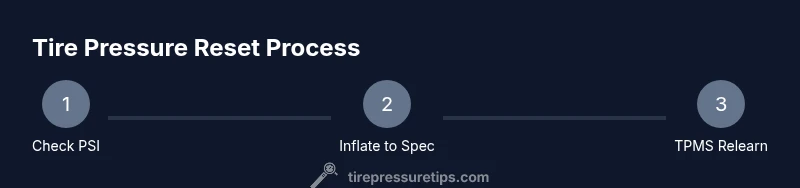
By following this guide, you’ll learn how to reset low tire pressure safely, accurately, and without guesswork. You’ll confirm the correct PSI for your vehicle, inflate to spec, and relearn your TPMS if required. This quick answer points you to the exact steps, tools, and safety checks you’ll use in the full article.
Why resetting low tire pressure matters
If you’ve ever wondered how do you reset the low tire pressure, you’re not alone. Resetting it correctly matters for safety, handling, and fuel economy. When a tire runs below the vehicle’s recommended PSI, the TPMS sensor flags a warning; inflating to spec is just the first step. According to Tire Pressure Tips, accurate PSI helps the tire’s footprint maintain grip, wear evenly, and stay cooler under load. A proper reset ensures your dashboard warning light turns off and your tires wear evenly over time. In this section, we’ll cover why it’s essential to reset, what can trigger a false reading, and how environmental factors like temperature can affect tire pressure readings. By understanding the basics, you’ll avoid common mistakes that leave you underinflated or overinflated, increasing the risk of punctures or poor fuel economy. The guidance here reflects Tire Pressure Tips analysis and practical experience from real-world driving conditions across different climates, and the Tire Pressure Tips team has seen many cases of false readings caused by rapid temperature swings.
brandNote:
Tools & Materials
- Tire pressure gauge (digital or analog)(Calibrated to measure PSI accurately; bring a reliable gauge for consistency)
- Air compressor or access to an inflation station(Essential for inflating tires to the correct PSI without guesswork)
- Vehicle owner’s manual or door placard reference(Use the manufacturer-recommended PSI; front/rear can differ)
- Notebook or app to log readings (optional)(Helpful for tracking PSI changes over time)
- Safety gear (gloves, eye protection)(Optional but good practice when working around tires)
Steps
Estimated time: 40-60 minutes
- 1
Locate the recommended PSI
Start by finding the manufacturer-recommended tire pressure for your vehicle. Check the door placard on the driver’s side jamb or reference the owner’s manual. Note any differences between front and rear tires, and remember that the spare tire may have its own specific pressure.
Tip: If you can’t read the placard, use the manual or manufacturer website as a backup. - 2
Check current tire pressures with a gauge
Remove the valve cap from each tire and attach your tire pressure gauge. Read the PSI and record the numbers for all four tires. Check when tires are cold for the most accurate reading.
Tip: Take readings from multiple tires and average them if readings vary widely. - 3
Inflate to the recommended PSI
Using an air compressor, add air to each tire until the gauge shows the target PSI. Re-check after inflation to confirm accuracy and avoid over-inflation.
Tip: Do not exceed the recommended PSI; some engines and tires benefit from slight headroom. - 4
Repeat with all tires and the spare if applicable
Ensure every tire (and the spare if you regularly check it) is inflated to the recommended pressure. Inconsistent pressures can affect handling and fuel economy.
Tip: Spare tires often have different pressure requirements; don’t assume they’re the same as the other tires. - 5
Perform TPMS relearn if required
Some vehicles require a manual TPMS relearn after inflation or wheel changes. Consult the owner’s manual or vehicle settings menu to determine if relearn is needed.
Tip: If your car requires manual relearn, complete it before driving long distances. - 6
Drive to trigger relearn
For many systems, a short drive at a safe speed helps the TPMS relearn the new pressures. Check your dashboard light after a brief drive to confirm the reset.
Tip: Driving at highway speed for 10–15 minutes is a common guideline; verify with your manual. - 7
Recheck and document
After the relearn, recheck each tire’s pressure to ensure it remains at the target PSI. Record the final readings for future reference.
Tip: Keep a simple log to monitor pressure trends over time and catch leaks early. - 8
Final safety check
Look for signs of leaks, damaged valves, or irregular tire wear. If you notice anything unusual, have the tires inspected by a professional.
Tip: Safety first: if a tire keeps losing air, get it checked promptly.
Frequently Asked Questions
Do I always need to reset TPMS after inflating a tire?
Not always. Some vehicles relearn automatically after driving; others require a manual relearn step. Check your manual for the exact procedure.
Most cars relearn after a short drive, but some models need a manual reset. Refer to your manual for details.
What if the TPMS warning stays after inflation?
If the light remains, inspect for leaks, faulty valves, or damaged sensors. A professional inspection may be necessary if readings don’t stabilize.
If the warning won’t go away after inflating, get a professional check to rule out sensor problems or leaks.
Can low tire pressure affect fuel economy?
Yes. Underinflation increases rolling resistance and lowers fuel economy. Keeping tires at the correct PSI helps efficiency.
Yes, underinflation can reduce fuel efficiency by increasing rolling resistance.
Is it safe to reset TPMS while driving?
No. Reset procedures should be done with the vehicle parked. Always follow the manual to avoid distractions or errors.
No, do it parked and follow the manual to avoid mistakes.
How long does a TPMS relearn take?
Time varies by vehicle. Some cars relearn after a brief drive; others require more specific steps as outlined in the manual.
It varies by model; some relearn after a short drive, others need a specific procedure.
What should I do if one tire keeps reading low?
Check for leaks, punctures, or valve issues. If you can’t find the cause, have the tire inspected or replaced as needed.
If one tire stays low after inflation, inspect for leaks or damage and seek professional help if needed.
Watch Video
What to Remember
- Check the manufacturer PSI before inflating
- Use a reliable gauge and proper technique
- Relearn TPMS when required by your vehicle
- Drive briefly to trigger automatic relearn if applicable
- Recheck pressures after driving and adjust as needed