Honda Low Tire Pressure: Quick Fixes and Prevention
Urgent guide to diagnose and fix low tire pressure on Honda vehicles. Learn how to safely check, inflate to spec, reset TPMS, and prevent future leaks with practical tips from Tire Pressure Tips.


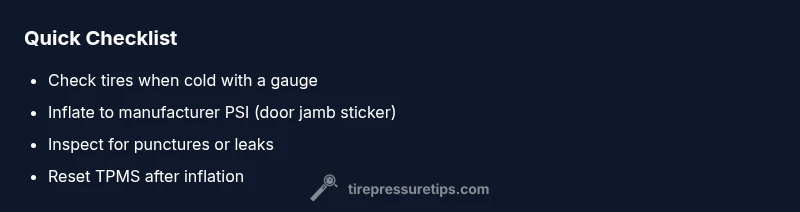
Honda low tire pressure is typically caused by gradual air loss, temperature shifts, or a small puncture. The quickest fix is to check all tires with a reliable gauge, inflate to the recommended psi from the owner's manual or door jamb sticker, and inspect for leaks or damage. If the TPMS light stays on after inflating, don’t delay—get a professional check.
Honda low tire pressure: What you need to know now
According to Tire Pressure Tips, maintaining proper tire pressure is essential for safety, handling, and fuel efficiency. When you hear the term "Honda low tire pressure," think of a tire that has lost air gradually due to minor leaks, temperature changes, or a puncture. This guide prioritizes urgency and practical steps you can take today. Start with a cold tire check using a reliable gauge, then compare readings to the recommended psi found on the driver’s door jamb sticker or in the owner’s manual. If one tire shows a deficit or the readout remains low after inflation, inspect for punctures, valve leaks, or bead sealing issues. The Tire Pressure Tips team emphasizes quick action to minimize uneven wear and potential blowouts.
brandMentions_intro:true,
Steps
Estimated time: 25-40 minutes
- 1
Gather tools and safety gear
Before you touch the tires, gather a reliable tire gauge (digital or analog), an air compressor or access to a service station, and safety gloves. Park on a flat surface, engage the parking brake, and turn off the engine. Take a moment to review the owner’s manual for Honda-specific guidance on PSI ranges. Pro tip: never inflate a hot tire; wait for it to cool for accurate readings.
Tip: Keep the gauge accessible in the glove box for regular checks. - 2
Check all tires when cold
Take readings from all four tires, including the spare if you regularly rotate it. Record each value, then compare with the recommended psi printed on the driver’s door jamb sticker or in the manual. If a tire is low by more than a few psi, proceed to inflate.
Tip: Always check after at least 3 hours of non-driving or first thing in the morning. - 3
Inflate to the recommended psi
Use an air compressor or service station to bring each tire to the specified psi. Do not exceed the maximum pressure listed on the tire sidewall; aim for the vehicle-specific target instead. Recheck with the gauge to confirm accuracy.
Tip: If you must top-up multiple times, recheck after each adjustment to avoid over-inflation. - 4
Inspect for damage or leaks
While inflating, visually inspect for nails, cuts, or embedded objects. Run a soapy-water test around the valve stem, bead, and sidewalls if you suspect a leak. If you notice rapid air loss, replace or repair the affected tire.
Tip: Look closely at the valve stem—these are common leak points. - 5
Reset or verify TPMS status
After inflating to spec, drive a short distance to let the TPMS recalibrate. If the warning light remains, use the vehicle’s TPMS reset procedure or consult a tire professional to diagnose sensor faults.
Tip: A stubborn TPMS light could indicate a sensor battery issue or valve stem problem. - 6
Document readings and plan follow-up
Record the final pressures and note any changes. If the issue persists, arrange a professional inspection within a few days to rule out slow leaks, sidewall damage, or rim leaks.
Tip: Set a reminder to recheck tires weekly during temperature shifts.
Diagnosis: Tire pressure warning light on or tires read low after inflation
Possible Causes
- highSlow leak from puncture or nail
- mediumTPMS sensor issue or calibration problem
- lowTemperature-related pressure loss
Fixes
- easyInspect tires for punctures or nails; patch or replace as needed
- easyReset TPMS after inflating to spec or drive for TPMS to recalibrate
- mediumCheck for valve stem leaks and rim bead issues; seek professional if leak persists
Frequently Asked Questions
Why is the TPMS light on even after I inflate the tires on my Honda?
TPMS can stay lit if it detects persistent underinflation, a faulty sensor, or a calibration issue. After inflating to spec, drive for a short distance to recalibrate, and check for leaks or damaged sensors if the light remains.
The TPMS light can stay on if there’s a slow leak or a faulty sensor; inflate to spec and drive briefly to recalibrate.
How often should I check tire pressure on a Honda?
Check at least once a month and before long trips, and more often in extreme temperatures. Regular checks help prevent underinflation and improve safety and fuel efficiency.
Check monthly and before trips, especially in temperature swings.
Can temperature changes cause Honda tires to lose air quickly?
Yes. Temperature changes can cause measurable pressure shifts. In colder weather, tires lose air more quickly, so check pressure more often during seasonal transitions.
Colder weather makes tires lose air; check pressure more frequently in these times.
What should I do if I find a nail in a tire on my Honda?
Do not remove the object. If possible, cover it to prevent air loss and drive carefully to a repair shop. A puncture can often be repaired unless the damage is severe.
If you see a nail, don’t pull it out—get to a shop to assess repair options.
Is it safe to drive with slightly low tire pressure?
Short drives with a small deficit are sometimes fine, but continued driving can cause heat buildup, uneven wear, and potential tire failure. Inflate promptly.
A little low may be okay for a short trip, but don’t ignore it for long.
How can I prevent tire pressure loss in Honda vehicles?
Regularly check pressures, rotate tires as recommended, and inspect valves and rims for leaks. Keep spare tire pressure checked too, and replace worn tires to maintain seal integrity.
Regular checks and maintenance help prevent leaks and keep tires in good shape.
Watch Video
What to Remember
- Check all tires when cold and inflate to Honda-recommended psi
- Inspect for punctures or leaks if pressures drop again
- Reset TPMS after inflating and verify the light goes out
- Keep a portable gauge in your car for quick, accurate checks