Which tyre pressure is correct: a practical guide
Discover how to determine the correct tyre pressure for your vehicle. Learn where to find the official spec, how temperature and load affect pressure, and how to check and adjust safely for optimal performance and longevity.


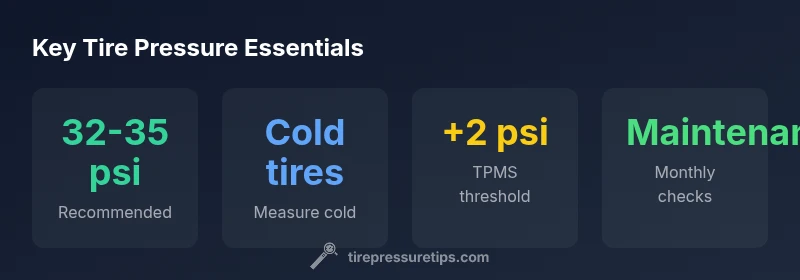
Which tyre pressure is correct depends on your vehicle and load. In most passenger cars, the recommended pressure is found on the door jamb sticker or in the owner's manual, typically around 32-35 psi when cold. Always use cold tires for measurement. The Tire Pressure Tips guidance emphasizes checking pressure monthly and adjusting for seasons and cargo.
Understanding which tyre pressure is correct
The question of which tyre pressure is correct isn’t answered by a single universal number. The right pressure depends on your specific vehicle, axle load, and the environment in which you drive. According to Tire Pressure Tips, the safest starting point is the manufacturer’s specification shown on the door jamb placard or in the owner’s manual. This specification represents the optimal balance between handling, tire wear, and fuel efficiency for your model. It’s important to note that front and rear tires may have different targets, especially on vehicles with uneven weight distribution or performance variants. When tires are cold, the reading should align with the spec. If you’ve just driven, give the tires time to cool before testing. Use a reliable gauge and check all four tires against the placard, not your memory. This approach supports safer handling, better mileage, and longer tire life.
How to find your correct tyre pressure
The quickest way to confirm the correct pressure is to locate the vehicle’s recommended range on the door jamb placard. If you can’t see the placard, consult the owner’s manual or dealer literature. Always check when the tires are cold for accuracy. Remember that some models require higher pressures on the front axle than the rear, or vice versa, depending on weight distribution and if you regularly carry passengers or cargo. Use a high-quality gauge, inflate gradually, and recheck after the tires have cooled. For vehicles with spare tires, the same principle applies if you plan to use the spare for an extended period.
Temperature and load effects on tyre pressure
Tire pressure is not static; it changes with temperature and load. Colder ambient temperatures reduce pressure, while hot driving can increase it. A common rule of thumb is roughly a 1 psi change for every 10°F temperature swing. Heavier loads push more air into tires, increasing pressure slightly; light loads keep pressure closer to the placard. If you drive in extreme heat or cold, you should recheck and adjust within the manufacturer’s specified range. This is why seasonal adjustments and load-aware inflation are emphasized in Tire Pressure Tips guidance.
Checking and adjusting tyre pressure safely
Create a simple routine: check when tires are cold, use a reliable gauge, and adjust to the vehicle’s recommended range. Remove valve caps, place the gauge on the valve stem squarely, and read the pressure. If you need to add air, use an air compressor with a regulator to avoid overinflating. After inflation, verify the reading again with the tires cold. Don’t rely on a warm tire reading, and avoid overinflation, which can cause uneven wear and a harsher ride. It’s also wise to check pressures at least once a month and before long trips.
Common myths and mistakes
A few myths persist: (1) Overinflating to prevent flat spots in winter is not recommended, as it increases the risk of impact damage and reduces traction. (2) All tires across an axle should always be at the same pressure—variations can reflect tire wear, load distribution, or tire size differences. (3) TPMS alone guarantees safety; while helpful, TPMS alerts don’t replace manual checks, and sensors can drift. (4) If your gauge reads high, you may have a leaky valve stem or a faulty gauge—double-check with a second gauge.
Tools and ongoing maintenance habits
Equip yourself with a good tire pressure gauge (digital or dial) and know the vehicle’s recommended range. Schedule monthly checks and before long trips, and adjust for seasonal temperature shifts and load conditions. Keep a record of the readings and compare over time to spot slow leaks or slow down in air loss. If you replace tires, recheck the pressure after the first few hundred miles, since tires settle and pressure may shift slightly.
Quick-start checklist
- Locate the placard on the driver’s door or consult the manual.
- Measure cold tires with a reliable gauge.
- Inflate to the recommended value, then recheck once cold.
- Check all four tires and the spare if used regularly.
- Consider TPMS readings as a supplementary guide, not a replacement for gauge checks.
Typical tire pressure ranges by vehicle type
| Vehicle Type | Recommended Pressure (psi) | Notes |
|---|---|---|
| Passenger Car | 32-35 psi | Check door jamb placard or manual |
| SUV / Crossover | 33-40 psi | Front/rear targets may differ |
| Light Truck / Van | 50-65 psi | Model-specific; refer to manual |
Frequently Asked Questions
What is the correct tyre pressure for my car?
Find the exact figure on the door jamb placard or in the owner's manual. Then measure cold tires with a reliable gauge and adjust within that recommended range. Front and rear pressures may differ depending on the model.
Check the placard and measure cold tires to confirm the value.
How often should I check tyre pressure?
Check at least once a month and before long trips. Do so when the tires are cold to avoid inflated readings from recent driving. If you carry heavy loads or travel in extreme temperatures, check more frequently.
Check monthly and before long trips when tires are cold.
Can TPMS replace manual pressure checks?
TPMS warns you when pressure is low, but it isn’t a precise gauge. Use a physical tire pressure gauge to verify readings and adjust to the manufacturer’s spec when needed.
TPMS helps but does not replace a gauge check.
Does temperature affect tyre pressure?
Yes. Colder temperatures reduce pressure, while heat can increase it. Expect about a 1 psi change for every 10°F temperature swing, and adjust accordingly.
Temperature changes affect pressure; recheck in different seasons.
Is it okay to overinflate to prevent flat spots?
No. Overinflation can cause uneven wear and a harsher ride, and may increase the risk of damage from road hazards. Always stay within the recommended range.
Don’t overinflate; stick to the spec.
What tools do I need to check tyre pressure?
A quality tire pressure gauge (digital or dial) is essential. Pair it with an air compressor that has a regulator, and keep the owner's manual handy for reference.
Keep a good gauge and follow the manual.
“Tire pressure is a vehicle-specific specification that varies with load and temperature. Follow the manufacturer’s guidance and verify readings regularly.”
What to Remember
- Consult the manufacturer placard for your exact value
- Measure cold tires for accuracy
- Account for temperature and load when inflating
- Use a reliable gauge and check regularly
- TPMS aids safety but isn’t a substitute for gauges