Where to Find Recommended Tire Pressure: A Practical Guide
Learn where to locate your vehicle’s recommended tire pressure—from door placards and owner manuals to TPMS—and how to verify it for safe, efficient driving in all conditions.


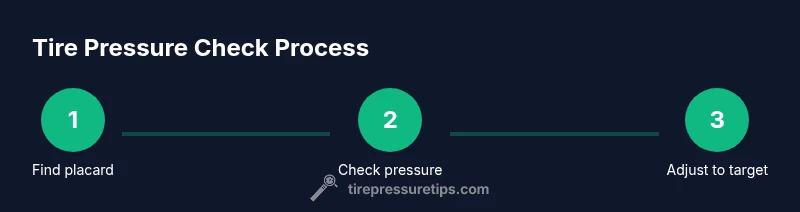
Locate the official tire pressure using your vehicle’s door placard and the owner’s manual, or the tire information label on the door jamb. This number is the target you should aim for when the tires are cold. Check with a reliable gauge, and remember that TPMS alerts may help, but they aren’t a substitute for the placard. According to Tire Pressure Tips, start with the placard as your baseline.
Where to look for the recommended tire pressure
According to Tire Pressure Tips, the door jamb placard is your primary source for the recommended tire pressure. This label is usually found on the driver’s door frame, but in some vehicles it lives on the inside edge of the door or the jamb near the hinge. The placard shows the PSI values for front and rear tires, and may include different numbers for different load conditions. If you cannot locate the placard, check the owner’s manual or the vehicle’s maintenance sticker (some models place it in the glove box or fuel filler door). Some lighter cars use a single value; heavier vehicles may show separate numbers for each axle. Remember these are cold-tire numbers—do not read them after a drive, as heat inflates tires and skews the reading. Use a trusted gauge to verify, and keep in mind that TPMS can alert you if a tire is significantly off, but it isn’t a replacement for the placard.
This placard is standardized by most manufacturers, yet some models provide slightly different guidance for certain wheel sizes or trim levels. If you share a vehicle’s make and model with a tire professional, they can help confirm whether the placard reflects your actual tire size and load conditions. Always start with the placard and then cross-check with the owner’s manual when in doubt, especially if you’ve changed tire sizes or installed low-profile or oversized tires.
How to interpret the numbers: front, rear, and load considerations
Tire pressure values can differ between the front and rear wheels, and in some vehicles they do not. Front tires often carry more steering load, while rear tires may bear more weight depending on the drivetrain and passenger/cargo loads. When you see two numbers on the placard, note which corresponds to the axle in question and apply the same value to both tires on that axle. If a vehicle lists a single value, it typically indicates a standard setup with equal pressures across all tires. Load conditions matter—carrying heavy cargo or towing can necessitate higher pressures. If your vehicle is designed for different axle pressures under load, adjust within the recommended range rather than over-inflating to accommodate every scenario. As a safety best practice, keep a record of your typical load and adjust pressures seasonally if your manufacturer recommends it.
Reading the tire sidewall: what the numbers mean and what they don't
The tire sidewall includes a maximum inflation pressure, but that is not your recommended operating pressure. The maximum pressure is a safety limit for the tire and can be far higher than your placard value. Do not inflate your tires to the maximum sidewall PSI unless the placard specifically calls for it under your typical load. Other numbers indicate tire size, speed rating, and load index, not the target operating pressure. Rely on the placard (and the owner's manual) for the correct pressures for daily driving, seasonal adjustments, and cargo loads. Sidewall information is important for understanding tire limits, but it should not dictate your daily tire pressures.
The role of TPMS and manual checks
Tire Pressure Monitoring Systems (TPMS) provide a helpful alert when a tire falls below or rises above the recommended range, but TPMS readings can be influenced by sensor calibration, temperature, and air leaks. Use TPMS as a fail-safe check in addition to a manual pressure reading with a gauge. Regular manual checks at least once a month help catch slow leaks, nails, or valve stem issues that TPMS alone might miss. Remember, a TPMS warning does not tell you the exact target pressure; it signals deviation from the placard value. This is why owners should still carry a gauge and verify the exact pressure in cold tires.
How to measure tire pressure accurately at home or on the go
To measure accurately, start with cold tires. If the car has recently been driven, wait at least three hours or until the tires have cooled down. Use a reliable tire pressure gauge—digital gauges are often easiest for quick readings, but analog gauges can be very accurate with careful use. Remove the valve cap, press the gauge onto the valve stem firmly, and note the reading. If you’re using a gas station air pump, many pumps display the current tire pressure while you inflate; always cross-check with your own gauge for accuracy. When you record readings, write down the target value from the placard and compare it to your current measurement. If readings vary by more than 1-2 psi from your target, adjust accordingly and recheck.
Seasonal and usage considerations
Temperature and seasonal changes influence tire pressure. Colder weather typically reduces PSI, while hot sunny days or heavy driving can increase it. Instead of chasing a fixed PSI, use the placard value as your baseline and adjust only when you see a consistent drift from readings taken when tires are cold. If you frequently drive with heavy loads, you may need to adjust the pressure within the manufacturer’s recommended range, and recheck after changes in cargo. Climate-specific guidance from the owner’s manual will help you tailor pressures to your region.
Common mistakes and how to avoid them
Common errors include inflating tires to the maximum sidewall pressure, neglecting to check when tires are cold, and using TPMS as a substitute for a gauge. Another mistake is ignoring rear vs. front differences on vehicles that specify separate pressures. Always verify with the placard, then cross-check with a gauge, and adjust gradually. Avoid inflating beyond the recommended range to achieve a firmer ride, as over-inflation reduces traction and tire life. Finally, don’t forget to check the spare tire—pressure discrepancies there can affect overall vehicle safety too.
Quick reference checklist for finding and verifying recommended tire pressure
- Locate the placard on the driver’s door jamb and note the front/rear values.
- If missing, consult the owner’s manual or maintenance sticker.
- Read the numbers when tires are cold; never read after driving.
- Use a reliable gauge and verify readings with your manual values.
- Check TPMS alerts, but treat them as warnings, not exact targets.
Tools & Materials
- Tire pressure gauge (digital or analog)(Choose a gauge with a clear readout; built-in air release is helpful for fine-tuning.)
- Air compressor or access to an air pump(Gas stations or portable compressors work; ensure you don’t exceed the placard value.)
- Owner's manual or placard reference(Have the official numbers handy for quick cross-checks.)
- Notebook or mobile app to log readings(Helpful for tracking changes over time and recognizing slow leaks.)
Steps
Estimated time: 15-25 minutes
- 1
Gather tools and locate the placard
Assemble your gauge and a reliable air source, then locate the placard on the driver’s door jamb. If needed, pull out the owner’s manual to confirm the exact front/rear values and any load-based differences.
Tip: Bring a flashlight to read small print on the placard in low-light conditions. - 2
Check units and target values
Ensure you know the unit (psi or kPa) used on your placard and confirm the correct target for your tire type and load. Maintain consistency in units throughout the process.
Tip: If the unit on your gauge differs, convert readings to the placard’s unit for accuracy. - 3
Measure tires when cold
Wait until tires have cooled for several hours or after the car has been stationary. Cold readings reflect the baseline pressure for safe operation.
Tip: Avoid inflating after short trips since heat skews readings. - 4
Read and compare with the placard
Press the gauge onto the valve stem firmly and record the reading for each tire. Compare the results to the placard values and identify any tires that fall outside the recommended range.
Tip: Measure both front and rear tires (and spare, if you keep one inflated) for consistency. - 5
Adjust to target pressure
If readings are low, add air gradually until you reach the target value. If readings are high, depress the valve to release air until you reach the target. Recheck after adjustment.
Tip: Avoid inflating to the maximum sidewall pressure unless the placard specifies it for your load. - 6
Recheck and document
Recheck all tires after adjustments to confirm accuracy. Note the final pressures for future reference and monitor changes over time.
Tip: Record readings in a notebook or app to spot leaks early.
Frequently Asked Questions
Where can I find the recommended tire pressure for my car?
The placard on the driver’s door jamb lists the recommended tire pressure, usually with separate front and rear values. If it’s missing, consult the owner’s manual or the maintenance sticker.
Check the door placard first, then the owner's manual if needed.
Is the tire pressure on the sidewall the correct target?
No. The sidewall shows the maximum safe pressure, not the operating target. Use the placard value for daily driving and adjust within the recommended range as needed.
The sidewall shows max pressure; your target is on the placard.
How often should I check tire pressure?
Check at least once a month and before long trips. Temperature changes can affect readings, so recheck after weather shifts or seasonal changes.
Check monthly and before trips; recheck after temperature changes.
What if the TPMS warning stays on after adjustment?
TPMS is a warning; if it stays on, there may be a leak or a faulty sensor. Recheck pressures and consult a professional if the light persists.
If the warning stays on, recheck pressures and consider a sensor check.
Can I inflate to the maximum sidewall pressure?
Do not inflate to the max sidewall pressure unless the placard specifies it for your load. Over-inflation can reduce grip and ride comfort.
No—stay within the placard’s target range.
Do pressures differ by load or season?
Yes. Heavier loads or extreme temperatures can require adjusting within the recommended range. Always confirm with the placard and manual guidance.
Yes, adjust within the recommended range for load and season.
What tools help me check tire pressure accurately?
A reliable tire pressure gauge and an accessible air source are essential. TPMS is helpful, but rely on a gauge for accuracy.
Use a gauge and air source; TPMS helps but isn’t precise.
Watch Video
What to Remember
- Know your placard values and use them as the baseline.
- Always measure cold tires with a reliable gauge.
- TPMS is helpful but not a replacement for manual checks.
- Avoid inflating to the tire’s maximum pressure unless specified.