Where Do You Find Tire Pressure: A Practical Guide
A comprehensive, data-driven guide to locating your vehicle’s recommended tire pressure, understanding sources, and verifying readings with TPMS and gauges. Practical steps, common pitfalls, and maintenance tips for safe driving.


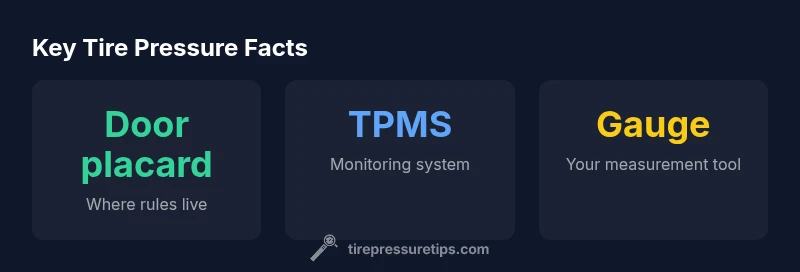
Where do you find tire pressure? The answer is found in two primary places: the door jamb placard on the driver's side and the owner's manual. The tire sidewalls show the maximum allowable pressure, not the target. Readings should be taken with tires cold using a reliable gauge, and TPMS can confirm readings, but it isn’t a substitute for manual checks. According to Tire Pressure Tips, these sources are your primary references.
Where to find tire pressure: locating the recommended number
In practice, many drivers ask: where do you find tire pressure? According to Tire Pressure Tips, the quickest path to the correct specification is twofold: check the door jamb placard on the driver’s side and consult the vehicle’s owner’s manual. The placard provides the recommended cold inflation pressure for front and rear tires under normal load. The manual explains any exceptions for all-wheel-drive configurations, winter tires, or special trim levels. You’ll also see the maximum pressure printed on the tire sidewall, but that value is not a target for daily inflation; it’s the ceiling you should avoid exceeding. For many vehicles, you may also find the information inside the glove box or on a sticker in the fuel filler door. If you own a newer car with a digital display, you can sometimes confirm the numbers in the vehicle’s instrument cluster, but always verify with a handheld gauge when in doubt. This information is essential because running tires under or over the recommended pressure reduces fuel efficiency, shortens tire life, and can compromise handling. The Tire Pressure Tips team found that most drivers underestimate the importance of checking the door placard even when they know to check pressure.
Primary source: the door jamb placard
The door jamb placard is your number-one reference because it’s tailored to your exact vehicle and configuration. It lists the recommended cold inflation pressure for each axle (front and rear) under normal load, which may vary for models with staggered tires or high-performance tires. If you drive a vehicle with a spare tire mounted separately, you may see a separate set of numbers for the spare, but never inflate your main tires to that value. For trucks and SUVs with heavier loads or all-wheel-drive systems, the placard may include different values for certain trims. The placard is typically a sticker on the door frame near the latch or on the edge of the driver’s door. If you can’t locate it, check the owner’s manual or the glove box for a section titled “Tire Pressure” or “Inflation Pressure.”
Secondary sources: owner's manual and glove box resources
The owner’s manual is the definitive secondary source for unusual operating conditions, such as towing, off-road use, or seasonal tire changes. It explains any exceptions to the standard values and clarifies what to do when you replace tires that require different pressures. Some models place tire-pressure information in the glove box or on a compartment lid; others embed it within the maintenance section. Always cross-check the placard with the manual when you switch to winter tires or run-flat configurations. While the manual provides guidance, the placard remains the primary source for everyday maintenance. The glove box or online PDF versions of the manual can be convenient if you don’t have the physical copy handy.
Tire sidewall labels vs. recommended pressure
The tire sidewall carries a maximum inflation pressure label. This value indicates the upper limit the tire can safely handle and is not the ideal operating pressure. Inflation beyond the recommended value (from the placard) can compromise tire contact with the road, reduce traction, and increase wear. In contrast, the placard’s numbers reflect the target pressures for your vehicle under typical load conditions. It’s common to see small variations between front and rear pressures, especially on vehicles with staggered fitments or performance tires. Remember: the sidewall maximum is a safety limit, not a daily target. The distinction matters for safe inflation practices and for understanding when a tire is overinflated or underinflated.
Reading and verifying measurements: cold vs hot tires and gauges
Tire pressure readings vary with temperature. For accurate results, measure when tires are cold (after the car has been parked for at least three hours or driven less than a mile). A hot tire reads higher than its cold state because air expands with heat. Use a reliable pressure gauge—dial, digital, or pen-style—to read the pressure and compare with the placard. If the gauge shows a number far from the recommended range, recheck after the tire cools down. If you notice a persistent discrepancy, there could be a slow leak, a TPMS fault, or a misread due to gauge calibration. Calibration intervals matter: test your gauge against a known standard occasionally to ensure accuracy.
Practical steps: a quick-check routine for busy drivers
- Locate the placard on the driver’s door jamb and note the recommended PSI for front and rear tires. 2) Check tires when cold, using a trusted gauge. 3) Compare readings with the placard; adjust if necessary. 4) If TPMS shows a warning, verify with a gauge even if the readout seems close. 5) Check the spare tire if you have one and ensure its pressure matches the spare’s label. 6) Recheck after driving short distances, since some plants and roads can affect pressure readings. 7) Schedule monthly checks, especially in extreme climates or after long trips. This routine reduces uneven wear, improves fuel efficiency, and enhances safety.
Key sources of tire pressure information
| Source/Location | What it shows | Best use | Notes |
|---|---|---|---|
| Door jamb placard (driver's door) | Recommended cold pressure per axle | Primary source | Tailored to your vehicle |
| Owner’s manual | Conditions/exception guidance | Secondary source | For unusual setups |
| Tire sidewall | Maximum inflation pressure | Safety ceiling | Not a target for daily inflation |
| Glove box sticker | Alternative placard location | Backup source | Model-specific variations |
Frequently Asked Questions
Where can I find the recommended tire pressure for my vehicle?
The door jamb placard on the driver’s side is the primary source, often complemented by the owner’s manual. If you can’t locate it, contact the dealer or check the manual for the exact figure.
Look at the driver’s door jamb sticker or your manual to find the exact PSI. If in doubt, use a gauge to confirm.
Does TPMS replace manual tire pressure checks?
No. TPMS provides alerts when pressure is low, but you should verify the reading with a physical gauge to confirm the exact PSI and detect slow leaks.
TPMS helps, but you still need a gauge to know the real numbers.
Can I inflate to the tire's maximum pressure?
No. The maximum inflation pressure on the sidewall is the limit, not the target. Overinflation can reduce grip and wear the center of the tread.
Don’t use the max PSI printed on the tire as your regular target.
Is the door placard the same for all tires?
Generally yes for the vehicle’s standard tires, but changes like winter tires or performance tires can alter recommended pressures. Always refer to the placard for your setup.
Check the placard for your exact tire setup.
What about spare tire pressure?
Spare tires often have a different recommended pressure. Check the spare’s label or owner’s manual. Keep the spare properly inflated for emergencies.
Spare tires have their own pressure; verify it too.
How often should I check tire pressure?
Aim for at least once a month and before long trips, especially when temperatures change. Regular checks prevent underinflation and related issues.
Check monthly and before trips to stay safe.
“Reliable tire pressure starts with knowing where to look and how to verify it; rely on both the placard and a gauge for precision.”
What to Remember
- Check the door placard first for your vehicle's recommended pressure
- Do not use the sidewall max as the regular target
- Verify readings with a hand gauge when tires are cold
- TPMS complements but does not replace manual checks