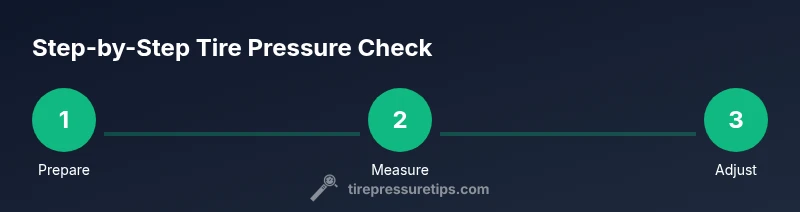
Where to Check Tire Pressure: A Practical Guide 2026
Learn where to check tire pressure, how to use a gauge, and how to maintain correct psi. This Tire Pressure Tips guide covers gas stations, home gauges, TPMS, and safer driving.


By the end of this guide, you’ll know exactly where to check tire pressure and how to do it correctly—whether at a gas station, a service bay, or at home. You’ll need a trusted gauge, the vehicle’s recommended psi from the door jamb label or owner's manual, and a plan for adjusting pressure safely.
Why a tire pressure place matters
According to Tire Pressure Tips, understanding the concept of a tire pressure place helps you identify the best locations for checking and adjusting your tires. The tire pressure place is not a single location; it’s any spot where you can reliably measure and adjust psi to match your vehicle’s specifications. Regular checks at the right place prevent uneven wear, improve fuel efficiency, and enhance handling. This section explores how tire pressure influences safety and performance, emphasizing that even small deviations from the recommended psi can change ride quality and tire contact with the road. The Tire Pressure Tips approach emphasizes using consistent measurement conditions, proper tools, and a calm, methodical routine so you don’t rush and miss critical steps.
- Consistency matters: always use the same gauge and same reference point on the tire.
- Condition matters: dry, cool tires give the most accurate readings.
- Context matters: cold tires show the recommended pressure more accurately than hot tires after a drive.
Below is a practical framework for identifying your tire pressure place, whether you’re at home, at a gas station, or at a service center. This framework mirrors real-world routines drivers use every day, and it aligns with Tire Pressure Tips’ standard guidance for safe, accurate measurements.
Finding the right place to check tire pressure
Choosing the right tire pressure place depends on accessibility, reliability, and your goals. Gas stations often offer air pumps and built-in gauges, making them convenient for quick adjustments. At-home checks, using a personal gauge, give you control over when and how measurements are taken, helping you build a routine that reduces fluctuating readings caused by ambient temperature. Service centers or tire shops can perform professional checks, often offering a free or low-cost reading with additional inspection services.
The key is to pick a location where you can obtain consistent, repeatable results. If you travel frequently or drive for long distances, having a home gauge plus a plan for cross-checking at a station can save time and prevent unexpected tire wear. The Tire Pressure Tips framework recommends using a quality gauge, documenting readings, and keeping notes in a small log or app so you can compare trends over weeks or months. Safety remains paramount—never inflate or deflate tires near traffic or in an unsafe workspace.
Also consider the season and weather:** cold-weather tire pressure adjustments**. In cold climates, tire pressure drops as temperatures fall, so frequent checks at your tire pressure place during winter months are wise. This practice helps you stay within the vehicle’s recommended range and supports optimal tire contact with the road.
Tools and setup you need before visiting a tire pressure place
Before you head out to your tire pressure place, gather the essential tools and data you need for accurate readings. Start with a reliable tire pressure gauge—the choice between digital and analog is personal, but accuracy matters. Digital gauges are easy to read, while analog gauges offer battery-free reliability. You should also have access to the vehicle’s recommended cold tire pressure, typically found on the driver’s door jamb label or in the owner's manual. If possible, bring a small notebook or a digital note app to record readings and adjust notes. A portable air compressor or access to an air pump is crucial for making adjustments on the spot. If you’re checking at a gas station, confirm the pump’s gauge is functioning and calibrated.
Pro tip: check your gauge accuracy by comparing readings on two known-pressure sources—this cross-check helps you catch a faulty gauge before making adjustments. For trucks or SUVs with higher pressure requirements or special tires, you may also want a tire pressure sensor-friendly gauge that reads TPMS data, if your vehicle doesn’t expose the number directly on the gauge.
Finally, wear gloves to keep your hands clean and bring sun protection if you’re outside. A small cash or card for payment at a station’s air pump is practical; some stations require payment before use.
Reading labels and aiming for the correct pressure
Tire pressure place measurements are only as good as your interpretation. Start by locating the recommended cold tire pressure for each tire. This value is usually shown in psi (pounds per square inch) or kPa on the door jamb label rather than the tire sidewall. The door jamb label lists separate values for front and rear tires and sometimes for the spare. When you read a gauge, compare the result to the recommended cold PSI. If you drive a lot in hot weather, remember that psi rises with temperature; a tire that reads 32 psi when cold may read higher after a drive. The goal is to adjust to the recommended level while accounting for slight temperature effects. Inflate or deflate in small increments, typically 1-2 psi at a time, then recheck. If your vehicle uses TPMS, don’t rely solely on the light—verify with a manual gauge for precision.
A crucial nuance is that the recommended pressure is a number for cold tires. Hot tires can show elevated numbers due to heat buildup. If you’ve just parked after a long drive or been on the highway, wait for tires to cool for approximately 3 hours or longer before checking again. This practice prevents misreading and ensures you aren’t over- or under-inflating based on transient heat. When you’re done, reseal valve stems with caps and reset any notes so future checks are easier.
Weather, temperature, and tire pressure: what to watch for at your tire pressure place
Temperature shifts at tire pressure places have a measurable effect on psi readings. In cold weather, pressures drop; in hot weather, they rise. The Tire Pressure Tips recommendations emphasize that a stable, neutral environment yields the most consistent results. If you check in the morning after a cold night, you’ll likely see lower readings than in the late afternoon when the sun has warmed the tires. If you live in an area with large diurnal temperature swings, plan checks accordingly and rely on a consistent routine (e.g., same time of day) when comparing readings week to week.
If you notice persistent deviations (for example, one tire consistently reads 4 psi higher or lower than others at the same temperature), there may be a slow leak, a faulty valve stem, or a more serious tire issue. In such cases, visit a tire shop for a more thorough inspection. The Tire Pressure Tips team advises documenting environmental conditions during each check to better identify genuine changes in tire pressure versus normal temperature fluctuations.
Safety, maintenance, and best practices after you check tire pressure
After you finish a tire pressure place check, it’s time to wrap up with safe maintenance habits. Always replace valve caps securely to prevent dirt ingress and slower readings. If you added air, recheck to confirm you achieved the target pressure; if you removed air, check again after settling. Maintain an air pressure log and note any recurring discrepancies. This data helps you recognize slow leaks or sensor issues before they become hazards on the road. When inflating, avoid over-inflation—exceeding the tire’s maximum pressure printed on the sidewall is unsafe and can cause rim damage or poor handling.
For vehicles with TPMS, your dashboard light should reflect the corresponding tire pressure status, but don’t rely on the light alone. Use a gauge to confirm pressure after any inflating or deflating. Finally, include the spare tire in your checks—spares can dry out or lose pressure over time just like primary tires. Regular checks at your chosen tire pressure place will help you sustain better tire wear, better fuel economy, and safer driving.
Quick-start recap: what to do at your tire pressure place this week
- Gather your gauge, access to air, and the vehicle label.
- Check tires when cold; allow three hours after driving.
- Read each tire’s PSI and compare with the recommended value.
- Inflate or deflate in small increments, rechecking after each adjustment.
- Refit valve caps and log the readings for future reference.
- Include the spare tire in checks, and verify TPMS readings with a manual gauge when possible.
Tools & Materials
- Tire pressure gauge (digital or analog)(Choose accuracy; verify at known pressures if possible)
- Air compressor or access to an air pump(Gas stations, service centers, or portable unit)
- Vehicle owner's manual or door jamb label(Shows the recommended cold tire pressure (psi or kPa))
- Notebook or mobile notes app(Record readings and adjustments)
- Pen or marker(Label tires with current psi during checks)
Steps
Estimated time: 25-40 minutes
- 1
Prepare and locate target pressures
Gather your gauge, ensure you have access to air if you need to adjust pressure, and locate the recommended cold pressures for each tire from the door jamb label or manual. This establishes your target before you begin.
Tip: Double-check you’re reading the label for the correct tires (front vs rear). - 2
Ensure tires are cold
If the tires have been driven recently, wait until they’re cool to measure. Cold readings reflect the vehicle’s true specifications and prevent over- or under-inflation.
Tip: Aim for a minimum of 3 hours since the car was last driven. - 3
Remove valve caps and attach gauge
Carefully unscrew the valve cap and press the gauge onto the valve stem to get a reading. If your gauge requires, hold it firmly without wiggling, to avoid air leakage.
Tip: If you hear hissing, reseat the gauge and recheck. - 4
Read and compare with the target
Note the current psi and compare it to the recommended figure. If it’s within 1–2 psi, you’re close enough for normal driving.
Tip: Document the reading for future reference. - 5
Inflate or deflate in small increments
If under-inflated, add air in 1–2 psi steps and recheck after each increment. If over-inflated, release air gradually and recheck.
Tip: Always recheck after adjustments before concluding. - 6
Recheck and reseal
Once the target is achieved, recheck all tires. Replace valve caps securely and tidy any air or debris around stems.
Tip: Inspect the tire valve for damage if readings behave unexpectedly. - 7
Record readings and plan the next check
Log the final psi for each tire and note any recurring discrepancies. Schedule your next check at a similar temperature and time of day.
Tip: Use a phone reminder to maintain consistency. - 8
Extend checks to the spare
Don’t forget the spare tire. Check its pressure and right away, so you’re prepared for emergencies and seasonal changes.
Tip: Keep a small gauge in your glovebox for quick checks on the go.
Frequently Asked Questions
What is the best place to check tire pressure?
The best places are places you can reliably measure and adjust PSI: at home with a good gauge, at a gas station, or at a tire shop. Each location has merits, but consistency and accuracy matter most.
Check PSI at a consistent location you trust, like home or a station with a reliable gauge.
How does temperature affect tire pressure?
Tire pressure drops when tires are cold and rises with heat. Temperature changes can shift psi by about 1 psi for every 10 degrees Fahrenheit in many passenger tires. Always compare to the cold-pressure specification.
Temperature changes can raise or lower tire pressure; check when tires are cold for accuracy.
Should I check tires when they are hot or cold?
Check tires when they are cold to reflect the vehicle’s recommended pressure. Checking hot tires can lead to overestimation and improper inflation.
Always check cold tires for accuracy.
How often should I check tire pressure?
Check monthly and before long trips. Also check after extreme temperature changes or if you notice poor fuel economy or uneven tire wear.
Check at least once a month and before long trips.
Can TPMS replace a manual gauge?
TPMS alerts you to pressure issues, but you should still verify psi with a manual gauge for accuracy, especially after adjustments.
TPMS helps but you should still check with a gauge.
What safety steps should I take when inflating tires?
Park in a safe, flat area, wear eye protection if needed, and inflate in small increments, monitoring the pressure as you go.
Park safely, inflate gradually, and keep an eye on the gauge.
Watch Video
What to Remember
- Check cold psi using a trusted gauge.
- Inflate to vehicle-recommended pressure in small steps.
- Check all tires, including the spare.
- Account for temperature when interpreting readings.
- Record readings to spot trends over time.