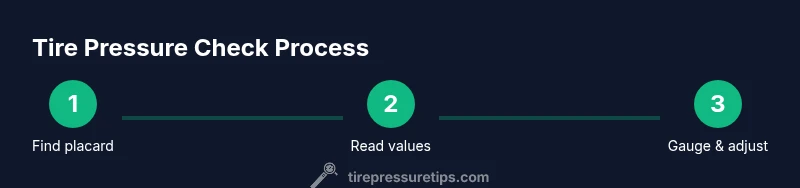
Where Tire Pressure Information Is Located in the Car
Find and understand the correct tire pressures for your vehicle. Learn where the data lives (placard, manual, digital displays), how to read it, and how to maintain safe, efficient tire inflation.


Where is tire pressure information located in the car? The driver’s door jamb placard is the primary source for recommended cold pressures, with the owner's manual or vehicle information display serving as backups. TPMS data helps you monitor current pressures, but always verify with a gauge when tires are cold to ensure accuracy.
Where tire pressure information is located in the car
Finding reliable tire pressure information starts with knowing where to look. The most accessible source is the driver’s door jamb placard, which lists the recommended cold pressures for the front and rear tires. According to Tire Pressure Tips, this placard is the standard reference across most passenger cars and light trucks. If you can’t find it there, check the owner’s manual; in some vehicles, the same data is echoed in the glove box or in the digital information screen. For trucks and SUVs, there may be separate numbers for the front axle and rear axle. Use the placard as your baseline, and use a gauge to verify readings before driving. This information is essential for safety, fuel efficiency, and tire longevity, so set aside time to locate each source on your specific model.
Reading the placard: what numbers mean for front vs rear tires
The placard typically shows the recommended cold tire pressures for the front and rear axles. In many vehicles, the values are identical for all four tires, but some models differentiate front vs rear pressures or include separate values for standard versus high-load configurations. The important takeaway is that the numbers refer to cold inflation, not the pressure after a hot drive. Do not confuse a “maximum inflation pressure” label with the recommended operating pressure; the maximum tells you the limit, not the target. By understanding this distinction, you can avoid under-inflation or over-inflation that can affect handling and wear.
Beyond the placard: owner’s manual and vehicle information display
Your owner’s manual is a definitive reference for how your vehicle determines and reports tire pressures. Some cars duplicate the placard data inside the glove box or on the rear of a door, while newer vehicles offer a tire information display or TPMS menu in the instrument cluster or central touchscreen. The TPMS shows current pressures as you drive and can alert you when a tire drops below a safety threshold. Keep in mind that TPMS readings may lag behind actual pressures slightly, and wheel position may affect which tire is flagged. The Tire Pressure Tips team recommends cross-checking TPMS readings with a manual gauge whenever you make changes or notice a warning light.
The right equipment for tire pressure checks
Use a tire pressure gauge (digital or mechanical) to obtain an independent reading. A good gauge is quick, accurate, and easy to read. For best results, perform checks with the tires cold and after the car has sat for a while to dissipate heat. A clean, dry valve stem ensures a clean reading. If your vehicle uses a monitoring system, pair the gauge results with the TPMS readout for a complete picture of current pressures. Having a simple checklist of sources—placard, manual, and TPMS—helps you stay consistent over time.
Interpreting readings: adjusting to the recommended pressures
Once you know the recommended cold pressures, compare them to the current readings. If a tire is under-inflated, add air in small increments and recheck. If over-inflated, release air until you reach the target. It’s generally better to adjust each tire to the exact value listed on the placard rather than relying on feel. After inflating, recheck all four tires, including the spare if you intend to store or rotate it soon. Consistency matters for steering response, braking, and tread wear.
Temperature effects and timing of readings
Tire pressure readings are sensitive to temperature. Hot tires read higher than cold tires because heat causes air to expand. For the most accurate comparison to the placard, check pressures when tires are cold. This is typically after the car has been parked for a while or the vehicle has cooled after a short drive. If you must check after driving, use a cushion of caution and understand that readings may be higher than the recommended cold pressures. The key is to aim for the cold-reference values whenever possible.
TPMS: sensors, warnings, and how to respond
TPMS uses wheel-mounted sensors or indirect methods to monitor inflation. If the system detects low pressure, it will illuminate a warning on the dashboard. Sensors can drift or fail, leading to false alerts. In some cases, a wheel rotation or tire replacement requires recalibration. Remember that TPMS is a safety aid, not a precise replacement for manual measurement. Always verify with a gauge and adjust to the placard values when necessary. The Tire Pressure Tips analysis emphasizes that TPMS readings should be used in conjunction with physical measurements for accuracy.
Maintenance tips: valve caps, seals, and sensor care
Valve caps protect the valve stem from dirt and moisture and should be tightened snugly after checking or inflation. Damaged or missing caps can cause slow leaks. Inspect valve stems for cracks or corrosion, and replace damaged sensors promptly if you notice persistent readings that don’t align with the placard. When replacing tires, insist on preserving TPMS sensor integrity and recalibrating if needed. Regular maintenance reduces sudden pressure changes and keeps you safer on the road.
Troubleshooting common TPMS issues
If a TPMS warning appears without an obvious cause, verify that all tires are inflated to the recommended pressures. In some vehicles, the warning may trigger after long idle periods or battery issues in the sensors. If you rotated tires or replaced a tire, a calibration reset is often required. When TPMS readings seem inconsistent with manual gauge results, inspect the valve core, cap, and sensor seals. Persistent problems may require professional service to check sensor batteries or replace faulty sensors.
Common mistakes to avoid when checking tire pressure
Avoid checking only one tire or assuming the spare has the same pressure as the four in use. Never inflate to the maximum sticker value as a target—use the recommended cold pressure. Don’t rely solely on TPMS warnings; they are helpful but not a substitute for a manual gauge. Also, don’t forget to check the inflation of your tires after weather changes or seasonal tires. A methodical approach reduces the risk of under-inflation and improves fuel economy and safety.
Quick monthly checklist you can follow
Create a simple routine: check all four tires (and the spare) against the placard values, recheck after any inflation adjustments, verify your TPMS readings, and document outcomes. Keep a small notebook or digital log of the date, tire pressures, and any changes you made. By integrating this into a monthly habit, you’ll catch leaks early, preserve tread life, and maintain optimal handling. Consistency is the best prevention tool.
Tools & Materials
- Tire pressure gauge (digital or analog)(Calibrate or replace every year for accuracy; digital gauges are easier to read.)
- Access to the vehicle placard (driver’s door jamb)(Primary reference for cold pressures; may be duplicated in the manual or on-screen display.)
- Owner’s manual or vehicle information display(Used for model-specific notes and TPMS guidance.)
- Clean cloth or tissue(Wipe valve stems before reading to ensure accurate gauge contact.)
Steps
Estimated time: 20-35 minutes
- 1
Check the placard values
Locate the recommended cold tire pressures on the driver’s door jamb placard. Confirm whether the values differ by axle or tire type and note the front and rear targets for your vehicle.
Tip: If you rotate tires, recheck the placard values to confirm the current targets apply to each tire position. - 2
Gather tools
Assemble your tire gauge, close the valve cap, and have a notebook ready to record readings. Ensure the gauge is readable and calibrated for accuracy.
Tip: Keep your gauge in a pocket or glove compartment so it’s readily accessible on trips. - 3
Ensure tires are cold
Wait until the tires are at ambient temperature before measuring. Temperature can skew readings, and cold checks provide the most accurate comparison to the placard.
Tip: If you’ve just driven, park and wait at least 20–30 minutes before checking. - 4
Remove the valve cap
Gently remove the valve cap from one tire at a time. Keep caps in a safe place to prevent loss or contamination.
Tip: Do not twist too hard; valve threads are delicate and can be damaged. - 5
Read current pressure
Place the gauge on the valve stem and read the pressure. Note the measurement and compare with the placard value.
Tip: Take multiple readings if the gauge is slow to respond to ensure accuracy. - 6
Inflate or deflate to target
If the pressure is low, add air in small increments and recheck. If high, release air gradually and recheck until you reach the target.
Tip: Always adjust in small steps; large changes are harder to correct precisely. - 7
Recheck all tires
After adjusting one tire, recheck that tire and then verify the others against the placard. Don’t skip the spare if it’s in use or due for inspection.
Tip: Consistency across all tires improves handling and wear balance. - 8
Reinstall valve caps
Replace each valve cap securely to protect against dirt and moisture.
Tip: If a cap is missing, replace it promptly to prevent slow leaks. - 9
Record the results
Document the date, tire pressures, and any adjustments for future reference and routine maintenance.
Tip: Keep the log with your vehicle maintenance records for easy access during service visits.
Frequently Asked Questions
Where can I find the recommended tire pressure for my car?
The placard on the driver’s door jamb shows the recommended cold pressures for front and rear tires. The owner’s manual often repeats this data, and the vehicle information display can show current TPMS readings.
Look at the door placard for the official numbers, then check the manual or information display for current readings.
What is the difference between the placard and the maximum inflation pressure?
The placard gives the target operating pressure for daily use, while the maximum inflation pressure is the limit the tire can withstand. Do not inflate to the maximum; use the recommended value from the placard.
The placard tells you the target pressure; the max is just the limit, not the target.
Is TPMS the same as my tire pressure readings?
TPMS provides a warning and current pressures but can lag or drift. Always verify TPMS readings with a physical gauge to ensure accuracy.
TPMS helps you monitor pressure, but you should still measure with a gauge.
Should I check tire pressure when tires are cold or warm?
Check tire pressure when the tires are cold for the most accurate result. Temperature can cause readings to vary significantly if measured after driving.
Check when cold for the best accuracy.
What should I do if the TPMS warning stays on after inflation?
If the warning persists after adjusting pressures, recheck all tires, inspect for leaks or damaged sensors, and consider recalibrating the TPMS after service or rotation.
Recheck pressures and inspect for leaks; recalibration may be needed after service.
How often should I check tire pressure?
Check tire pressures at least once a month and before long trips. Seasonal changes or temperature shifts can affect pressures, so regular checks help maintain safety.
Monthly checks and before trips are best.
Watch Video
What to Remember
- Check the placard for the exact cold pressures.
- Use a gauge to verify, not only the TPMS readout.
- Inflate/deflate in small steps to the target value.
- Check tires when cold and recheck after adjustments.
- Maintain TPMS and valve components to prevent leaks.