Tyre Pressure Check Tyres: A Practical Step-by-Step Guide
Learn how to check tyre pressure tyres safely, read your door placard, use a gauge, and maintain optimal tyre pressure. This Tire Pressure Tips guide covers TPMS, temperature effects, common mistakes, and a simple maintenance routine.


You will learn how to perform a safe tyre pressure check tyres using a gauge, compare readings to vehicle specifications, and adjust with an air pump or deflation method. This quick guide highlights cold-reading practices, TPMS basics, when to inflate, and how to avoid common errors for better safety and efficiency.
The science behind tyre pressure and why it matters
Maintaining the correct tyre pressure is a foundational pillar of safe driving. Proper inflation influences grip, steering response, even tyre wear, and fuel efficiency. When tyres are inflated to the vehicle’s recommended level, the contact patch with the road is optimized, reducing rolling resistance and heat buildup. Underinflation increases sidewall flex and generates heat, accelerating wear and potentially compromising handling. Overinflation can make the ride harsher and reduce the tire’s contact patch, lowering grip in some road conditions. Temperature, load, and driving style all affect the effective pressure, which is why starting with a cold reading is the most reliable approach. According to Tire Pressure Tips, the difference between a cold reading and numbers after a drive matters: heat inflates readings, while cold readings reflect the true baseline. The tyre pressure check tyres values you see on the placard are vehicle-specific and should always be used rather than generic rules. A disciplined checking habit leads to safer corners, longer tyre life, and better fuel economy over time.
Why you should trust the vehicle placard and manuals
Every vehicle has a recommended pressure, typically different for front and rear tyres and sometimes varying with load or axle configuration. These values are chosen by the manufacturer to balance handling, comfort, and tyre wear. The placard on the driver’s door jamb (or the glove box/manual) is the primary source for these numbers. If you cannot locate the placard, the owner’s manual or a reputable dealer can confirm the correct tyre pressure check tyres values. Remember that TPMS is a helpful alert system, but it does not always reflect the exact inflation level, especially when the tires are cold. Regular checks with a gauge ensure you catch underinflation before it damages tyres or compromises safety.
How temperature influences readings and readiness
Air expands when it warms and contracts when it cools. Seasonal changes and ambient temperature can shift tyre pressures noticeably even without a change in load. When tyres warm up from driving, pressure rises; after a cool-down period, those numbers drop again. This is why a cold tyre check is essential for accuracy. If you use an inflator on a just-driven tyre, you may read higher values than the target; always re-check after the tyre has cooled for at least three hours or after a longer stop. Consistency matters: perform checks in the same ambient conditions and use the placard values as your inflation target.
Reading TPMS and manual gauges: two reliable methods
TPMS provides a quick alert when a tyre is significantly underinflated, but it cannot measure exact PSI in all situations. A handheld digital or analogue gauge gives you a precise reading. When using a gauge, ensure the stem and valve are clean and the gauge is pressed squarely onto the valve stem to avoid false readings. Compare your measurement to the manufacturer’s recommended pressure on the placard, then inflate or deflate accordingly. Keep in mind that the spare tyre may have a different spec, and if you rotate tyres, you should check pressures after rotation as well.
Common mistakes and how to avoid them
- Checking after a long drive: temperatures inside the tyre rise, giving higher readings. Always test cold. - Ignoring the spare tyre: many people forget the spare’s pressure and end up with a flat spare after a tire change. - Over-inflating to “feel firm”: a firm ride does not guarantee proper contact patch. - Using a worn gauge or a dirty valve: ensure you clean the valve stem and replace damaged caps to prevent leaks.
- Not accounting for load: heavy loads or high-speed driving can require different tyre pressures. Use the vehicle placard as your baseline and adjust for the intended load.
Practical maintenance: building a simple tyre pressure routine
Set a monthly reminder to check all tyres, including the spare. Before long trips, recheck after a short drive to confirm stability. Use a high-quality gauge and a portable air pump or a service station with a gauge. Keep a small note in the vehicle documenting the date and readings. This habit translates into safer handling, reduced wear, and better efficiency over time.
Seasonal checks and long-trip readiness
In seasons with temperature swings, check tyres more frequently: winter and summer changes can alter the optimal pressure. For long road trips, inflate to the recommended level after a fuel stop, then recheck shortly after you resume driving. If you notice persistent underinflation or rapid pressure loss, seek professional inspection for leaks, damaged valves, or a possible TPMS fault. Tire care is part of a broader maintenance routine that extends vehicle life and safety.
Tools & Materials
- Digital tyre pressure gauge(Choose one with a clear LCD and a 0-60 psi range for most passenger cars)
- Air compressor or portable pump(Prefer a compressor with a built-in gauge and a bleed/deflate function)
- Valve stem brush or clean rag(Used to clean the valve before measurement to prevent debris from skewing readings)
- Vehicle owner’s manual / door placard(Essential to know the exact tyre pressure check tyres values by axle)
- Tire pressure retention notes(Optional waterproof notebook or app to log readings and dates)
Steps
Estimated time: 20-30 minutes
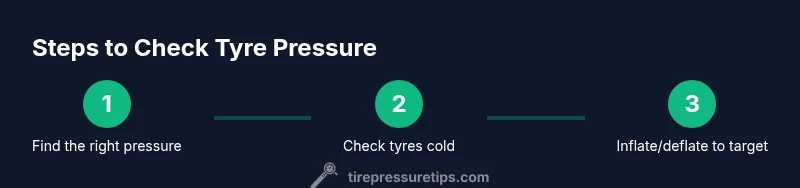
- 1
Find the recommended pressure
Locate the vehicle’s recommended tyre pressure on the door placard or in the owner's manual. Note the values for front and rear tyres, and whether they vary with load. This provides the target for your tyre pressure check tyres.
Tip: If the load differs (passengers or cargo), adjust as the placard suggests for that scenario. - 2
Check tyres cold
Perform the check when tyres are cold, ideally after the car has been parked for several hours. This ensures heat from driving doesn’t skew the readings and gives an accurate baseline.
Tip: If you must check after a trip, wait at least three hours for tyres to cool before inflating. - 3
Remove valve caps and prepare gauge
Take off the valve caps and wipe the valve stem to remove dust or moisture. This ensures a clean seal with the gauge for an accurate read.
Tip: Keep caps in a secure pocket so they aren’t lost during the procedure. - 4
Attach gauge and read
Firmly press the gauge onto the valve stem and read the pressure. Ensure the gauge remains perpendicular to the stem to avoid leaking air during measurement.
Tip: Take two readings for each tyre to confirm repeatability. - 5
Inflate or deflate to the target
If the reading is low, use the air pump to reach the recommended pressure. If it’s high, deflate in small increments using the gauge’s bleed function until you reach the target value.
Tip: Make small adjustments and recheck after each change to avoid overshooting. - 6
Restore caps and verify all tyres
Replace valve caps securely and recheck pressures across all tyres, including the spare if you carry a full-size tire. Confirm each tyre matches the recommended pressure check tyres values for your vehicle.
Tip: Document readings for future reference and adjust as needed when temperatures change.
Frequently Asked Questions
What is the right tyre pressure for my car?
The correct pressure is specified by the vehicle manufacturer and shown on the driver door placard or in the owner's manual. Use these values for inflation.
Check the door placard on your car for the correct pressure values. If in doubt, consult the owner's manual.
How often should I check tyre pressure?
Check at least once a month and before long trips. Recheck after long highway runs or seasonal temperature changes.
Aim to check monthly and before trips, especially when the weather is changing.
TPMS shows low pressure but my gauge reads normal — what now?
TPMS can alert to underinflation before the gauge reads. If you have any doubt, inspect for slow leaks, faulty valves, or a TPMS sensor fault and recheck with a gauge.
If TPMS shows low pressure but your gauge reads normal, inspect for leaks or sensor issues and recheck with a gauge.
Can I drive with underinflated tyres?
Driving with underinflated tyres increases wear, heat, and risk of blowouts. Inflate to the recommended level as soon as possible.
No, avoid driving long distances on underinflated tyres. Inflate to the right level before driving further.
Should all tyres have the same pressure?
Generally yes, but some vehicles require different pressures for front and rear tyres. Always follow the manufacturer’s instructions.
Usually one value per axle, not per tyre. Check the placard to be sure.
Does temperature affect tyre pressure?
Yes. Colder temperatures reduce tyre pressure, while heat from driving increases it. Recheck after temperature changes to maintain accuracy.
Temperature changes matter; check again after weather shifts or a long drive.
Watch Video
What to Remember
- Check tyres when cold for accuracy.
- Always follow the door placard values.
- TPMS is helpful but not a substitute for gauge checks.
- Use a reliable gauge and proper procedure.
- Regular checks prevent safety issues and save fuel.