How to Check Tyre Pressure in Car
Learn how to check tyre pressure in car accurately and safely. This step-by-step guide covers tools, techniques, TPMS basics, and maintenance tips to keep tires performing at their best.


In this guide you will learn how to check tyre pressure in car accurately using a gauge or TPMS, across all tires and the spare. You’ll need a reliable tire pressure gauge, access to your vehicle’s manual or door placard, and a safe, level space. This quick answer sets you up for a deeper dive into tools, steps, and safety considerations.
Understanding tyre pressure and why it matters
Maintaining correct tyre pressure is a simple, high-impact habit that affects safety, handling, fuel economy, and tire longevity. The phrase how to check tyre pressure in car may sound basic, but performing regular checks ensures the tires are pitched to the right level for grip, braking, and wear. The correct pressure supports even contact with the road, reduces rolling resistance, and helps prevent overheating that can lead to tire damage on long trips. According to Tire Pressure Tips, staying consistent with checks helps drivers catch slow leaks and sensor issues before they become emergencies. In this guide, you will learn what tools you need, how to measure cold tires, and how to adjust pressure safely.
Tools and measurement methods
There are three common ways to measure tyre pressure: analog gauges, digital gauges, and TPMS-based readings. Analog gauges (dial or pencil gauges) are affordable and reliable when read correctly. Digital gauges give a quick numerical readout, often with backlighting for low-light conditions. TPMS (tire pressure monitoring system) provides real-time alerts from the vehicle’s sensors. Regardless of the method, always compare the reading to your vehicle’s recommended pressure from the door placard or owner's manual. Keep a small notebook or a phone note to record readings for future reference, and remember that readings can change with temperature, load, and driving conditions. Tire Pressure Tips emphasizes using a calibrated gauge and checking readings across all four corners for consistency.
Temperature effects and the best time to check
Tire air pressure changes with temperature: the air inside the tire expands in heat and contracts in cold. This means a tire can read higher after a warm drive or lower on a cold morning. For accurate readings, check tyres when they are cold—ideally before you drive or after the car has been parked for several hours. If you must check after a trip, anticipate a higher reading and plan to recheck after the tires have cooled. The practical takeaway is to schedule regular checks so measurements reflect typical conditions, not transient heat.
Reading numbers: psi, kPa, and what to adjust
Most vehicles use pounds per square inch (psi) in the US or kilopascals (kPa) elsewhere. Your door placard lists the manufacturer’s recommended pressure for front and rear tires, which often differ. When readings fall below or exceed those numbers, adjust gradually—inflate in small increments or release air in small amounts until you’re within the recommended range. After adjusting, recheck each tire to confirm uniformity across the tire set. Remember, underinflation increases wear and risk of blowouts, while overinflation can reduce traction and cause a harsher ride.
TPMS: understanding alerts and when to trust a gauge
TPMS provides early warnings about underinflated tires. However, TPMS is not a substitute for periodic manual checks with a gauge. If TPMS alerts you, verify the pressure with a gauge and adjust as needed. If a sink or sensor issue triggers a false warning, consult a qualified technician. Tire Pressure Tips notes that cross-checking with a gauge improves accuracy and helps you maintain even tire wear and safe handling.
Maintenance routine: practical schedules and safety
Make tire pressure checks part of your regular maintenance routine. Check at least once a month, before long trips, and when you notice a change in ride quality, handling, or fuel economy. Pair pressure checks with other routine tire care—tread depth inspections, rotation schedules, and valve stem inspections—to extend tire life and improve safety. The Tire Pressure Tips team recommends documenting readings over time to identify slow leaks early and plan timely repairs.
Authority sources and trusted guidance
For authoritative guidance on tire pressure and safety, you can consult official sources and major publications that cover tire maintenance and road safety. This section provides references to reputable sources you can read for deeper detail and official recommendations, including government and consumer-focused outlets. Always verify your vehicle’s recommended pressure and use a reliable gauge for best results.
Tools & Materials
- Tire pressure gauge (digital or analog)(Choose a gauge with a clear readout and a stable connection to the valve stem)
- Vehicle owner’s manual or door placard with recommended PSI(Front and rear pressures can differ; check both if specified)
- Air compressor or access to an air pump(Used to adjust tire pressure as needed)
- Valve stem cap(Keep caps in place to protect valve stems from dirt)
- Notebook or digital log(Record readings to monitor over time)
- Cloth or rag for cleaning valve stems(Wipe away dust to ensure a clean gauge reading)
Steps
Estimated time: 25-35 minutes
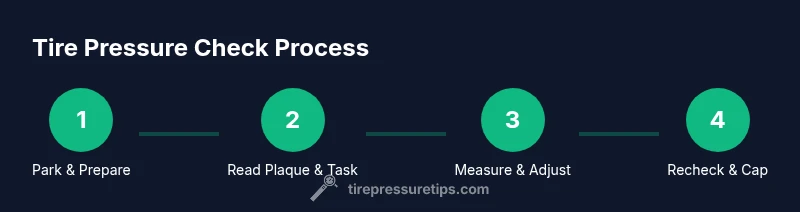
- 1
Park on a level surface and prepare
Position the car on a flat, stable surface away from traffic. Engage the parking brake and idle if needed to reduce wheel movement. This setup minimizes reading errors and ensures your safety before you begin.
Tip: Always work in a safe, well-lit area and avoid measuring near heat sources or blowing fans that can warm tires. - 2
Find the recommended PSI and door placard
Look for the vehicle's recommended tire pressure on the door jamb placard or in the owner's manual. Note the PSI values for front and rear tires, and whether there is a separate value for the spare.
Tip: If your placard values are missing, use the manufacturer’s published specs for your model year from a reputable source. - 3
Ensure tires are cold
Avoid measuring after driving; hot tires read higher due to expansion. If you’ve driven, wait until tires cool down to get an accurate baseline, then adjust accordingly.
Tip: Give tires at least 2-3 hours to cool when possible; if you must check sooner, plan a recheck later in the day. - 4
Remove valve caps and attach gauge
Unscrew the valve cap from each tire and press the gauge onto the valve stem firmly to obtain a stable reading. Hold the gauge in place without twisting to prevent leaks.
Tip: Be careful not to let dirt or debris fall into the valve stem during removal and gauge attachment. - 5
Record and compare readings
Record the reading for each tire and compare with the recommended PSI. Note any tire that’s significantly under or over the target range.
Tip: Use a dedicated notebook or a tire-tracking app for consistency across checks. - 6
Inflate or deflate to match the spec
If a tire is low, add air in small increments and recheck after each adjustment. If a tire is high, release air until it reaches the recommended PSI. Do not overshoot.
Tip: Inflation increments should be conservative; avoid rapid changes that could overshoot the target. - 7
Recheck all tires
After adjustments, recheck every tire to confirm uniform pressure across the set. This ensures balanced wear and optimal handling.
Tip: Double-check the gauge accuracy on a known reference point if readings seem inconsistent. - 8
Check the spare and re-cap
If you have a full-size spare, check its pressure as well and ensure the cap is replaced securely. Spare tires can lose air over time, especially in storage.
Tip: Keep a compact spare in good condition with proper pressure for emergencies. - 9
Document results and close-up
Close the valve caps, wipe down any residual air or moisture, and log the final readings for future reference. This helps track changes and plan maintenance.
Tip: Note any leaks, cracks, or abnormal wear for early maintenance actions.
Frequently Asked Questions
What is the ideal tire pressure for my car?
The ideal pressure is specified by the vehicle manufacturer and is shown on the door placard or in the owner's manual. Pressures may differ between front and rear tires and can depend on load and speed. Always follow those official recommendations.
Check the door placard on your car or consult the owner's manual for the exact PSI values.
Should I check tire pressure when tires are hot or cold?
Check wheels when they’re cold for the most accurate measurement. If you’ve driven recently, wait until tires have cooled to recheck and adjust as needed.
Always check when cold. If you must check after driving, plan a recheck later when the tires have cooled.
Can TPMS replace manual tire pressure checks?
TPMS provides early alerts about low pressure, but it’s not a substitute for periodic checks with a gauge. Use a gauge to confirm readings and ensure accuracy.
TPMS helps, but you should still measure with a gauge for accuracy.
What if readings differ between tires?
Some variation is normal, but large discrepancies may indicate leaks, valve problems, or damage. Inspect tires and inflate to the recommended level on each tire if needed.
Check each tire individually and look for leaks or damage if readings vary widely.
Should I check the spare tire as well?
Yes, if you have a full-size spare. Spare tires can lose air over time, especially when stored. Keep it at the recommended pressure.
Check the spare if you have one, and ensure it’s ready for emergencies.
How often should I check tire pressure?
A practical guideline is to check monthly and before long trips, especially when temperatures change or if you notice changes in ride feel.
Check monthly and before trips for best results.
Watch Video
What to Remember
- Check tyres when cold to ensure accuracy
- Use the correct gauge and the vehicle’s recommended PSI
- Adjust in small increments and recheck
- Inspect all tires and the spare regularly
- Log readings to monitor trends over time