Tire Pressure Reader Guide: Read PSI Accurately Every Time
Learn how to use a tire pressure reader to check and maintain correct tire pressure. Practical, step-by-step guidance from Tire Pressure Tips. Expert advice included.


A tire pressure reader is a handheld gauge that measures a tire's PSI quickly and accurately. It helps you verify cold-tire pressure against the vehicle’s recommended range, detect slow leaks, and prevent underinflation or overinflation. This guide shows how to choose, use, and interpret readings from different reader types for safer, more efficient driving.
What is a tire pressure reader and why it matters
A tire pressure reader is a handheld instrument used to measure the air pressure inside a tire. It can be analog (dial) or digital and often includes a long nozzle that fits standard valve stems. Why it matters: correct tire pressure improves safety, braking performance, tire wear, and fuel economy. According to Tire Pressure Tips, using a dedicated reader helps ensure readings are accurate, not skewed by ambient temperature or the gauge you might rely on at a gas station. Regular checks help catch slow leaks and maintain the optimal contact patch between tire and road. The tool is inexpensive, compact, and portable, making it easy to carry in a glove box or trunk. For most passenger cars, the recommended PSI is listed on the door placard and in the owner's manual; reading at the correct temperature (cold tires) yields the most reliable baseline. In practice, a reader is more dependable than guessing or relying on the TPMS light alone, because TPMS is a warning system, not a precise pressure reading.
Types of tire pressure readers: pros and cons
There are three common families of readers: analog dial gauges, digital gauges with LCD displays, and digital gauges with auto-sync or smartphone integration. Analog dial gauges are simple, durable, and affordable, but readings can be harder to read in low light or on older eyes. Digital gauges deliver a numeric readout and may store recent values, yet they rely on batteries and can be more fragile. Some digital models connect to a phone app for tracking and trends, which can be handy for maintenance logs. Regardless of type, ensure a proper seal on the valve stem and avoid leaning the gauge, which can push air and skew the reading. The choice depends on how often you check tires, where you typically measure (garage vs roadside), and how important data history is to you. A quality gauge with a clear display and a wide measurement range (roughly 0–60 PSI for most cars) tends to offer the best balance of accuracy and durability.
How to choose the right reader for your needs
Consider accuracy, build quality, and visibility in different lighting. Look for a gauge with a wide, easy-to-read scale, a snug valve fitting, and a secure grip. Check the battery life if you buy a digital model, and confirm that the device can measure in PSI, bar, or kPa if you need that compatibility. Durability matters if you carry the gauge in a toolbox or glove box; features like a rubber bumper or swivel chuck help. Price varies from inexpensive simple sticks to premium digital models with memory and auto-calibration. The best approach is to pick a model you can consistently read without straining and that you can use across all tires, including the spare. Finally, verify that the gauge's measurement range covers your vehicle’s typical PSI, and opt for a unit with easy calibration instructions.
How to use a tire pressure reader correctly
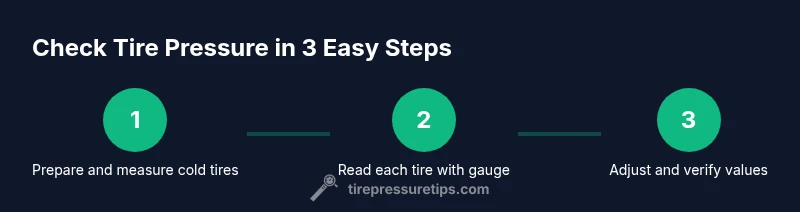
First, ensure tires are cold and the vehicle has been stationary for at least three hours, or measure first thing in the morning. Remove the valve cap from the tire and inspect it for damage. Align the gauge with the valve stem and apply even, straight pressure to form a tight seal. Take a steady reading; for analog gauges, read the needle against the scale; for digital gauges, read the numeric value on the display. Repeat on the other tires and record each value. After obtaining readings, compare them against the recommended PSI on the door placard and adjust accordingly using an air compressor or a tire inflator. Recheck each tire to confirm the final pressure matches the target. Replace valve caps snugly to prevent dirt entry and ensure the gauge stays ready for next use. When finished, store the gauge in a protective case or pouch.
Interpreting PSI readings and adjusting tires
PSI readings tell you how much air is in each tire relative to the vehicle’s target pressure. Always measure when tires are cold, because heat from driving can raise the reading by a few PSI. Compare each tire to the recommended range; front and rear tires may have slightly different targets. If a tire is low, add air in short bursts, recheck, and adjust until you’re within the target range. If a tire is overinflated, release air gradually until the measurement aligns with the recommended value. Don’t rely on the TPMS alone; use your reader to confirm. After adjusting, recheck all tires because inflating one tire affects the system's distribution. Finally, make a note of any tire that remains stubbornly low or high, as that can indicate a slow leak or a damaged valve stem.
Maintenance, calibration, and safety tips
Keep your tire pressure reader clean and free of dirt and lint that can obstruct the gauge or valve. Periodically calibrate or verify accuracy using a known reference, especially if you notice inconsistent readings. Replace batteries in digital models before they fail, and store the gauge in a cool, dry place away from direct sunlight. If a gauge feels loose or the seal seems compromised, avoid using it until it’s repaired or replaced. Use caution near moving traffic when checking tires roadside; never lean into traffic to reach the valve. For vehicles with smaller valve stems or expensive tires, consider using a stem cap with gasket to ensure a snug fit. Finally, keep an eye on the gauge’s scale worn marks; a gauge that’s worn may read inaccurately, and replacing it is more cost-effective than risking unsafe pressure.
Common mistakes and best practices
Neglecting to check tires when cold leads to incorrect readings. Using a damaged or old gauge can give unreliable numbers. Forgetting to replace valve caps or using poor lighting can hamper accuracy. Not measuring all four tires or assuming the spare is correct is another error. Best practices include checking all tires, rechecking after inflation, and logging readings for trend tracking.
Tools & Materials
- Tire pressure reader (analog or digital)(Choose a gauge with a range that covers typical passenger-car pressures (0-60 PSI) and a readable display.)
- Vehicle door placard or owner's manual(Contains the recommended PSI values for your vehicle.)
- Notebook or app for recording readings(Helpful for tracking changes over time.)
- Spare valve caps(Keep as a spare in case of loss.)
Steps
Estimated time: 10-15 minutes
- 1
Gather tools and reference values
Collect your tire pressure reader, locate the recommended PSI on the door placard or owner's manual, and confirm you are measuring cold tires for accuracy.
Tip: Have the gauge ready and a notebook to log readings. - 2
Prepare tires and remove caps
Ensure the tires are cold and remove the valve caps from each tire to allow full air access during measurement.
Tip: Inspect caps for damage and keep them handy for resealing after measurement. - 3
Attach gauge and form a seal
Place the gauge on the valve stem and press firmly to form a tight seal without bending the valve.
Tip: Avoid tilting the gauge; a straight contact yields a more accurate reading. - 4
Read and record the PSI
Take the reading from the gauge. If digital, note the exact number; if analog, read the scale carefully.
Tip: Record each tire with its location (FL, FR, RL, RR) for consistency. - 5
Repeat for all tires
Repeat the measurement process for the remaining tires and the spare if applicable.
Tip: Consistency across tires helps catch asymmetrical issues. - 6
Adjust as needed
If any tire is outside the recommended range, add or release air in small increments and recheck.
Tip: Make gradual adjustments to avoid overcorrection. - 7
Recheck and reseal
After adjustments, recheck all tires to confirm targets are met. Replace valve caps securely.
Tip: A loose cap can let dirt in or quietly leak air. - 8
Store the gauge
Put the gauge back in its protective case or pouch and store in a cool, dry place.
Tip: Keep a spare valve cap in the case as well.
Frequently Asked Questions
What is a tire pressure reader?
A tire pressure reader is a handheld tool that measures tire PSI. It provides a quick, accurate reading you can compare to the vehicle's recommended range.
A tire pressure reader measures your tire's PSI so you can compare it to the recommended values.
How often should I check tire pressure?
Check at least once a month and before long trips. Measure when tires are cold for accurate baseline readings.
Check your tires at least once a month or before long trips, and always when cold.
Are digital readers better than analog ones?
Digital readers provide a numeric readout and are easy to read, but rely on batteries. Analog gauges are simple and durable but can be harder to read.
Digital gauges are easy to read and often store readings, but batteries can fail; analog gauges are simple and rugged.
Should I rely on TPMS or a gauge for accuracy?
TPMS is a warning system. Use a tire pressure reader to confirm exact PSI values and adjust to the recommended target.
TPMS warns you about low pressure, but you should still measure with a gauge for precise numbers.
How cold should tires be before measuring?
Measure after the car has been stationary and cool for several hours. Temperature affects air pressure readings.
Measure when tires are cold, after the car has been stationary for a few hours.
How do I know my gauge is accurate?
If readings seem inconsistent, compare against a known reference or use a different gauge to verify. Replace worn or damaged gauges.
If readings seem off, test with a reference or another gauge and replace if worn.
What to Remember
- Check tires when cold for accuracy
- Choose a reliable gauge and keep it in good condition
- Always verify readings against official PSI values
- Inspect all tires including the spare
- Store the gauge properly and log readings