Psi Tire Pressure Gauge: How to Check Tire Pressure Correctly
Learn how to use a psi tire pressure gauge to check tires, interpret readings, and maintain safe, efficient inflation. Tools, steps, tips, and maintenance explained by Tire Pressure Tips.


You will learn how to use a psi tire pressure gauge to accurately check tire pressures, interpret readings, and maintain proper inflation. Gather a gauge, the vehicle’s recommended psi from the door placard, and a reliable source for reference. According to Tire Pressure Tips, precise technique reduces wear, improves fuel efficiency, and enhances safety in everyday driving.
What is a psi tire pressure gauge and why it matters?
Tire pressure is a key factor in safety, handling, tire wear, and fuel efficiency. A psi tire pressure gauge translates the air pressure inside a tire into a readable number, typically expressed in pounds per square inch (psi). The term psi is the standard unit used in most consumer gauges, whether you’re using a pencil gauge, a dial gauge, or a digital readout. Using the correct gauge and technique is essential, or readings can be misleading and lead to underinflation or over inflation. According to Tire Pressure Tips, accurate readings come from using a gauge that’s well maintained and from applying a consistent measurement method. This small tool helps you verify cold tire pressure, which is the baseline for inflation decisions and safety checks. When tires are underinflated, fuel economy drops and tread wears unevenly; overinflation can lead to a harsher ride and increased risk of a blowout on rough roads. Understanding psi and gauge accuracy empowers you to maintain optimal inflation, improve handling, and extend tire life. The concept is simple, but execution matters, especially when temperatures shift or tires heat up after a drive.
Tools & Materials
- psi tire pressure gauge(Essential tool; ensure it can read in psi and is calibrated to ±1 psi accuracy)
- Vehicle door placard or owner's manual(Shows the manufacturer-recommended cold psi for front/rear tires)
- Valve caps and clean rag(Cap helps prevent dust and moisture from entering the valve stem)
- Gauge calibration tool (optional)(Use if you suspect inaccuracy or after a long storage period)
Steps
Estimated time: 15-25 minutes
- 1
Prepare your tools and vehicle
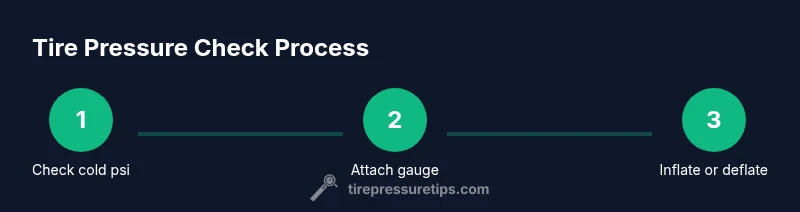
Gather your psi tire pressure gauge and the vehicle’s recommended cold psi from the placard or manual. Park on a level surface and wait for tires to be cold before measuring. Remove the valve caps and inspect the stems for wear.
Tip: Having the car in park and engine off reduces pressure fluctuations. - 2
Identify the correct cold PSI
Locate the recommended cold psi on the door jamb placard or in the manual. This value is the target you should aim for when tires are cold, not after a drive that heats the tires.
Tip: If you drive long distances regularly, check the psi before the trip rather than after. - 3
Prepare the valve stem
Clean the valve stem to ensure a tight seal with the gauge. Remove the valve cap completely so the gauge can connect cleanly.
Tip: A dirty valve stem can cause readings to drift or leak. - 4
Attach the gauge securely
Place the gauge squarely on the valve stem and press straight in to create a good seal. Do not rock or tilt the gauge, as this can give an inaccurate reading.
Tip: Keep the gauge steady until the reading stabilizes. - 5
Read and compare the pressure
Read the gauge and compare the number to the cold PSI from the placard. If the reading is too low or too high, plan inflation or deflation accordingly.
Tip: If using a digital gauge, give it a moment to lock the number. - 6
Adjust and recheck
Inflate or deflate to reach the target psi, then recheck to confirm accuracy. Replace the valve cap to seal the stem and finish.
Tip: Take a final reading with the engine off and the car on level ground.
Frequently Asked Questions
How often should I check tire pressure?
Aim to check once a month and before long trips, especially with temperature changes.
Check your tires monthly and before long trips for safe driving.
What is the difference between digital and analog gauges?
Digital gauges are easier to read, while analog gauges require interpreting the dial with the scale.
Digital gauges are easier to read, but both work when accurate.
Why might TPMS readings differ from a gauge?
TPMS provides an estimate and can lag temperature changes; a gauge shows the exact number.
TPMS gives an estimate; use a gauge for exact pressure.
What should I do if the gauge reads zero?
Check the display or battery, recalibrate if possible, and replace the gauge if readings are still zero.
If it shows zero, check the battery and calibration, then consider replacing the gauge.
What PSI should my tires have?
Consult the door placard or manual for the correct cold PSI; changes in load or temperature may affect it.
Look up your vehicle’s official cold PSI on the placard or in the manual.
Watch Video
What to Remember
- Check tires when cold to ensure accuracy
- Use a reliable gauge and calibrate regularly
- Follow door placard guidance for optimal inflation
- TPMS supplements but does not replace a gauge reading