How to Check Tire Pressure at a Gas Station: A Practical Guide
Learn to safely check and adjust tire pressure at a gas station with our step‑by‑step approach, including TPMS considerations, gauge usage, and maintenance tips for better fuel economy and tire life.


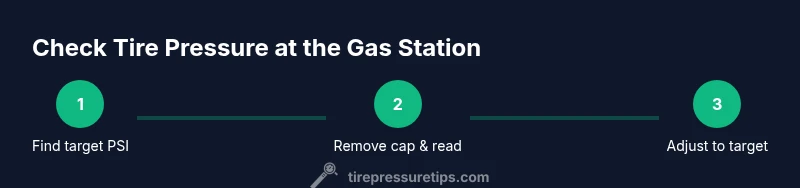
At most gas stations, you can check and adjust tire pressure using the built‑in air pump and its gauge. Start with the PSI listed on the door placard, remove the valve cap, and add or deflate until the gauge matches the target. Repeat for all four tires, then recheck after a short drive for accuracy.
Why Gas-Station Checks Matter
According to Tire Pressure Tips, keeping tires properly inflated is essential for safety, fuel efficiency, and tire longevity. Checking tire pressure at gas stations offers a convenient way to verify readings when you're on the road or in a hurry. Consistent checks help prevent underinflation, which can lead to uneven wear and higher fuel consumption. Regular checks also help you catch slow leaks early, potentially saving you from flat tires or sudden blowouts. In this guide, you'll learn how to use gas station air pumps, interpret PSI targets, and perform accurate readings with TPMS in mind. Whether you drive a sedan, SUV, or pickup, the same basic steps apply, and the effort pays off in improved handling and safer tires.
Understanding PSI, TPMS, and the Placard
Your vehicle's door placard and owner's manual specify the ideal tire pressure for front and rear axles. For most passenger cars, the target is given in PSI and may change with load or temperature. If your Tire Pressure Monitoring System (TPMS) warns that a tire is underinflated, use that reading as a starting point but verify with a manual gauge to be sure. Gas stations often provide a gauge on the air pump; use it to cross-check the vehicle's reading. Remember that PSI targets are not universal; the correct pressure depends on vehicle type, tire size, load, and season. Keeping a simple record of your readings helps you spot gradual leaks or changes over time. Always reference the placard when in doubt, rather than relying solely on the TPMS alert.
Tools and Safety: What You’ll Need
Before you begin, gather a few simple tools. A reliable tire pressure gauge (digital is easiest to read) and access to a gas station air pump with a functional gauge are essential. Have the vehicle’s recommended PSI from the placard or owner’s manual handy to set targets accurately. Optional but helpful items include a clean cloth to wipe the valve stem, spare valve caps, and a notebook or notes app to record readings. Practice safe handling of the air pump: park away from busy lanes, keep hands clear of moving parts, and avoid over-inflating beyond the recommended limit. If the pump lacks a gauge or reads erratically, skip that station and try another to avoid guessing.
Step-by-Step Routine for Each Tire
To keep readings consistent, follow this practical routine for every tire. Start by locating the target PSI on your placard. Remove the valve cap and store it so it won’t get lost. Attach your gauge securely and read the pressure. If the reading is below the target, add air slowly until you approach the mark; if it’s higher, release air until you reach the target. Re-seat the valve cap and wipe away any dust. Move to the next tire and repeat the sequence. After you’ve checked all four tires, drive for a short distance to settle the tires, then re-check to confirm stability. This routine minimizes errors and keeps your readings comparable over time.
Reading the Station Gauge vs. Your Gauge
Gas station gauges vary in precision, so rely on your own gauge for accuracy. Start with a cold tire reading, and compare that value to the placard target. If the station gauge reads higher or lower by a noticeable margin, use your own gauge to guide inflation. Always re-check after topping off, and leave the valve cap off only long enough to complete the check. If you routinely find large discrepancies, consider buying a trusted gauge and using it for at-home checks as a baseline. The goal is to maintain the recommended PSI at both cold and after a brief drive, ensuring optimal fuel economy and tire wear.
Common Mistakes and How to Avoid Them
Common mistakes include checking after driving (warm tires give higher readings), ignoring temperature fluctuations, and over-inflating to the gauge’s maximum. A frequent error is using the station’s gauge as the sole reading, which may be inaccurate. Always verify with a personal gauge and never guess. Another pitfall is failing to check all four tires or neglecting the spare tire if you carry one. Keep your records updated and use the placard values as a standard, not a guess. Finally, don’t mix gauge types; consistency matters when tracking pressure changes over time.
Temperature and Tire Pressure: What to Expect
Temperature profoundly affects tire pressure. Cold air contracts, while warm air expands, so a tire can lose or gain pressure as outdoor temperatures change. The difference can be about 1–2 psi for every 10 degrees Fahrenheit (or roughly 5–6 degrees Celsius) of temperature shift, depending on the tire and vehicle. The placard values assume normal ambient conditions. If you’ve driven in heat or cold, recheck the tires when they’ve cooled to ambient temperature. When testing at a gas station, try to measure after the car has sat for a few hours or first thing in the morning for the most stable reading. This helps prevent chronic underinflation in winter or overinflation in summer, both of which impact fuel economy and tire wear.
Aftercare: Valves, Caps, and Documentation
After you finish, reinstall the valve caps to protect stems from dirt and moisture. Wipe the valve stems clean and inspect for cracks or leaks. If a valve cap is missing or damaged, replace it promptly. Keep a simple log of readings, dates, and station names to identify leaks or gradual pressure loss over time. If you notice persistent, unexplained changes in pressure, consult a professional to inspect for punctures, slow leaks, or TPMS faults. Regular notes also help when you rotate tires or replace tires to ensure continued accuracy.
Quick Home Maintenance to Support Gas-Station Readings
Develop a lightweight home routine to support on‑the‑road checks. Once a month, verify your own gauge’s calibration with a known standard or at a trusted service center. Check all four tires for uniformity, and record the readings alongside the recommended PSI. Keep your tires inflated to the vehicle manufacturer’s target, adjust for seasonal temperature, and ensure TPMS sensors aren’t reporting stale data. A consistent home baseline makes gas-station checks more reliable and reduces guesswork on busy days.
When to Seek Professional Help and Warranty Considerations
If you notice ongoing pressure loss despite correct fueling practices, or TPMS warnings persist even after adjusting readings, seek professional assistance. Slow leaks, cracked valve stems, or damaged seals require inspection by a tire professional. Persistent discrepancies between your gauge and station readings may indicate gauge calibration issues or a faulty TPMS sensor. Some tires and wheels have warranty considerations related to improper inflation; follow the manufacturer’s guidance and keep records of maintenance to support any warranty claims.
Tools & Materials
- Digital tire pressure gauge(Calibrated; reads in psi; easy to read)
- Gas station air pump with gauge(Ensure the gauge is functional and readable)
- Vehicle placard or owner’s manual(Record front/rear PSI targets; note temperature considerations)
- Clean cloth(Wipe valve stems and valve caps if needed)
- Valve caps(Keep caps on when not testing; replace missing caps)
- Notebook or notes app(Log readings and station details for future reference)
Steps
Estimated time: Estimated total time: 12-20 minutes
- 1
Find the target PSI
Locate the recommended tire pressure on your placard and note the target for front and rear tires. This is your inflation goal. Having the target in mind prevents guesswork during the test.
Tip: Compare front and rear targets; some vehicles differ between axles. - 2
Remove the valve cap
Gently unscrew the valve cap and set it aside where it won’t roll away. A clean vent ensures an accurate reading and reduces the chance of dirt entering the valve stem.
Tip: Keep the cap nearby to reseal the valve quickly after testing. - 3
Attach the gauge and read
Place the gauge firmly on the valve stem and take a steady reading. Note the pressure in psi and compare it to the target value.
Tip: If using a digital gauge, press the trigger and wait for a stable reading. - 4
Add air if low
If the reading is below target, top off gradually until you’re within a few tenths of the goal. Avoid over-inflation in a single puff.
Tip: Pause between small inflations to check stabilization. - 5
Release air if high
If the reading is above target, release small amounts of air until the gauge nears the target. Recheck after each small release.
Tip: Do not deflate to the exact target in one step; small adjustments are safer. - 6
Repeat on all tires
Move to the remaining tires and repeat steps 3–5. Consistency across all wheels is crucial for balanced handling and wear.
Tip: Tires should be checked when cold for the most accurate reading. - 7
Re-seat and confirm
Reinstall the valve caps, wipe any residue, and re-check each tire to confirm readings are stable after a brief drive.
Tip: A short drive helps tires settle; recheck after returning to a cool state. - 8
Document and monitor
Record the final readings, date, and station. This creates a baseline for future checks and helps identify slow leaks.
Tip: Keep a simple log in your phone or a small notebook.
Frequently Asked Questions
Can I check tire pressure at a gas station with my own gauge?
Yes. Use your own gauge to verify the station’s reading and adjust to the placard target. Station gauges can be inaccurate, so cross-check for accuracy.
Yes. Use your own gauge to verify the station’s reading and adjust to the placard target. Cross-check for accuracy.
Should I check tire pressure when the tires are cold or hot?
Check tires when they’re cold for the most accurate reading. Driving heats tires and can raise the pressure, leading to over-inflation if measured hot.
Check when cold for accuracy; hot tires can give misleading readings.
What if the TPMS shows low pressure but my handheld gauge says normal?
Recheck with your gauge and also inspect for slow leaks or valve issues. If readings remain inconsistent, have the TPMS or tires inspected.
Recheck with your gauge; if inconsistent, seek professional inspection.
How often should I check tire pressure?
Check at least once a month and before long trips. Temperature changes and load can alter pressure, so regular checks help prevent underinflation.
Check about monthly and before long trips to catch changes early.
Is nitrogen filling better for tire pressure?
For the average driver, standard air is sufficient. Nitrogen can slightly reduce pressure loss but isn’t a substitute for regular checks.
Nitrogen isn’t essential; regular checks with air are fine for most drivers.
What should I do if I can’t find the PSI on the placard?
If the placard is missing, consult the owner’s manual or contact the dealer to obtain the correct pressures for your vehicle.
If the placard is missing, check the manual or contact the dealer for guidance.
Watch Video
What to Remember
- Check tires cold for accuracy.
- Use your own gauge to verify station readings.
- Inflate or deflate gradually toward the target psi.
- Document readings to spot trends over time.
- Keep TPMS in mind but rely on a manual gauge for precision.