How to Use a Tire Pressure Machine at a Gas Station
Learn to safely check and adjust tire pressure at a gas station using a tire pressure machine. This educational guide covers gauges, TPMS basics, and common mistakes to boost tire health and fuel efficiency.


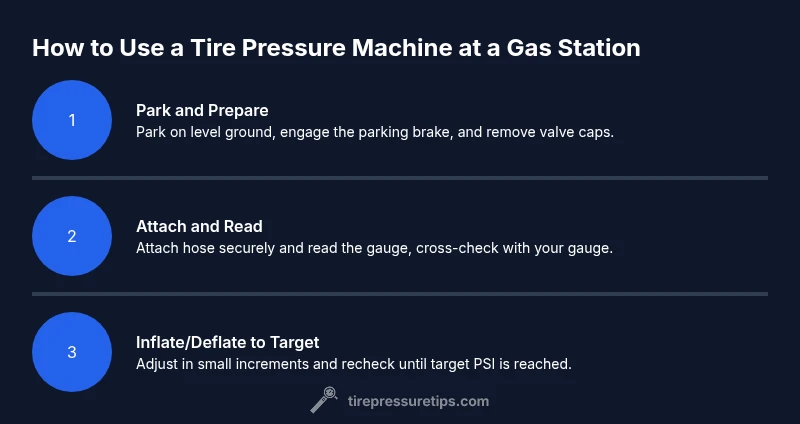
With a gas station tire pressure machine, you’ll quickly check and adjust each tire to the vehicle’s recommended PSI. Start by parking safely, turning off the engine, and removing the valve stem cap. Attach the air hose, read the gauge, inflate or deflate to the target PSI, recheck, and replace the cap. This simple routine protects tire wear, fuel efficiency, and TPMS health.
Why checking tire pressure at a gas station is a quick win
Maintaining proper tire pressure is one of the simplest, most effective ways to improve safety, performance, and fuel efficiency. Gas stations offer a convenient chance to verify and adjust PSI while you’re filling up or stopping for air. This guidance is especially valuable for drivers who don’t own a personal gauge or who prefer to cross-check readings against a built-in station gauge. According to Tire Pressure Tips, routine pressure checks at gas stations are quick wins for tire health and can help catch slow leaks before they become expensive repairs. The Tire Pressure Tips team found that many drivers trust the station’s gauge but forget to confirm it against a reliable handheld gauge. The result is readings that are close, but not precise, which can lead to under- or over-inflated tires over time. In this article, you’ll learn how to approach the gas station pressure machine confidently, how to verify the numbers, and how to integrate this habit into your monthly maintenance routine. You’ll also understand when to seek professional help and how outdoor temperatures affect readings. The goal is simple: ensure every tire runs at the recommended PSI so you maximize safety, tire life, and fuel economy.
How gas station tire pressure machines work
Gas station air machines come in two broad types: digital readouts and mechanical dial gauges. Most modern stations display PSI on a small screen, while older machines use a rotating dial. Both types feed air through a hose that ends in a valve stem chuck. When you press the lever, air travels into the tire, and the gauge updates in real time. The key to accuracy is proper connection and cold tires. Station machines are generally calibrated, but readings can drift due to temperature, hose wear, or a loose nozzle. Before you inflate, inspect the chuck for wear and wipe the valve stem to remove dirt. If the machine has a “deflate” button, you can release air in small increments to reach your target psi. Note that some machines measure in psi, others in bar or kPa; you’ll usually have to convert mentally or rely on the display. For best results, use your own handheld gauge to cross-check the machine’s reading, especially if you’re balancing pressure across multiple tires.
How to determine the correct PSI for your tires
Your vehicle’s recommended tire pressure is not the maximum; it’s the optimum operating pressure for safe handling and fuel efficiency. Find the PSI on the driver’s door jamb label or in the owner’s manual. Some tires have different rear vs front PSI; Always follow the label for the specific tire. When reading cold tires, readings may be lower and readings rise as tires warm up during driving, so aim to measure when tires are cold for accuracy. Units are typically psi in North America, but some stations display metric units. If you don’t know the target, consult your owner’s manual or the door jamb label, and cross-check with a trusted handheld gauge.
The pros and cons of gas station machines vs home gauges
Gas station machines are convenient and fast, especially when you’re already fueling up. They’re useful for a quick verification and for catching obvious under- or over-inflation. Home gauges, however, often provide more consistent readings and allow constant cross-checks across multiple tires over time. The main caveat with station gauges is potential drift or calibration issues, especially if the machine is older or heavily used. Always cross-check the station reading with your own gauge, and if a tire reads unusually high or low, re-measure after a few minutes with another gauge to rule out a one-off error.
Step-by-step usage overview (high-level)
You’ll find this overview useful as a quick refresher before you start pumping. For a detailed, step-by-step protocol, see the dedicated section below. Key idea: connect securely, read accurately, and confirm against the vehicle’s specification. This process can be performed on all four tires in under 15 minutes with a steady hand and a calm approach.
Common mistakes to avoid
Common mistakes include inflating tires when they are hot, not rechecking after a quick adjustment, and ignoring the manufacturer’s PSI recommendations in favor of the tire sidewall maximum. Another frequent error is failing to remove the valve stem cap before using the nozzle, which can trap dirt and skew the reading. Finally, relying solely on the station gauge without cross-checking with a personal gauge can lead to inconsistent tire pressures over time.
Safety and maintenance tips you should know
Safety starts with station etiquette: park on a flat surface, apply the parking brake, and turn off the engine. Wear gloves if you don’t want to get oil on your hands, and avoid touching the hot parts of the pump immediately after use. After inflating, wipe the valve stem and cap clean and replace the cap securely. Regularly inspect tires for wear, cracks, or nails, and keep a routine to check PSI at least once a month and before long trips.
Next steps: tracking PSI over time and planning maintenance
Keep a simple log of your PSI readings over time to spot slow leaks. Many drivers find it helpful to record the PSI for each tire after every fill-up. If you notice persistent pressure loss, schedule a tire inspection for leaks, valve stems, or bead seats. Integrating a monthly PSI check at the gas station with your broader maintenance plan helps maximize tire life and vehicle safety.
Tools & Materials
- Personal tire pressure gauge (digital or analog)(Use it to cross-check gas station readings for accuracy.)
- Vehicle owner's manual or door jamb PSI label(Locate the recommended PSI per tire; front and rear may differ.)
- Valve stem caps(Keep caps handy after measuring; prevents dirt from entering valve stems.)
- Gloves (optional)(Keeps hands clean when handling hoses and caps.)
- Notepad or smartphone to record readings(Helpful for tracking PSI over time and maintenance reminders.)
Steps
Estimated time: 8-15 minutes
- 1
Park safely and prepare
Find a level spot away from traffic. Engage the parking brake, switch off the engine, and remove valve stem caps so you can access the stems. This prevents heat buildup from driving from skewing readings and ensures a clean connection.
Tip: Chock the wheels if you’re parked on a slope and wear gloves if you prefer. - 2
Locate the machine and check the display
Approach the gas station air pump and note whether the gauge is digital or mechanical. Look for any labels indicating PSI units and whether you can select units. A quick visual check helps you plan how to read and compare readings.
Tip: If the screen is dim, request assistance from station staff or switch to a different pump if available. - 3
Attach the nozzle securely
Place the air hose chuck squarely over the valve stem and press the lever to seal. Ensure the connection is firm to avoid air leaks during measurement. Do not force the nozzle, which can damage the stem.
Tip: If the chuck won’t seal, rotate it slightly or try a different tire stem. - 4
Read the gauge and compare
Read the station’s gauge and note the PSI. Cross-check with your personal gauge to confirm. If the two readings differ significantly, use the lower reading as your baseline and re-check after a moment.
Tip: Record the numbers for each tire to track changes over time. - 5
Inflate or deflate to the target PSI
If a tire is below the recommended PSI, inflate gradually in small increments, then recheck. If above, use the machine’s deflate function in small steps and recheck after each adjustment.
Tip: Avoid over-inflating in a single burst; small steps reduce overshoot. - 6
Recheck, cap, and document
After inflating/deflating to target, remove the chuck, recheck all four tires, and replace valve stem caps. Note the final PSI in your maintenance log or app.
Tip: If a tire continuously loses pressure, seek professional inspection for leaks or valve issues.
Frequently Asked Questions
Can I use any gas station air pump to fill tires?
Gas station air pumps generally provide an air hose with a built-in gauge. Readings can vary, so always cross-check with your own gauge and use the vehicle’s PSI label as the target.
Gas station pumps usually work, but readings vary. Always cross-check with a personal gauge.
How do I know the pressure reading is accurate?
Readings should be verified with a trusted handheld gauge and compared to the vehicle’s recommended PSI on the door jamb or manual. Temperature affects readings, so measure when tires are cold for best accuracy.
Cross-check with your own gauge and measure when tires are cold.
Should I inflate to the max PSI on the tire sidewall?
No. The recommended PSI in your owner’s manual or door jamb label is the target. The maximum PSI printed on the tire is the limit, not the goal for everyday use.
Don’t use the max PSI on the tire as your target.
Can the gas station TPMS be reset there?
Gas station pumps don’t typically reset TPMS. You may need a dedicated TPMS tool or professional service if TPMS warnings persist after inflating.
Most pumps won’t reset TPMS; professional service may be needed.
What about hot tires? Should I read pressure while hot?
Readings are most accurate when tires are cold. Driving heats air, raising PSI. If you must check after a drive, wait until tires cool before relying on the reading.
Measure when cold for accuracy; hot tires read higher.
What if a tire keeps losing air?
If a tire consistently loses pressure, inspect for leaks, damaged valve stems, or punctures and seek professional inspection.
If it keeps losing air, seek an inspection for leaks.
Watch Video
What to Remember
- Park on level ground and read cold tires for accuracy.
- Cross-check gas station readings with a personal gauge.
- Inflate/deflate in small increments and recheck.
- Maintain a tire pressure log for spotting slow leaks.