Gas Station Air Compressors: Tire Inflation Guide for Pros
Learn how to safely use gas station air compressors to check and inflate tires, maintain correct tire pressure, and avoid common mistakes with TPMS considerations and safety tips from Tire Pressure Tips.


You can safely inflate vehicle tires at gas stations using their built-in air compressors, provided you use a reliable tire gauge, set the correct PSI, and avoid overinflation. This quick guide introduces step-by-step best practices, compares gas-station pumps to home units, and highlights TPMS considerations to protect tire wear and fuel efficiency.
What is an air compressor gas station and why it matters for tire pressure
An air compressor gas station is a public service point where you can add pressurized air to your vehicle's tires using an on-site air pump. These stations can be convenient for maintaining correct tire pressure on the go, especially when your own compressor isn’t handy. The key to safe, effective use is understanding PSI targets, reading the pump gauge accurately, and recognizing how ambient temperature, load, and tire wear affect required pressure. According to Tire Pressure Tips, using a gas station air compressor to check and fill tires is common practice, but it must be done with care to avoid under- or over-inflation and to preserve TPMS accuracy. When you inflate at a station, you should have a reliable tire gauge and a plan for verifying the correct PSI for each tire. This section lays the groundwork for practical use—what to expect from public pumps, how to verify readings, and how to keep your tires in optimal condition across seasons.
How gas station air compressors differ from portable home units
Public gas station pumps vary in accuracy and design compared to portable home units. Station pumps typically rely on an integrated gauge that is easy to read, but gauges can drift over time or be miscalibrated. In contrast, a personal digital gauge you trust gives you consistent readings and the ability to log PSI across tires. The main practical difference is control: at home you can set a precise target and inflate gradually; at a station you must watch the gauge more closely and adjust in real time. The Tire Pressure Tips team recommends using your own calibrated gauge to cross-check station readings. Also note that some station pumps deliver air at a faster rate, which can lead to overshooting your target if you don’t monitor closely. If possible, choose stations with well-maintained equipment and a visible maintenance history. Remember that TPMS readings respond to real-time tire pressure, so recheck after adjusting.
Best practices for using gas station air compressors to check and inflate tires
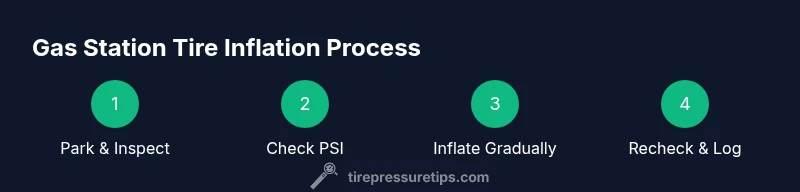
To get the best results from a gas station inflator, follow a consistent process: inspect tires for damage, remove the valve cap, and connect your gauge before touching the pump. Record the current PSI for each tire, then set the target PSI according to vehicle recommendations—usually found on the door placard or owner’s manual. Attach the hose carefully to avoid pushing debris into the valve stem, and inflate slowly, pausing to read the gauge frequently. After reaching the target, remove the hose and re-measure with your own gauge to confirm accuracy. If a tire reads too high, release air gradually using the valve control and recheck. For vehicles with TPMS, remember the system can take time to reflect changes in tire pressure, so give it a moment before relying on the warning light. Maintain a log of PSI readings and inflate others in a similar fashion for consistency.
Safety considerations and common mistakes
Public pumps are convenient, but there are safety considerations to keep in mind. Always wear eye protection if you’re worried about suit contamination from dirt or debris and never stand in front of the hose’s nozzle during inflation. A common mistake is inflating too quickly, which can cause heat buildup and uneven tire seating. Another pitfall is failing to replace the valve caps after inflation—these small caps prevent dirt and moisture from entering the stem. If you notice a hissing sound, air leaks, or a consistently incorrect reading from the station gauge, stop and use your own gauge to verify. If pressure readings remain inconsistent, it may be a sign of a tire puncture or TPMS imbalance, and you should seek professional inspection. Tire Pressure Tips emphasizes safety and accuracy over speed when inflating tires at gas stations.
How ambient temperature and load affect tire pressure targets
Tire pressure is not static. Temperature changes, road load, and driving distance alter the air inside tires. In cold weather, PSI drops; in hot weather, PSI can rise. If you leave the car in the sun or drive long distances, gas station readings may drift from winter or summer baselines. The rule of thumb is to verify your PSI in the current conditions and adjust modestly rather than chasing an exact number from a single reading. Tire Pressure Tips recommends checking PSI before long trips and after heavy loads, as well as after seasonal temperature shifts, to maintain even wear across the tread.
The role of TPMS and how to use it with gas station inflators
TPMS alerts you when tire pressure falls outside the recommended range, but it doesn’t replace regular PSI checks. Use the gas station inflator as a supplementary tool to verify TPMS warnings. After inflating, recheck each tire with your own gauge to confirm the reading reported by the TPMS is aligned with your target PSI. If the TPMS warning persists after inflation, there may be a slow leak, a defective sensor, or a misread. Tire Pressure Tips notes that TPMS is a helpful safety feature, but it relies on accurate tire pressure measurement as the baseline.
Troubleshooting and when to seek professional help
If readings are inconsistent across two gauges, or if inflation does not hold after driving, you may have a slow leak, a faulty valve stem, or a damaged tire bead. In such cases, stop inflating and schedule a professional inspection. Also, if you notice a persistently high tire temperature after inflation, discontinue pumping and seek assistance. Regular maintenance—like valve stem replacement and TPMS sensor checks—helps prevent recurring issues. For most drivers, a quick station-read, a personal gauge cross-check, and a log of PSI readings will suffice for routine maintenance between professional checkups. The Tire Pressure Tips team recommends routine checks and consistent inflation practices for overall tire health.
Tools & Materials
- Tire pressure gauge (digital preferred)(Calibrated, reads in PSI; bring your own to cross-check station gauge)
- Gas station air hose with built-in gauge(Use to compare against your gauge; some pumps misreport PSI)
- Valve caps(Keep caps on to protect stems and maintain consistency)
- Marker or notebook(Log PSI before and after inflation for each tire)
- Chocks(Place to secure the vehicle while inflating)
- Gloves(Optional for grip and hand protection)
Steps
Estimated time: 25-45 minutes
- 1
Park on a level surface
Stop at a safe, level area and engage the parking brake. Ensure the vehicle is stable and won’t roll during inflation. This minimizes the risk of accidental movement while you’re handling the gauges.
Tip: If the ground is soft or sloped, use wheel chocks before inflating. - 2
Inspect and remove valve caps
Take off the valve caps and inspect the valve stem for damage or dirt. Wear gloves if you prefer, and keep caps in a safe spot to avoid losing them. This step helps prevent contamination and ensures a clean seal.
Tip: Keep caps in your pocket to avoid misplacing them. - 3
Check current PSI with your gauge
Attach your trusted gauge to the valve stem and read the current PSI. Compare it with the vehicle’s recommended pressure on the driver’s door placard or owner’s manual. Record the numbers for all tires if you’re doing a full check.
Tip: If your gauge reads differently from the station hose, rely on your personal gauge for accuracy. - 4
Set target PSI and inflate gradually
Connect the hose and inflate in small increments, checking the gauge frequently to avoid overshooting. Stop when you approach the target, then recheck with your gauge to confirm accuracy.
Tip: Inflate in 1–2 PSI increments and pause to verify readings. - 5
Recheck all tires
After inflating to the target on each tire, use your own gauge to re-measure. Ensure all tires reflect similar pressure ranges appropriate for your vehicle and load.
Tip: Tires on the same axle should be within 1 PSI of each other for even wear. - 6
Replace valve caps and tidy up
Re-secure valve caps on each tire to prevent dirt and moisture ingress. Wipe any moisture from the stems and cap the valves to protect the seals.
Tip: Check caps for damage; replace if threads are stripped. - 7
Log results and review TPMS status
Record the final PSI for each tire and note any TPMS warnings. Use this data for future checks and seasonally adjusted targets. If TPMS remains alert after inflation, there may be a leak or sensor issue.
Tip: Keep a simple notebook or smartphone note for quick reference. - 8
Decide if professional check is needed
If readings remain inconsistent, if you hear leaks, or if a tire shows abnormal wear, schedule an inspection with a tire/service professional. Regular maintenance helps prevent dangerous tire failures.
Tip: Don’t ignore persistent TPMS warnings or irregular tire wear.
Frequently Asked Questions
Can I trust the station gauge for tire inflation?
Station gauges vary in accuracy. Always verify with your own calibrated gauge before finalizing tire pressure.
Station gauges can vary. Use your own gauge to confirm the reading before finishing.
What should I do if TPMS shows a warning after inflating?
If the TPMS stays on after inflating to the target PSI, recheck all tires, consider a minor leak, or a sensor issue and seek professional inspection if unresolved.
If TPMS stays on after inflating, recheck all tires and consider a sensor issue if it doesn’t resolve.
Is it safe to inflate all tires at the same time at a gas station?
Yes, but do so in small increments per tire and recheck each one. Don’t rush; consistent checks prevent over-inflation.
You can inflate all tires, but do it slowly and check each tire before moving to the next.
How does temperature affect tire pressure at the gas pump?
Cold temperatures lower PSI; hot temperatures raise PSI. Check in current conditions and adjust gradually.
Temperature changes change PSI, so check in the current conditions and adjust carefully.
When should I seek professional tire service?
If you notice leaks, sidewall damage, or persistent inaccurate readings, schedule a professional inspection.
If you see leaks or sensor issues, get a professional inspection.
What gear should I always carry for tire maintenance?
A reliable PSI gauge, a marker or notebook, valve caps, and a basic inflator if possible for cross-checks.
Carry a good gauge, a notebook, valve caps, and a basic inflator for checks.
Watch Video
What to Remember
- Check PSI with a reliable gauge before and after inflation
- Use your own gauge to verify station readings
- Inflate gradually to avoid over-inflation and heat buildup
- TPMS complements, not replaces, regular PSI checks
- Document PSI and condition to improve future tire care