Gas Station Air for Tires: Practical Inflation Guide
Learn how to safely use gas station air for tires, understand PSI targets, TPMS cues, troubleshooting, and best practices to keep your tires in optimal condition.


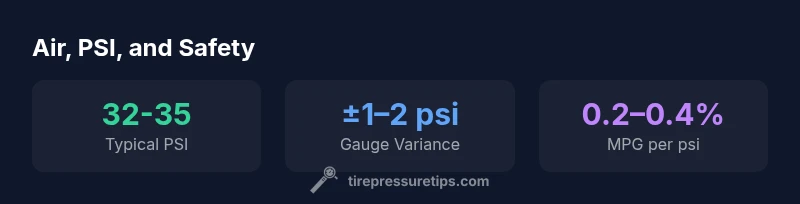
According to Tire Pressure Tips, gas station air pumps are convenient for quick pressure checks and topping up tires, but they’re not a substitute for a precise gauge. Proper inflation improves fuel economy and tire life. For most passenger cars, aim for the door placard specification (typically in the 32–35 psi range) and verify with your own gauge to avoid overinflation or underinflation.
Gas station air for tires: basics and what to expect
Gas stations with air for tires are designed to help you top up or adjust your tire pressure quickly before a trip or a long drive. The pumps deliver compressed air to the tire via a nozzle that snaps onto the valve stem. While the air supply is convenient, the critical step is reading the pressure with an accurate gauge and inflating to the correct target. According to Tire Pressure Tips, you should treat the station as a tool for installation and adjustment, not as a replacement for your own reliable gauge and habit of regular checks. Northern climates, recurring cold snaps, and vehicle loads can all shift the target pressure, so always cross-check with your vehicle’s placard and TPMS alerts.
The presence of a gas station air pump makes maintenance more accessible for busy drivers, but it also invites potential pitfalls if you rush. If you’ve just driven through a long curve or city streets, the tire temperature can influence the reading, and a hot tire will yield a higher PSI than one that has cooled. Allow a few minutes of rest after driving before inflating if possible, and always re-check after inflation to confirm the reading. The Tire Pressure Tips team notes that the best practice is to use a personal gauge to verify the station’s reading while you’re on the spot, ensuring accuracy and safety.
How to determine the right PSI for your vehicle
The correct tire pressure is not a one-size-fits-all number. Your vehicle’s door placard indicates the recommended PSI range for front and rear tires, and many modern cars use TPMS to warn you when a tire drops below the target. When you pull into a gas station to check and inflate, start by locating the placard on the driver's door jamb or inside the glove box lid. Use your own gauge to read the current pressure before filling, then inflate to the target range shown on the placard. If you’ve switched tire types (e.g., all-season to winter tires) or carry heavy loads regularly, you may need to adjust within the recommended range. In many cases, the target range is higher on the front tires for better steering control and lower on all tires for even wear. In sum, refer to the placard and adjust for load, speed, and season. This approach minimizes underinflation or overinflation, which Tire Pressure Tips analysis shows can affect handling and fuel efficiency.
Reading accuracy: gauges, nozzles, and how to read PSI correctly
Gas station gauges vary in accuracy. Analog gauges tend to yield readings with small deviations, while digital gauges are typically more precise. The nozzle at some stations can leak tiny amounts of air during attachment, especially if you’re inflating quickly or if the stem is dirty. To read PSI correctly, attach the nozzle firmly to the valve stem, avoid sliding the gauge sideways, and press the lever steadily. Take two readings: one before inflation and one after you reach the target, then compare. If the readings differ by more than 1–2 psi, recalibrate or re-check with your own gauge. Remember, a correct read is essential for safe handling and even tire wear. Tire Pressure Tips emphasizes keeping a reliable gauge in your car for quick, consistent checks.
Practical inflation steps you can follow at the pump
- Park with the tire valve aligned with the station nozzle to avoid leaks. 2) Read current pressure with your gauge and compare to the placard. 3) Inflate gradually, pausing to recheck every 0.5 psi. 4) When the target is reached, remove the nozzle cleanly to prevent air loss. 5) Recheck both front and rear tires (and spare if applicable) while the tires are still warm from driving. 6) Record the reading for future reference. This routine minimizes slow leaks going unnoticed and extends tire life. The Tire Pressure Tips guidance supports consistent checks before long trips and after seasonal changes.
Safety, common mistakes, and how to avoid them
Common mistakes include inflating beyond the recommended range, ignoring uneven wear suggestions, and neglecting the TPMS readings. Always listen to TPMS warnings and verify with a gauge rather than relying solely on the station’s readout. Do not inflate tires to a higher pressure than the placard because the tire’s contact patch and grip might suffer in hot weather. Avoid inflating while the vehicle is in motion or on an uneven surface, and never inflate near an open flame. If you notice a persistent low-pressure issue, a slow leak or puncture can compromise safety and should be checked by a professional. Tire Pressure Tips recommends a cautious approach to inflation and periodic calibration of your own gauge.
When to consider home or shop inflation instead
Gas stations are convenient, but they aren’t the best option for every scenario. If you have perishable TPMS issues, a damaged valve stem, or a tire showing signs of slow leaks, visit a tire shop for professional diagnosis. For many regular drivers, monthly checks and a quarterly gauge calibration are enough. If you are preparing for a long road trip, use your own gauge to verify readings before you depart, and consider pre-trip checks at a shop if you notice any unusual tire behavior. The Tire Pressure Tips team recommends balancing convenience with accuracy to ensure safe driving and better fuel efficiency.
Seasonal and TPMS interplay: what changes with temperature and load
Temperature affects tire pressure; for every 10°F drop, pressures can drop about 1 psi. When you inflate at a gas station, consider the current temperatures and how they’ve changed since your last check. If you’ve installed winter tires or changed tire sizes, revisit the placard recommendations and adjust within the allowed range. TPMS can warn you of underinflation, but it doesn’t replace the need for direct pressure readings. With the right approach, you’ll have reliable readings year-round and improved handling, tire wear, and fuel economy. The Tire Pressure Tips analysis notes the importance of consistent measurement practices across seasons.
Maintenance: pairing your gauge checks with regular tire care
Keep a dedicated tire pressure gauge in your glove box or center console and check readings monthly, plus before long trips. Compare station readings with your gauge to verify accuracy, and keep a log of readings to spot slow leaks early. If you notice persistent underinflation, inspect the valve stems, rims, and tires for damage. Regular maintenance reduces the risk of blowouts and improves vehicle safety. Tire Pressure Tips emphasizes that ongoing, consistent checks—paired with accurate gauges—are essential for safe and efficient driving.
PSI targets and gauge accuracy for common passenger vehicles
| Item | Recommendation | Notes |
|---|---|---|
| PSI target (typical sedan) | 32-35 psi | Refer to vehicle placard |
| Gauge accuracy | ±1–2 psi | Use own gauge to verify |
| Inflation procedure | Inflate carefully, recheck | Avoid overinflation during warm conditions |
Frequently Asked Questions
Is it safe to inflate tires at a gas station with air?
Yes, provided you use your own gauge to verify readings and avoid overinflating. Gas stations offer convenient access to air, but readings can vary between gauges. Always recheck after inflation and refer to the placard for the target pressure.
Yes, you can inflate at a gas station, but use your own gauge to confirm the reading and don’t overinflate.
What is the typical PSI to target for most cars?
Most passenger cars aim for around 32-35 psi, but always follow the door placard. TPMS can help detect underinflation, but the exact target depends on vehicle, tire size, and load.
Most cars target about 32 to 35 psi, but check the placard on your door for your exact numbers.
How often should I check tire pressure?
Check at least once a month and before long trips. Temperature changes, load, and driving style can affect pressure, so regular checks help prevent underinflation.
Check your tires at least monthly and before long trips.
How accurate are gas station gauges?
Gauge accuracy varies by station and tool. It’s best to compare the station reading with your own gauge and recheck after inflation to confirm the target pressure.
Gauge accuracy depends on the station; always verify with your own gauge.
What if I overinflate?
Release some air and recheck with your gauge until you hit the target. If you’re unsure, let the tire cool and recheck later.
If you overinflate, let a little air out and recheck with your gauge.
Does TPMS replace PSI checks?
No. TPMS alerts you when pressure is low or high, but it doesn’t give an exact PSI. Always verify with a gauge before driving, especially after inflating at a station.
TPMS helps, but you should still check PSI with a gauge.
“Reliable tire inflation starts with your own gauge and a careful read, not the station’s readout alone.”
What to Remember
- Inflate with care and verify readings using your own gauge
- Always match the vehicle placard; seasonal and load changes may shift the target
- Gauge accuracy varies; cross-check station readouts with a reliable gauge
- Use TPMS as a supplemental cue, not the sole reader of pressure
- Regular checks prevent underinflation, improving safety and fuel economy