How to Check Tyre Pressure at a Petrol Station: A Practical Guide
Learn how to safely check tyre pressure at petrol stations, choose the right gauge, and inflate to the correct PSI with practical steps from Tire Pressure Tips.


Can you check tyre pressure at petrol station? Yes—it's common and safe when you follow the right steps. Most stations offer air pumps with built-in gauges or digital readouts. Start with a cold tire, note the vehicle’s recommended psi from the door placard, and verify against the gauge. This quick guide shows you how to do it accurately.
Preparation: what you need to know before you pull up to the pump
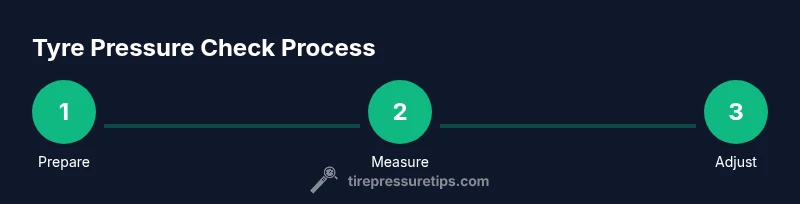
The question can you check tyre pressure at petrol station is answered with a confident yes, so long as you follow safe steps. According to Tire Pressure Tips, start by locating each tire's recommended pressure (psi) from the driver’s door jamb placard or the owner's manual. This target depends on vehicle load, tire size, and whether it's front or rear. In practice, use this figure as your inflation target and avoid guessing. If you're new to this, carry a small notebook or use a notes app to track readings over time. When you're ready, pull into a safe, level spot, apply the parking brake, and switch off the engine to eliminate distractions and prevent pump mishaps. If you're working with more than one vehicle, keep each reading separate. Consistency matters: use the same gauge type and procedure every time to ensure comparable results. The Tire Pressure Tips team emphasizes patience and careful measurement.
How petrol station air pumps work and what to expect
Public air pumps come in a few different designs. Most petrol stations provide a built-in gauge, sometimes a dial, sometimes a digital readout. Some pumps require you to accept a credit card or pay a small fee to use air. A few older stations still rely on a separate handheld gauge attached to the hose. Regardless of the display, the key is to understand that the reading on the pump's gauge may vary from device to device. The Tire Pressure Tips analysis shows that differences of 1-2 psi between gauges are normal. When you can, cross-check with your own gauge or a tire pressure gauge you trust. If the pump's gauge reads significantly differently from your own reading, repeat the test after reseating the gauge or try another pump. Always complete the measurement on a cold tire if possible; temperatures affect the shown pressure.
Safety, etiquette, and best practices at public air pumps
Public pumps are convenient, but they demand respect for others and safe handling. Turn off the engine, set the parking brake, and avoid leaning over hot exhaust components. Keep children away from the pump area, and never leave your vehicle unattended while inflating. If the pump is malfunctioning or busy, wait your turn and follow posted instructions. The reading you get at a petrol station is a snapshot, not a guarantee; use it as a reference point. The Tire Pressure Tips team stresses that the goal is accurate pressure rather than speed. If you smell fuel, see a spark, or notice a burning odor, stop immediately and move away. Always replace valve caps after measuring, and store the gauge in a pocket or bag to prevent loss.
How to prepare the tire and valve for measurement
Remove the valve cap from the tire you plan to check and inspect the valve stem for damage or dirt. Clean any debris around the valve stem. This ensures a clean seal and prevents false readings. If you have a second person helping, ask them to hold the gauge while you check. The door placard psi is the target; make sure you know which tire you're testing (front-left, front-right, etc.) for a 4-wheel car. Have the right gauge ready and ensure your gauge is calibrated for accuracy before you test.
Reading and interpreting the psi reading
Attach the gauge to the valve stem; press straight and firmly. Read the indicated PSI and compare to the target. Digital gauges display a clear number, while dial gauges show a rotating needle. If the reading is low, you need to add air; if high, release air through the valve core. Take a second reading to ensure consistency, and avoid relying on a single off-hand measurement. Remember, temperature and recent driving can affect readings, so consider the context of your measurement.
Inflate or deflate to reach the target PSI
Add air in small increments (usually 2-3 psi at a time) and recheck after each addition. If you overinflate, press the center of the valve core to release air slowly and recheck. Repeat until you land on the exact target PSI for each tire. After inflating, recheck all tires again to ensure even pressure across the axle. If your pump has a built-in gauge, cross-check with your own gauge for accuracy.
Temperature, temperature, temperature: why it matters
Ambient temperature and recent driving affect readings. For consistent results, check when tires are cold or after they have cooled for a while. The Tire Pressure Tips analysis shows that readings taken when tires are cold are more reliable. If you’ve just driven, wait for tires to cool and recheck before declaring the inflation complete. Temperature compensation can save you from over-inflating in warm conditions and under-inflating in cold conditions.
TPMS and manual checks: combining data
TPMS provides a warning when a tire is under-inflated, but sensors can lag or give anomalous readings after a long trip or heavy load. Always verify with a manual gauge at the pump and adjust to the target psi shown on the door placard. Use TPMS as a guide, not as a sole source of truth, especially if you notice a discrepancy between the display and your gauge. Regular cross-checks help you maintain optimal tire performance.
Logging, maintenance, and keeping tires inflated over time
Develop a simple routine to log tire pressures monthly or before long trips. Note the PSI per tire, the ambient temperature, and any comments about the tire's condition. Periodic calibration of your gauge is essential—digital gauges can drift over time, and even small inaccuracies add up. With a consistent logging habit, you’ll spot gradual pressure changes early and avoid under- or over-inflation.
Quick recap: staying safe and accurate at the pump
Always check tyres when they are cold, use a reliable gauge, and inflate to the vehicle’s recommended PSI. Maintain a log of readings and revisit tire maintenance regularly. For best results, combine manual gauge checks with the vehicle’s TPMS readings and consult your Tire Pressure Tips references whenever you’re unsure.
Tools & Materials
- Tire pressure gauge (digital or analog)(Prefer a gauge with a digital readout for accuracy)
- Vehicle owner’s manual or door jamb placard with recommended psi(Know the target psi for each tire)
- Notepad or mobile notes app(Log readings over time)
- Valve caps for all tires(Keep caps clean and replace after testing)
- Safe, level parking area near the pump(Engine off, parking brake engaged, away from traffic)
Steps
Estimated time: Total time: 10-15 minutes
- 1
Find a suitable pump and gauge
Park in a safe, level spot and locate the air pump. Confirm the display type (digital or analog) and ensure the unit reads in psi. If possible, test with a quick read on a known-good tire to gauge accuracy.
Tip: If the pump is busy, wait your turn and keep your surroundings clear of other vehicles. - 2
Prepare the tire and valve
Remove the valve cap from the tire you’re testing and inspect the valve stem for damage or dirt. Clean the stem edge to ensure a clean seal and accurate reading.
Tip: Keep the valve cap in your pocket so you don’t misplace it. - 3
Check the target PSI
Read the recommended tire pressure on the door placard or in the owner’s manual. Note whether the tire is front or rear, as targets can differ by position.
Tip: If you don’t know the tire position, label tires as FL/FR/RL/RR before starting. - 4
Attach the gauge to the valve
Press the gauge squarely onto the valve stem and ensure a tight seal. Avoid wiggling the gauge, which can give a false reading.
Tip: If using a digital gauge, hold it steady for a stable read. - 5
Read and compare
Read the PSI from the gauge and compare to the target PSI. If the reading is off, you’ll know whether to inflate or deflate.
Tip: Take a second reading to confirm accuracy. - 6
Inflate or deflate to target
If under-inflated, add air in small increments and recheck after each addition. If over-inflated, release air through the valve core in small amounts and recheck.
Tip: Avoid large inflations in one go to prevent overshooting the target. - 7
Recheck all tires
After adjusting one tire, recheck it and then test the others. Temperature and recent driving can influence readings, so consistency matters.
Tip: Record the final numbers for your records. - 8
Seal up and tidy
Replace the valve caps, wipe down any foam or debris, and store your gauge safely. Ensure the pump area is clean and free of tripping hazards.
Tip: Keep a small pouch for your gauge and caps. - 9
Log and plan future checks
If you keep a log, note date, tire positions, PSI, and ambient temperature. Plan proactive checks monthly or before trips.
Tip: A simple log helps spot gradual pressure drops early.
Frequently Asked Questions
Can I check tyre pressure at any petrol station?
Most petrol stations offer air pumps, but availability and costs vary. If you’re unsure, carry your own gauge and check later at home.
Most stations have air pumps, but costs and hours vary. Bring your own gauge to confirm readings whenever possible.
Is it safe to check tyre pressure while the engine is running?
No. For safety and accuracy, turn off the engine, apply the parking brake, and only then measure and inflate.
No—turn off the engine and engage the parking brake before inflating.
What types of gauges should I trust?
Digital gauges are easy to read, while analog dial gauges are common and reliable if calibrated. Pick one you can read clearly and keep it accurate.
Digital or analog gauges work well; just ensure accuracy and consistency.
Why does tire pressure vary between tires?
Tires, load, and temperature affect readings. Front and rear tires may have different targets on some vehicles.
Temperature and load affect PSI; use the door placard as your guide.
How often should I check tire pressure?
Check every 1-2 weeks or before long trips. Always test when tires are cold for accuracy and consistency.
Weekly or before trips, always when cold.
What if TPMS shows low pressure but readings are normal?
Use a manual gauge to verify; TPMS can lag or misread. If readings differ, trust the manual gauge and inspect for leaks.
Trust the manual gauge; TPMS can lag behind readings.
Watch Video
What to Remember
- Check tires when cold for accuracy.
- Use a reliable gauge and measure each tire.
- Inflate to the door placard psi.
- Recheck after adjustment to confirm.
- Log readings to track changes over time.