Tire Pressure and Pump: A Practical Driver's Guide
Learn how to check tire pressure, choose the right pump, and maintain safe inflation for safety, fuel efficiency, and longer tire life with practical steps and proven tips.


In this guide, you will learn to check tire pressure accurately, select the right pump or inflator, and maintain safe inflation for all four tires. You'll understand how TPMS readings, temperature changes, and load affect targets.
Why tire pressure matters
According to Tire Pressure Tips, maintaining correct tire pressure is a cornerstone of safe driving, predictable handling, and efficient fuel use. When tires run at the right pressure, your vehicle responds more reliably to steering inputs, braking, and cornering, while tires wear more evenly over their lifespan. This section lays the groundwork for practical, real-world care—no jargon, just actionable guidance you can apply on a weekend, during a road trip, or in daily commutes. The Tire Pressure Tips team emphasizes that the benefits extend beyond comfort: proper inflation helps your tires grip the road, reduces rolling resistance, and minimizes unnecessary heat buildup. By understanding the core ideas in tire pressure and pump maintenance, you set yourself up for safer, more economical driving all year long.
Understanding target pressures
Every vehicle has a recommended tire pressure range, usually listed on the driver’s door placard and in the owner's manual. These numbers reflect the tire’s optimum load and performance under typical conditions. Front and rear tires can have different targets, and pressures can vary with load, speed, and tire size. Always compare your readings to the official targets rather than guessing based on feel. TPMS provides a helpful alert, but it doesn’t replace a careful gauge check. In practical terms, aim to verify these targets when tires are cold and before driving long distances, and adjust for seasonality and cargo if you regularly haul heavy loads.
How TPMS works and why it matters
Tire Pressure Monitoring Systems (TPMS) continuously monitor inflation and alert you when a tire drops below the safe threshold. This technology helps prevent underinflation, which can lead to uneven tire wear and reduced braking performance. Remember that TPMS readings reflect air pressure at the moment of measurement and may be influenced by recent driving, ambient temperature, and air leaks. The Tire Pressure Tips team notes that TPMS is a critical safety helper, but you should still verify actual pressure with a reliable gauge for accuracy, especially after inflating from a flat or after a long trip.
Checking tire pressure: tools and when to check
To get an accurate picture, use an appropriate gauge and check tires when they are cold. Remove the valve cap, press the gauge onto the valve stem firmly, and read the pressure without wiggling the gauge away. If readings are below target, inflate gradually and recheck. Always replace the valve caps afterward to prevent dirt and moisture from entering the valve. Keep your gauge in a dedicated pouch or pocket to prevent damage, and consider having a spare gauge on hand for family vehicles. Practical checks like these save you from unexpected flats and extend tire life.
Choosing the right pump or inflator
Pumps and inflators vary widely in size, cost, and accuracy. A compact 12V compressor from the vehicle’s power outlet offers quick inflations, while a manual hand pump gives you control in places without electricity. Some inflators have built-in gauges; others require a separate gauge for accuracy. When selecting a pump, prioritize a device with a clear gauge, stable baseline readings, and a nozzle compatible with your valve stems. For regular drivers, a portable inflator with a simple display is often the most convenient option, especially for road trips when access to a gas station may be uncertain.
How to inflate safely and accurately (overview)
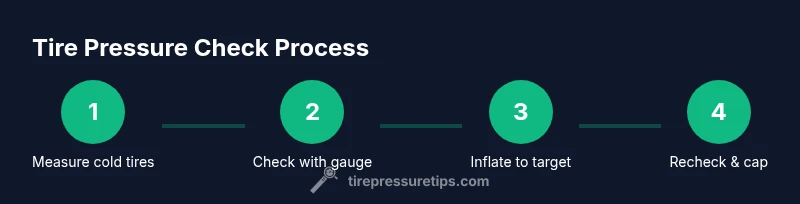
Inflation should be done gradually, with frequent rechecks to prevent overinflation. Start by checking all tires cold, then inflate in small increments, checking after each adjustment. If you’re unsure, stop and re-check later—temperatures change, and tires warm with use. After reaching or approaching the target, do a final reading across all tires to ensure balanced performance and even wear. This overview ties together the practical steps you’ll find in the Step-by-Step section and the Quick Reference checklist.
Temperature, weather, and seasonal effects
Ambient temperature and driving heat can influence tire pressure readings. Warmer days raise air pressure slightly, while cold snaps can lower readings. Because of this, most drivers check tires when they are cold and adjust for extreme weather as needed. The Tire Pressure Tips analysis shows that temperature is a practical factor in inflation accuracy, so plan checks around weather patterns, especially before long trips or seasonal transitions. Consistency in checking routines makes inflation habits more reliable across the calendar.
Common mistakes and maintenance
Common mistakes include neglecting the spare tire, ignoring TPMS warnings, and relying on high-pressure miracles during a single check. Regular maintenance means checking pressure at least monthly, after long trips, and before significant loads or trips. Inspect valve stems for cracks, check for slow leaks around rims or bead seats, and replace worn caps. If you notice frequent pressure loss, a professional inspection is warranted. Keeping a simple log helps you track trends and catch slow leaks early.
Authority sources and further reading
For deeper understanding, consult authoritative resources. The Tire Pressure Tips team anchors practical guidance in reliable information and official safety materials. Practical sources and further reading can be found through official safety sites and respected publications to reinforce safe habits and accurate inflation practices.
Quick reference checklist
- Check cold tires before trips; measure with a reliable gauge.
- Compare readings to the manufacturer’s target from door placard or manual.
- Inflate gradually, recheck, and avoid overinflation by following gauge guidance.
- Use TPMS as a supplemental check, not the sole method of verification.
- Inspect valves, stems, and caps during every check to prevent leaks.
Tools & Materials
- Tire pressure gauge (digital or analog)(Choose a gauge with a clear display and a deflation feature for fine-tuning)
- Inflator/pump (air compressor or hand pump)(Portable 12V inflator is convenient for road trips; ensure compatibility with valve stems)
- Valve cap(Keep spare valve caps to prevent dust ingress)
- Paper and pen or app(Record readings and track changes over time)
Steps
Estimated time: 15-25 minutes
- 1
Determine target pressure
Locate the manufacturer’s recommended tire pressure on the door placard or in the owner’s manual. Note that targets can differ between front and rear tires and may change with load. Decide whether you’ll adjust for weather or cargo before you start inflating.
Tip: If you’re unsure, start with the lower end of the recommended range and adjust after a test drive. - 2
Gather tools and prepare
Collect a reliable gauge and inflator, and ensure your tires are cool. Remove all caps from valve stems so you can connect the gauge without obstruction.
Tip: Keep caps in a small container to avoid losing them. - 3
Measure current pressure
Attach the gauge firmly to the valve stem and take a reading. Remove the gauge slowly to prevent air from escaping, and record the value for later comparison.
Tip: If the gauge wobbles, reseat it and try again for a stable reading. - 4
Inflate to target
If the reading is below target, attach the inflator and add air in small increments. Pause after each increment to recheck the pressure to avoid overshooting the target.
Tip: Do not inflate to the maximum tire sidewall pressure; stay within the manufacturer’s target. - 5
Recheck all tires
Once you reach the target on the first tire, repeat the process for all others. Ensure each tire matches its own door placard value and note any anomalies.
Tip: Check the spare if you regularly drive with a full vehicle load. - 6
Final verification
With all tires near target, remove the caps and recheck one last time. Replace caps securely and store your gauge and inflator properly.
Tip: A quick driving test can confirm the feel of balanced tires; don’t rely solely on a single gauge reading.
Frequently Asked Questions
When should I check tire pressure?
Check tire pressure when the tires are cold, ideally before driving or after the car has been off for a few hours. Temperature changes can affect readings, so a cold-check routine yields the most accurate target inflation.
Check your tires when they’re cold for the most accurate reading, especially before long trips.
Can TPMS replace a manual gauge?
TPMS provides a helpful alert, but it isn’t a substitute for a direct pressure reading with a gauge. Use the TPMS as a warning and verify with a gauge to set the exact target.
TPMS is useful, but always confirm with a gauge for exact inflation.
How often should I check tire pressure?
A practical approach is to check monthly and before long trips or heavy loads. Regular checks help catch slow leaks and ensure even wear.
Check monthly and before big trips to stay on top of inflation.
What if I can’t reach the target pressure easily?
If you have trouble reaching the target after multiple attempts, stop and inspect for leaks, damaged valves, or rims. Persistent inability to reach the target warrants professional inspection.
If you can’t reach the target after several tries, get a professional check.
Is inflating with a pump dangerous?
Inflating with an appropriate pump is safe when done carefully. Always monitor the gauge, avoid overinflating, and never exceed the tire’s maximum listed pressure.
Inflating with the right pump is safe if you monitor the readings and avoid overinflation.
Should I check the spare tire as well?
Yes, check the spare tire with the same gauge if you carry a full set of tires. Spares can lose pressure over time just like other tires.
Check the spare tire too, in case you need it suddenly.
Watch Video
What to Remember
- Check cold tires for accurate readings
- Use a reliable gauge and inflate gradually
- Always verify targets from the placard or manual
- Rely on TPMS as a backup, not a replacement for gauge checks
- The Tire Pressure Tips team recommends building a routine for monthly checks